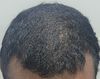
The conversation is about someone's three-year experience with irregular derma rolling, Minoxidil, and Redensyl for hair loss, hoping to thicken areas with fine hair.
A user is seeking advice on purchasing RU58841 with Minoxidil in Canada and is concerned about the vehicle used for the solution. They also inquire about the differences between RU58841 and topical finasteride in terms of efficacy.
An 18-year-old shared a 5-month hair transformation using RU58841 and minoxidil, reporting no side effects and crediting most regrowth to minoxidil. Opinions on RU58841 are mixed, with some users and a YouTuber moving away from it due to side effects and lack of studies.
TDM-105795 showed promising hair growth results, with higher efficacy than placebo and minimal side effects. It activates dormant hair follicle stem cells and may maintain gains without immediate loss, unlike minoxidil.
A user's progress with treating their hair loss using Minoxidil, finasteride, and dermarolling after two months of treatment; the conversation includes other users' observations of improvement and encouragement.
The user discusses using compounded oral minoxidil due to the ineffectiveness and inconvenience of topical minoxidil for diffuse thinning. They question the efficacy of compounded minoxidil compared to original tablet forms and express concerns about the importance of excipients and binders.
A user is experiencing facial bloating from low-dose topical finasteride due to high estradiol levels and is seeking advice on using DIM to manage this issue, including dosage and brand recommendations.
The conversation discusses potential hair loss treatments focusing on stimulating IGF-1 at the follicle level using growth-factor cocktails and engineered peptides, such as Acetyl Tetrapeptide-3, Copper Tripeptide-1, Oligopeptide-20, Thymosin-β4, and Palmitoyl Tetrapeptide-7. It suggests that device-assisted delivery methods like microneedling may enhance effectiveness.
The conversation is about the difficulty of applying both pyril and min/fin to treat hair loss twice daily and whether combining them yields positive results.
An 18-year-old is experiencing positive hair regrowth results using 2.5mg minoxidil, 0.5mg finasteride daily, and dermarolling twice a week. They are satisfied with the progress and hope for continued improvement.
A satirical post where someone claims to have developed a radioactive isotope scalp serum using Polonium-210 that outperforms Minoxidil and finasteride for hair regrowth. The serum reportedly stimulates DNA repair in hair follicles, leading to significant hair density increase, but the post is met with skepticism and concerns about safety.
Follicopeptide (FOL005) by Coegin Pharma will launch as a cosmetic hair growth treatment by Q2 2025, showing similar efficacy to finasteride. Users discuss the benefits and skepticism of releasing hair loss treatments as cosmetics rather than drugs.
Two Chinese suppliers provided legitimate RU58841, confirmed through a free drug testing service. The vendors were Shaanxi Greenyo Biotech and Lyphar, found on Made-in-China.
A user is joining a clinical trial for Clascoterone, a drug approved for acne but being tested for hair loss. They previously tried finasteride with limited success and plan to share updates on their experience with the new treatment.
RU58841 in glycerin may cause less irritation than in PG form, but its effectiveness might be reduced. Users discuss the potential trade-off between irritation and efficacy.
The user experienced increased hair shedding after using RU58841, despite initial improvements in scalp condition and appearance. They are considering stopping RU58841 to see if shedding decreases.
A user shared a success story showing hair regrowth over 10 years, attributing it to quitting creatine and taking 0.5mg finasteride. Some commenters were skeptical about creatine's impact, while others inquired about side effects, and the original poster reported no negative effects from finasteride.
The conversation discusses the effectiveness of anti-androgens for hair loss, with a preference for topical treatments like RU58841 over oral options due to better scalp concentration and fewer side effects. Topical finasteride at 0.1% may provide some results, especially when combined with a topical androgen receptor antagonist like RU58841.
Experimenting with the effects of creatine and finasteride on DHT levels, as well as a discussion regarding the potential link between creatine supplementation and hair loss.
The conversation is about someone seeking information on long-term users of CB-03-01 for hair loss, having experienced negative side effects from finasteride and facing rapid hair thinning.
This user has conducted data scraping of 365 Reddit posts on the hairloss drug Pyrilutamide over the last year to analyse efficacy and side effects. The findings, which are available in a 19 page report with graphs, suggest that 22% of Pyrilutamide users experience positive results while 63% experience symptoms. A larger analytics project is proposed for other drugs with enough demand.
The conversation discusses using retinol to enhance minoxidil's effectiveness for hair loss, with a user considering The Ordinary's 0.5% retinol and seeking advice on azelaic acid concentration. Other users suggest using tretinoin instead and consider pre-formulated products combining minoxidil, tretinoin, and azelaic acid, but the original poster has not seen improvement from dermarolling.
The conversation discusses a comparison table for a spray combining Minoxidil and Finasteride for hair loss treatment in the UK. Specific treatments mentioned are Minoxidil (Min) and Finasteride (Fin).
The user is questioning whether their hair shows signs of regrowth or just normal growth after two weeks. They are using Minoxidil, Finasteride, and RU58841 for hair treatment.
Users discussed experiences with Everychem's solution similar to PP405 for hair loss, noting some positive results like increased hair thickness and new growth. There was skepticism about the product's legitimacy and safety, with some users reporting early signs of effectiveness and others expressing concerns about the lack of evidence and safety profiles.
GT20026 is discussed as a potential treatment for hair loss that targets androgen receptors without affecting hormone levels, but it may not promote significant regrowth. It is expected to be available by 2028, with other treatments like Breezula and Clascoterone also mentioned.
DLQ01, a prostaglandin F2α analog, shows promise for hair growth by directly stimulating PGE2/PGF receptors without needing conversion, and can be combined with minoxidil and retinoids like tretinoin for enhanced effectiveness. Minoxidil's efficacy may be reduced by COX-1 inhibitors, but using prostaglandin analogs like Latanoprost or Bimatoprost can help maintain its effectiveness.
HMI-115, a newly discovered hair loss treatment that could potentially be effective for those with diffuse thinning and telogen effluvium. It is based on prolactin receptor antagonist signaling and has already undergone Phase I trials in women, with potential commercialization by 2027.