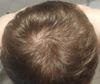
The user left their 2.5 mg pills at home and is considering using 5% topical minoxidil as a substitute. They also inquire about where to obtain over-the-counter minoxidil pills.
Dr. Kyle Gillet mentioned on Dr. Andrew Huberman's podcast that dutasteride mesotherapy blocks DHTconversion only in the scalp and is the most promising topical treatment. Users discussed concerns about systemic absorption and the practicality of dutasteride injections.
The conversation discusses hair regrowth treatments using finasteride, minoxidil pills, and topical minoxidil, with a focus on the use of a 1.5mm derma roller. Users advise caution with derma rolling, suggesting smaller needle sizes and longer intervals between sessions to avoid skin damage and systemic absorption of minoxidil.
The conversation discusses a hair loss treatment regimen including 5% minoxidil, 2.5mg oral minoxidil, 1mg finasteride, tretinoin cream, derma stamping, derma rolling, scalp massagers, and a mix of vitamins and minerals. The user also considers using maca and adapalene, with advice on potential scalp irritation and the effectiveness of these treatments.
The conversation discusses hair loss treatments, with a focus on the use of finasteride, minoxidil, laser treatment helmets, and Redensyl. Opinions vary on the effectiveness and side effects of finasteride, with some users advocating for its use despite potential risks, while others express concerns about its impact on sexual function.
The conversation discusses hair loss treatments, focusing on alternatives to Minoxidil, such as Bimatoprost and Latanoprost, and the use of Finasteride, Dutasteride, RU58841, and microneedling. The user plans to add Latanoprost to their regimen, which already includes oral and topical Minoxidil and Finasteride, Ketoconazole shampoo, and microneedling.
The conversation discusses using very low dose topical finasteride to achieve specific serum DHT reduction percentages. It concludes that finasteride dosage increases linearly between 5-30% DHT reduction but requires exponential increases for reductions up to 70%.
The conversation discusses the mechanism of action of alfatradiol (17 alpha estradiol) in treating hair loss. It explores theories that it either inhibits 5 alpha reductase to prevent T->DHT conversion or aromatizes scalp T into 17-alpha-estradiol to save hair.
The conversation discusses preferences for hair loss treatments, specifically finasteride over dutasteride. Users share personal experiences, cost considerations, FDA approval status, and potential side effects, with some switching between treatments to find what works best for them.
The conversation is about a user's one-year progress after a 3,200 graft FUE hair transplant and their use of oral finasteride and minoxidil. People are impressed with the results and are discussing the effectiveness and cost of the treatment.
The conversation discusses the use of dutasteride (DUT) versus finasteride (FIN) for hair loss treatment, with some users preferring DUT for its effectiveness while others choose FIN due to its approval status, better long-term data, and lower risk of side effects. Users share personal experiences with both medications, including side effects and effectiveness.
The conversation is about disappointment with pyrilutamide's performance as a hair loss treatment, with some users expressing interest in other treatments like Verteporfin, GT20029, and RU58841, while others suggest sticking with established treatments like finasteride or dutasteride.
The conversation revolves around the experiences of different individuals with hair loss treatments like Minoxidil, Finasteride, and RU58841. The discussion includes various perspectives on the effects of these treatments, the importance of hair for self-esteem and attractiveness, and the influence of significant others on the decision to use or stop using these treatments.
The conversation discusses the potential benefits of sublingual minoxidil for hair loss treatment. It suggests that sublingual minoxidil, which bypasses the liver, may have fewer side effects, greater bioavailability, and could be more effective than oral minoxidil.
The conversation is about hair transplants and the perception that they often look unnatural, especially in the first few rows of hair. There is a debate about whether it's better to choose a cheaper clinic in Turkey or a more expensive one in the USA, with some arguing that experience and skill matter more than cost.
The conversation is about the potential dangers of taking oral minoxidil and grapefruit juice together. Some users express concern about dangerous drug interactions, while others argue that grapefruit juice may inhibit the metabolism of finasteride. The conclusion is that grapefruit juice may make finasteride less effective, but it won't affect minoxidil.
The conversation is about a person's nearly 5-month progress using finasteride, minoxidil, some vitamins, and occasional microneedling to treat hair loss, with noticeable improvement in hair growth. They also mention not using creatine or performance-enhancing drugs.
The conversation discusses the complexity of hair loss causes, suggesting that DHT sensitivity alone doesn't fully explain it. Treatments mentioned include finasteride and dutasteride.
The conversation discusses hair loss treatments, specifically mentioning Minoxidil, finasteride, and RU58841. It highlights a study suggesting that sulforaphane may reduce DHT levels and promote hair growth in mice.
The conversation is about individuals considering waiting for Breezula to treat hair loss instead of using Finasteride due to concerns about side effects. Some are opting for Finasteride now, while others are wary of its impact on neurosteroids.
The conversation is about analyzing receded temple closeups for signs of fibrosis, scarring, or androgenetic alopecia (AGA). Specific treatments like Minoxidil, finasteride, or RU58841 are not mentioned in the conversation.
The conversation is about concerns regarding the safety of using RU-58841 and oral Minoxidil for hair loss, particularly potential heart-related side effects. The user is using a topical solution with RU-58841 and Minoxidil, along with a pill containing Dutasteride, Finasteride, and oral Minoxidil, and is seeking advice on the regimen.
The conversation is about a 21-year-old seeking advice on managing hair loss, considering options like shaving, hair implants, or using treatments like finasteride and minoxidil. The user is concerned about self-image and the social implications of being bald at a young age.
The conversation discusses concerns about potential cognitive and emotional effects of finasteride, with the original poster planning to monitor their cognitive performance while using the treatment. A user responds that most people do not experience cognitive shifts, though some report subtle changes.
The conversation discusses using RU58841 for hair loss, with OP experiencing thinning in the front area and steady hair loss. OP plans to try microneedling while avoiding finasteride and dutasteride.
The conversation discusses hair shedding while using Minoxidil and dutasteride, noting that shedding can occur even months into treatment as part of the hair cycle. Despite shedding, previous regrowth suggests the treatment is effective.
The conversation discusses hair loss treatments, specifically the use of topical and oral finasteride combined with minoxidil. The user experienced a second shedding phase but hopes for regrowth in the coming months.
The conversation discusses hair loss treatments, focusing on insulin resistance, microneedling with topical melatonin, and stress reduction. Users express skepticism about the advice, preferring proven treatments like minoxidil and finasteride, while some mention alternative methods like dermal incisions and verteporfin for reducing fibrosis.
The conversation is about dealing with hair loss and exploring treatments like HRT, Minoxidil, and micro-needling. The user is considering wigs and possibly a hair transplant while expressing feelings of self-doubt and seeking support.