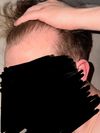
The user experienced significant hair regrowth after 3.5 months using a topical 2-in-1 from Hims, ketoconazole, and weekly microneedling. The user is 37 years old.
The user is considering shaving their head completely after buzzing it due to a receding hairline and is unsure if the bald look will suit them. Another user suggests they look good with the buzz cut and recommends exploring the "Bald" subreddit for more support.
A user shared their experience with a beard-to-scalp hair transplant, noting no visible scars and improved hair density using finasteride and minoxidil. The conversation discusses the differences between beard and scalp hair, potential changes in hair texture, and the use of beard hair for increased scalp coverage.
Microneedling for hair loss involves sterilizing tools and possibly using serums like minoxidil or hyaluronic acid. Users report different routines, including applying minoxidil immediately after microneedling, using finasteride, and washing with ketoconazole shampoo.
A 22-year-old is planning a hair transplant for the end of 2027 and is currently using finasteride, switching to dutasteride soon, and taking oral minoxidil to stabilize hair loss. They are seeking advice on candidacy and the number of grafts needed.
The conversation discusses using peptides BPC-157 and TB-500, combined with microneedling, to potentially enhance hair regrowth. The user plans to try BPC-157 due to its lower cost and reports of hair growth, despite limited human trials and concerns about side effects from other treatments like minoxidil and finasteride.
Verteporfin reduces scar tissue in hair transplants but doesn't significantly regrow hair follicles. More testing is needed to determine its effectiveness.
Clascoterone is promising for hair loss, showing 24.5% improvement in satisfaction compared to placebo. Users consider it an alternative to finasteride, with concerns about absorption and side effects.
Minoxidil and LLLT are compared for treating hair loss, with LLLT showing higher regrowth rates and fewer side effects. LLLT is less time-consuming and more suitable for those with health issues, while Minoxidil requires daily application.
A user shared progress pictures of a hair transplant done in Toronto, Canada. The conversation includes comments on the appearance of Antonio Conte, with some suggesting he looked better after shaving his head.
The conversation discusses HMI 115, a new hair loss treatment with promising results, showing a significant increase in hair density after two months. Some users are skeptical, while others are hopeful for its release and potential affordability.
Hair loss treatments discussed include promising Pyr available online and Verteporfin dosing after FUE for follicle regeneration, but no updates on SCUBE3.
A 29-year-old is using liposomal topical finasteride/minoxidil and low-level light therapy (LLLT) to improve hair growth, showing significant progress in crown recovery. The user prefers liposomal topicals to avoid side effects from oral finasteride and uses the iRestore Essential device for LLLT.
Black individuals may embrace baldness better due to less contrast between hair and skin. Finasteride is suggested for hair loss management, and natural styles like buzz cuts are recommended.
A clinical trial for Verteporfin as a hair loss treatment, and the potential for greater progress in treatments for hair loss in the future. Common treatments such as Minoxidil, Finasteride and RU58841 were discussed.
The user underwent a hair transplant 11 months ago and is satisfied with the results, regaining confidence. Post-operation treatments included oral minoxidil, finasteride, dutasteride, vitamin supplements, and occasional QR678 injections.
A user shared their personal experience with hair loss treatment, detailing their journey from initial hairline thinning to regrowth. They tried several protocols, with the most effective being a combination of finasteride, minoxidil, dermarolling, and topical tretinoin, and plan to continue finasteride daily.
The conversation is a satirical discussion about hair loss treatments, jokingly suggesting using a Cocker Spaniel as an alternative to actual treatments like finasteride, minoxidil, RU58841, ketoconazole, and dermarolling.
The importance of lighting when taking progress pictures and discussing hair growth, as dramatic changes can be seen even without real improvements. The users also discussed methods such as Fin min and dermarolling for treating hair loss.
PP405 is a promising new treatment for hair loss that activates dormant stem cells in hair follicles, potentially bypassing the effects of DHT. It is currently in phase 2 trials and could be available between 2027 and 2030, but it is not considered a definitive cure.
A 35-year-old shared a 2-month update on their hair transplant of 3153 grafts, noting redness, itching, and some pimples, while using finasteride for over 12 years to maintain hair. Users discussed the effectiveness and timing of starting finasteride, with some suggesting consulting a doctor for young individuals considering the treatment.
Low-level laser therapy (LLLT) stimulates hair growth but current devices are expensive. A proposed non-profit project aims to create affordable, 3D-printed LLLT devices and collect data on their effectiveness.
Discussing a regimen to improve the user's hairline, with treatments proposed including minoxidil, rectal microneedling, IV drip of minoxidil, laser removal, PRP injection, topical minoxidil, divine protein shakes, stem cell injections, and keto shampoo.
The conversation discusses potential hair loss treatments, including Setipiprant, Bimatoprost, and Follicept. The user encourages signing up for Follicept, which may come to market soon.
A 42-year-old experienced significant hair regrowth after 12 weeks on an oral combination of finasteride (1 mg) and minoxidil (2.5 mg), with noticeable improvements and no side effects. The user is considering continuing the treatment for a year due to the unexpected positive results.
The conversation is about adding dermarolling to a hair loss treatment routine. The user seeks recommendations for dermarollers, stamps, or pens, emphasizing the importance of quality and proper cleaning.
Whether using both Fluridil and Alfatradiol together could be more effective than either one alone as a hair loss treatment, given their different mechanisms of action.
A user is seeking recommendations for dermatologists or hair clinics in the Greater Sacramento or Bay Area for exosome treatments, comparing topical application plus microneedling versus direct scalp injections. They are also asking for personal experiences and before-and-after photos.
Hair cloning may become available in 1-2 years in Japan, but widespread availability and affordability could take 7-15 years. Current treatments like finasteride are effective but may lose effectiveness over time.