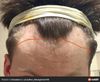
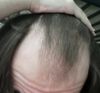
The conversation is about using GHK-Cu, a copper peptide, for hair loss treatment. Users discuss their experiences, dosages, and additional benefits like improved skin and energy.
A user shared their positive experience with a 5% minoxidil and 0.1% finasteride topical serum for hair loss, noting improvements in hair density and new growth within 2.5 months. They also mentioned using red light therapy, vitamin D+K2 supplements, and an all-natural shampoo.
Veradermics' oral minoxidil shows promise for hair regrowth, with some users reporting significant improvements, while Pelage's PP405 results are less convincing and lack transparency. There is skepticism about both treatments' long-term effectiveness and potential side effects.
A mid-30s individual is experiencing hair loss at the front and temples but not the crown, and is seeking affordable treatments. They have ordered pumpkin seed oil capsules due to cost and side effects concerns with official treatments.
The conversation is about starting a hair loss treatment using a topical solution containing RU58841, Minoxidil, and Copper Peptides. The user plans to test the product and share updates on its effectiveness.
The conversation is about hair loss treatments. The user considers using a foam with Saw palmetto, caffeine, and EGCG, but another user suggests just using finasteride.
The conversation discusses hair regrowth using Finasteride, Alpecin shampoo, vitamins, RCP serums, and Redensyl, with noticeable improvement in the fifth month. The user experienced some shedding initially but found stability without using Minoxidil, as advised by their dermatologist.
PP405 shows initial promise for treating androgenetic alopecia, with safety confirmed in early trials, but skepticism remains due to limited data. Further trials are needed to determine its true efficacy and potential market impact.
Obscure hair loss topicals like Alfatradiol, Fluridil, and Stemoxydine are discussed. They may be considered for those not responding well to common treatments like Minoxidil and Finasteride.
People are discussing making their own PP405 for hair loss treatment using JLX069 and DMSO. There is skepticism about the safety and effectiveness of this homemade solution, with some users expressing concerns about potential risks.
The conversation is about a user seeking advice on adding GHK-Cu to RU58841 for hair loss treatment, while already using oral minoxidil, dutasteride, ketoconazole shampoo, and considering LLLT. They are unsure about the concentration and carrier solution for GHK-Cu.
The conversation discusses the effectiveness of KX-826 for hair loss and questions how long it should remain on the scalp before washing or sweating. It also mentions treatments like Minoxidil, finasteride, and RU58841.
A satirical post where someone claims to have developed a radioactive isotope scalp serum using Polonium-210 that outperforms Minoxidil and finasteride for hair regrowth. The serum reportedly stimulates DNA repair in hair follicles, leading to significant hair density increase, but the post is met with skepticism and concerns about safety.
The conversation discusses purchasing experimental hair loss treatments KX-826, AHK-Cu, and PTD-DBM, with the user already using Minoxidil and having side effects from Finasteride. Concerns about the legitimacy of certain suppliers and the authenticity of products like pp405 are also mentioned.
The user is using topical minoxidil and finasteride with good results and is considering adding stemoxydine 5% to their regimen. Another user suggests trying it if financially feasible, as results can vary.
PP405 may revive dormant hair follicles but is unlikely to help with long-term baldness where follicles are replaced by scar tissue. It is seen as a potential adjunct to treatments like minoxidil and finasteride, but its effectiveness on deeply fibrotic or scarred areas is doubtful.
PP405 might make minoxidil unnecessary, but finasteride or other 5AR inhibitors may still be needed. PP405 is expected to be expensive and not available until at least 2028, with limited information on its effectiveness.
A study that outlines the full model for androgenic alopecia (AGA) which links DHT to cellular senescence in dermal papilla cells, and suggests black chokeberry as a source of cyanidin 3-O-arabinoside polyphenol with potential anti-oxidant properties that could reverse this process. The post encourages reaching out to experts in anti-aging and longevity to research treatments involving the polyphenol.
TDM-105795 showed promising hair growth results, with higher efficacy than placebo and minimal side effects. It activates dormant hair follicle stem cells and may maintain gains without immediate loss, unlike minoxidil.
The user is considering adding Stemoxydine to their hair loss regimen, as they already use topical finasteride with rosemary and cannot use Minoxidil. They are seeking feedback on Stemoxydine and Alphatradiol, and another user mentions 2-deoxy-d-ribose as a potential option.
PP405 may revive dormant hair follicles, and DHT blockers like finasteride or dutasteride could maintain new hair. Combining PP405 with minoxidil might be optimal, but long-term effects and continuous use are uncertain.
PP405, a potential hair loss treatment, is facing delays in releasing Phase 2 results, causing frustration among users who compare it to past failed treatments. Despite skepticism, some remain hopeful about PP405's future, while others discuss alternative treatments like Clascoterone and its expected market release.
A $3 hair oil applicator is recommended for applying minoxidil efficiently, reducing wastage and oily scalp issues. Users discuss cleaning methods and price differences.
Hair loss may be caused by calcification of capillaries in the scalp, restricting blood flow to hair follicles. A daily treatment regimen including high doses of Vitamins D and K, Magnesium, and Nattokinase could potentially decalcify these capillaries, improving blood flow and hair growth. However, some users warn against excessive Vitamin D intake and emphasize the need for medical consultation.
The conversation is about a person using dutasteride and minoxidil for hair loss, considering adding RU58841 and PP405 for more density. They are seeking advice on using these treatments and exploring other options like GT20029.
PP405 is in phase 2 trials for hair loss, with discussions on its cost and effectiveness compared to minoxidil and finasteride. Users are skeptical about its efficacy and timeline, with hopes for market release by 2027.
Exploring hair loss treatments beyond DHT, including Minoxidil, pyruvate, Gt20029 targeting androgen receptors, and vasodilators. Other options like Kx826, adenosine signaling, growth factor topicals, and microneedling are also discussed.
A new topical medication, Clascoterone, shows promise for hair loss, improving hair count significantly. Trials for Breezula are ending, but sign-ups for PP405 trials are available for 2026.
The user switched from oral minoxidil to topical minoxidil and added JXL-069/PP405-3HP, along with topical dutasteride, melatonin, and tretinoin. They also use low-level laser therapy (LLLT) but doubt its effectiveness.