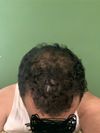
The hair transplant has a straight, unnatural-looking hairline that many find unappealing. The person is not using finasteride or minoxidil, which may affect future hair retention.
The conversation discusses hair loss treatments, specifically Setipiprant, finasteride, and bimatoprost. Setipiprant is suggested for maintenance, while bimatoprost is for regrowth, and combining them with dermarolling is recommended for better results.
A 31-year-old used topical minoxidil and finasteride with weekly microneedling for 3.5 weeks, seeing improvements in the crown and frontal areas. They are happy with the results and curious about the 3-month mark.
User shared a 10-month update after a 4000-graft hair transplant, using finasteride, minoxidil, hair density shampoos, hair oils, and vitamins. Replies suggest patience as crown growth can take up to 18 months.
The conversation is about a person experiencing significant hair loss in the donor area after a hair transplant, with others suggesting it might be shock loss. The person is taking oral minoxidil and dutasteride to help with the issue.
The user is using oral finasteride, topical minoxidil, and microneedling for hair loss. Progress has slowed, with the crown showing little change, but the hairline is improving with more thin baby hairs.
A user is experiencing temple hair recession and is seeking alternatives to finasteride. They are considering castor oil, coconut oil, and derma rolling, and have seen some improvement with Zenegen.
A male experiencing crown and frontal baldness, along with overall hair thinning, is considering starting topical minoxidil and oral finasteride. He seeks advice on dosages, potential side effects, application tips, and whether to consult a dermatologist before beginning treatment.
A user shared their experience with a hair and beard transplant in Istanbul, performed by Dr. Selahattin Tulunay, noting successful results after 12 months. The procedure cost 5000 €, and the user is open to questions about combining procedures or traveling for surgery.
A 30-year-old male is considering finasteride or a hair transplant for hairline recovery after 3 months of using Minoxidil foam without seeing regrowth. Another user advises against a hair transplant, suggesting it's too early.
The user experienced hair thinning and was diagnosed with alopecia incognito and male pattern baldness. They are using minoxidil, finasteride, and dutasteride scalp injections, reporting gradual improvement with no side effects.
The user experienced significant hair maintenance using 0.25mg daily finasteride and minoxidil foam, with minimal side effects. They recommend oral finasteride for better results, especially for the crown area.
A user underwent a hair transplant with 3500 grafts at WSC clinic in Istanbul and uses finasteride, biotin, multivitamins, minoxidil with finasteride, biotin shampoo, and coconut oil with peppermint oil for hair loss treatment. Another user commented that the result looks like a barren patch of hair.
A 23-year-old is concerned about potential crown thinning and has been using minoxidil for 3 years and finasteride for 10 months, with overall hair improvement. They are unsure if their crown appearance is due to natural hair whorls or early thinning.
ABS-201 shows promise for male hair regrowth by blocking the prolactin receptor, with higher expected efficacy than current treatments. The discussion also covers dosing differences between macaques and humans for hmi115, highlighting a significant dosage disparity.
Two twins who used Minoxidil, finasteride and dermarollers to treat their androgenic alopecia over a 10 month time period. The user is providing details on the process they use for dermarolling.
A user is experiencing hair loss in the center of their hairline and has been using topical finasteride for seven months with minimal progress. They are considering switching treatments due to concerns about losing ground and potential side effects of other options.
Dr. Muñoz's discovery suggests that targeting potassium channels in fibroblasts could reactivate hair growth, offering new treatment possibilities for alopecia. Potential strategies include using minoxidil, diazoxide, and other potassium channel openers, as well as bioelectric devices and direct growth factor applications.
A user shared their experience with a 7600 graft hair transplant using scalp, beard, and chest hair over three procedures, expressing satisfaction with the results despite mixed feedback. They also used finasteride to thicken hair and considered scalp micropigmentation for further improvement.
The post is about a user sharing progress pictures of their hair loss, comparing the appearance of their crown before and after using finasteride for 1 week to 4 months. The user also mentions using minoxidil and starting microneedling.