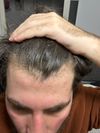
The user continues to experience hair loss despite using dutasteride 2.5mg, minoxidil 5mg, and ciclopirox shampoo, and plans to reassess after one year. Others report similar issues with dutasteride, with some switching to finasteride or adding RU58841.
Finasteride and Minoxidil may continue to improve hair regrowth after one year, but significant changes are unlikely, and most improvements occur in the first year. Some users report minor improvements after 18 months or more, but maintenance is the primary benefit after the initial year.
The user is considering continuing minoxidil and microneedling, possibly adding low-dose topical finasteride, and undergoing a large FUE hair transplant to improve hair appearance. They plan to use hair fibers for added density, aiming for a convincing cosmetic look rather than full density.
The user is experiencing continued hair loss despite using dutasteride and oral minoxidil, and is considering adding finasteride or adjusting their current treatment. They are seeking advice on whether to change their approach due to lack of improvement, especially at the temples and crown.
The user is experiencing continued hair loss despite using finasteride, dutasteride, and minoxidil, and is advised to improve diet, check for deficiencies, and consider other treatments like microneedling. Suggestions include sticking with the current regimen, considering a hair transplant, or accepting hair loss and shaving.
The user is experiencing continued hair loss despite using Dutasteride 1.5mg and previously Finasteride. They are considering combining Finasteride with Dutasteride and exploring other options like saw palmetto, but avoid Minoxidil due to excessive body hair growth.
The user is experiencing continued hair loss despite using minoxidil, finasteride, tretinoin, and microneedling. They are considering a hair transplant due to lack of response to current treatments.
The conversation discusses continuing finasteride and minoxidil after a hair transplant. Minoxidil should be applied around the new hairline, avoiding the transplant area until healed, then gradually extended to all areas.
The user has experienced significant hair regrowth in 4 months using oral minoxidil, oral finasteride, and 2% ketoconazole cream. They are advised to continue the treatment, keep hair short, and be patient for further progress.
The user is experiencing continuous hair shedding after starting finasteride and is considering switching to dutasteride or adding minoxidil. They are seeking advice on whether the shedding is normal or if it could be due to other factors like telogen effluvium.
A user experienced continuous hair shedding for 13 months after starting finasteride, suspecting it might cause chronic telogen effluvium, and considered switching to dutasteride or stopping medication. Other users suggested that finasteride doesn't cause hair loss, recommending dutasteride for more aggressive hair loss, while some advised against stopping medication.
A user is experiencing continued hair loss despite using 0.5mg dutasteride and 2.5mg minoxidil, and is seeking advice on why the treatments aren't working and how to address potential androgen receptor sensitivity. Replies suggest getting tested and considering scalp micropigmentation (SMP).
The user regrets not continuing hair loss treatment with finasteride earlier and plans to restart it along with minoxidil. Another user suggests trying dutasteride and oral minoxidil as a more effective treatment.
The user experienced continuous hair shedding for 16 months while on finasteride, with periods of improvement. They also used T Gel shampoo and noticed a reduction in hair loss symptoms after 18 months, including the return of their sex drive and normal hair texture.
Finasteride may affect liver function and cortisol levels, potentially linking it to non-alcoholic fatty liver disease (NAFLD). More research is needed to understand this connection fully.
The user has been experiencing continuous hair loss despite using finasteride, minoxidil, and dermastamping. They are seeking advice on what to do next.
The user is considering whether to continue with hair loss treatments or change their hairstyle, having previously experienced side effects from finasteride. They are open to trying other options and seeking advice.
The user is considering whether to continue their current hair loss treatment, which includes Minoxidil and possibly Finasteride, or switch to Dutasteride or increase Minoxidil. They have seen slight improvement on the left side but not on the right.
The conversation is about whether to continue using minoxidil before a hair transplant or stop it and let hair loss progress. Most suggest staying on minoxidil for better results, despite potential long-term use concerns.
The conversation discusses whether to continue using finasteride or switch to dutasteride after one year, with users generally advising to stick with finasteride for more time due to positive results and potential risks of switching. Minoxidil is also being used, and some suggest considering a hair transplant for further improvement.
The discussion is about whether to continue reducing finasteride dosage with already low DHT levels. Treatments mentioned include minoxidil, finasteride, and RU58841.
The user is considering whether to continue using finasteride despite already shaving their head frequently. Another user suggests continuing finasteride if they want to maintain existing hair, but stopping is also an option if they are comfortable going bald.
The conversation discusses whether to continue or stop oral minoxidil for hair maintenance, with OP using spironolactone, oral and topical minoxidil, finasteride, and ketoconazole shampoo. It is suggested that stopping oral minoxidil might not cause significant hair shedding if topical treatments continue, but oral minoxidil is generally more effective for most people.
The user is considering whether to continue their hair loss treatment, which includes finasteride, minoxidil spray, keto shampoo, and dermarolling. Suggestions include increasing minoxidil application, adding multivitamins, improving sleep, and possibly switching to dutasteride, while the consensus is to keep going with the treatment.
Finasteride and dutasteride must be taken continuously to prevent hair loss, and minoxidil should also be used long-term. Patience is needed as results from these treatments can take months to over a year to appear.
Minoxidil gains are not permanent without continued use, even with DHT suppression. Combining treatments like Dutasteride, Finasteride, and RU58841 may help maintain hair, but stopping Minoxidil typically results in hair loss.
Adderall and Vyvanse may contribute to hair loss by stressing the dopamine system and increasing cortisol levels. Users discuss potential treatments like Minoxidil, finasteride, and RU58841 for managing hair loss.
Clascoterone (Breezula) showed positive results for treating hair loss without affecting cortisol levels. Opinions vary, with some users optimistic about its potential and others critical of its effectiveness compared to existing treatments like finasteride.
Finasteride prescriptions in France now require an annual certificate acknowledging psychiatric and sexual risks, as the European Medicines Agency recognizes these risks. The conversation discusses the potential mental health effects of Finasteride, with some users reporting side effects and others questioning the statistical significance of these findings.