Search
for
Sort by
Community Join
570-600 / 1000+ resultscommunity Any experiences with ds laboratory revita shampoo, or nanoxidil?
The conversation is about exploring alternatives for hair loss treatment, specifically ds laboratory revita shampoo and nanoxidil, with the user currently using microneedling. The user is considering these options due to fewer side effects compared to other treatments.
community Using WinLevi (Clascoterone) for Seborrheic Dermatitis and Acne
Winlevi (clascoterone) is discussed as a treatment for hormonal acne and seborrheic dermatitis due to its ability to block DHT and regulate sebum production. The post suggests that Winlevi could offer a novel approach for managing seborrheic dermatitis.
community Ketoconazol Shampoo on Curly Hair
Ketoconazole shampoo can be very drying, especially for curly hair, and may not be suitable for those who need to maintain moisture. Some users suggest using oils or masks to mitigate dryness, while others recommend avoiding it unless necessary for conditions like dandruff.
community A theory about "embracing" the bald look
Baldness and modern fashion trends, with a focus on shaving heads and using treatments like minoxidil to manage hair loss and enhance appearance.
community TH07 by Triple Hair entering phase III trial
A new topical treatment, TH07, combining finasteride, latanoprost, and minoxidil, is entering phase III trials with promising early results. Some users express skepticism, noting the treatment uses existing products.
community Shiseido/Replicel RCH-01 trial results were finally shared online
The Shiseido/Replicel RCH-01 trial results were disappointing and ineffective. Users expressed skepticism and frustration, suggesting alternatives like Tsuji or simply accepting baldness.
community 2 month results. Topical spray of 0.3% finasteride, 7% minoxidil, 2.2% ketoconazole, 0.2% Biotin. Top pic is the end of August, bottom pic is today
The user shared two-month results using a topical spray with 0.3% finasteride, 7% minoxidil, 2.2% ketoconazole, and 0.2% biotin, showing improvement in hair loss. The user also mentioned using hair fibers previously and dermastamping inconsistently.
community Topical Metformin for Hair Transplant donor area skin/hair regeneration?
Topical Metformin shows potential for regenerating hair follicles and minimizing scarring in hair transplant donor areas, similar to Verteporfin but without its side effects. The discussion suggests considering Metformin for post-hair transplant care, though more human trials are needed.
community can someone help me identify these pls
The user is experiencing diffuse thinning and inflammation despite using 2.5mg dutasteride daily, ciclopirox, and ketoconazole shampoos. They are considering treatments like hydroxychloroquine and JAK inhibitors due to suspected scarring alopecia and have faced challenges in obtaining a scalp biopsy.
community What's the deal with verteporfin?
The conversation discusses verteporfin as a potential hair loss treatment and questions why more precise methods aren't used to test its effectiveness in regrowing hair. Some users believe verteporfin is promising and should receive more attention, while others are skeptical about the testing methods.
community Why everyone should be using topical Dutasteride

community After many years of topical fin+min use im considering topical dut, worth it?
The user is considering adding liposomal dutasteride to their hair loss treatment, which currently includes topical finasteride and minoxidil. They are exploring different concentrations and application frequencies to enhance hair retention and are also planning to continue using Rogaine.
community The DEFINITIVE cure for hairloss
The conversation humorously suggests using immunosuppressants like ciclosporine and oral minoxidil for hair regrowth, with a satirical plan involving hair transplants from family members. It highlights the side effects and impracticality of such treatments, emphasizing the post's satirical nature.
community Adding the final piece to my fin/min/derma stamp routine
The user has been using finasteride, minoxidil, and a derma stamp for 3 months with significant improvement. They are now adding ketoconazole to their routine.
community Eirion Therapeutics Announces Potential Breakthrough Treatment for Hair Loss Based on First-in-Man Clinical Trial Results
ET-02, a new hair loss treatment, shows promising results with a 6-fold increase in hair count, potentially outperforming minoxidil by activating stem cells in hair follicles. Further trials are ongoing to confirm its efficacy and safety, with potential market release in the future.
community Topical finasteride in liposomal formulation
Topical finasteride in a liposomal formulation reduces systemic absorption compared to ethanol solutions. The user is seeking sources for such products, noting that popular options like morr-f are not liposomal.
community Is the change in scalp texture (more creases, less shiny) a positive sign of hair regrowth and scalp recovery, or not significant?
The user has been using a hair regrowth regimen for 9-10 months, including topical finasteride and minoxidil, various oils, and supplements like multivitamins and omega-3. They observed fine hairs returning and a change in scalp texture after adding cinnamon oil, questioning if this indicates positive hair regrowth.
community Topical caffeine is a common ingredient in formulas to prevent hair loss and to induce hair regrowth. (What’s your take on this?)
The conversation discusses whether topical caffeine is effective for hair loss, with some users questioning its role due to its vasoconstrictive and vasodilative properties, while another suggests that temporary vasoconstriction might be beneficial by promoting angiogenesis. Specific treatments mentioned include caffeine shampoo, which one user believes is ineffective.
community Liquid Chromatography–Mass Spectrometry (LC-MS) VS Enzyme-Linked Immunosorbent Assay (ELISA)
Finasteride and Nizoral shampoo with Ketoconazole are used for hair loss treatment. Liquid Chromatography–Mass Spectrometry (LC-MS) is recommended over Enzyme-Linked Immunosorbent Assay (ELISA) for more accurate DHT testing.
community Guys… Pelage might just be the one. They might actually find the cure. I work in tech - let me explain.
Pelage, backed by Google Ventures, is seen as a promising company potentially finding a cure for hair loss using stem cell activation. There is skepticism and optimism among users, with some awaiting results from ongoing trials.
community Is tazarotene potentially better than tretinoin in combination with topical minoxidil?
Tazarotene may be more effective than tretinoin when combined with topical minoxidil for hair loss due to its selective binding to RAR-beta and gamma, though it can cause irritation. Tazarotene's potency can lead to indirect inflammatory reactions despite potentially causing less irritation than tretinoin.
community Dutasteride Mesotherapy seems like the best of all worlds.. Why isn't it talked about more?
Dutasteride mesotherapy is discussed as a potentially effective hair loss treatment with no sexual side effects, requiring less frequent application than daily pills. However, it is not widely popular due to limited availability, high cost, and skepticism about its effectiveness.
community Protac degradation of the androgen receptor in mice shows good efficacy and no systemic drug could be found
The efficacy of degrading the androgen receptor through dermal application in DP cells, a delivery system for topical drugs that involves dissolving microneedles, and rosemary oil as an alternative anti-androgen.
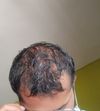
community 4 months of topical min/fin plus micro needling
The user has been using a topical solution of minoxidil 5% and finasteride 0.025% daily, along with dermastamping every two weeks and ketoconazole shampoo twice a week for four months. The treatment is for hair loss.
community Choose your topical antiandrogen and tell me why
The conversation is about choosing a topical antiandrogen for hair loss, with options including RU58841, CB0301, Pyrolutamide, Alfatradiol, and Fluridil. Users discuss their preferences and reasons for selecting specific treatments.
community Topical Finasteride with rogain foam as solvent
The conversation discusses using Rogain foam as a solvent for topical finasteride due to an allergy to propylene glycol. The foam's ingredients, including alcohol SD 40B, are considered suitable for dissolving finasteride for easier application without skin irritation.
community Sea salt spray and powder for thickness in New Zealand?
The conversation is about finding sea salt sprays, volumizing powders, and waxes for hair styling and thickness, specifically available in or shippable to New Zealand. The user seeks affordable options for these hair products.
community Seeking Advice After Frustrating Dermatologist Visits: Min/Fin vs Supplements
The user is frustrated with dermatologists who dismiss Minoxidil and finasteride as unsafe, instead recommending mustard oil, PRP, zinc supplements, and hair products. The user feels these suggestions are ineffective and is considering starting Minoxidil and finasteride despite the dermatologists' advice.
community When results are great, but you're looking for excellent
The user improved hair density from 45% to 70% using dutasteride and minoxidil, but still uses hair fibers for a fuller look. They added a topical mix of minoxidil, finasteride, and bimatoprost, but doubt further significant improvement.