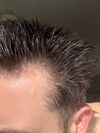
Peppermint oil and olive oil are being used to potentially improve hair growth, with some initial observations of stronger, thicker hair. Another user is using a mix of peppermint, coconut, castor, and rosemary oils, noting healthier and softer hair but no significant regrowth yet.
Creatine may accelerate hair loss in those genetically predisposed, with some users reporting increased shedding while taking it and improvement after stopping. Some users use treatments like finasteride and minoxidil, while opinions on creatine's impact vary.
The conversation discusses a hair loss treatment formulation containing cyclosporin, minoxidil, and tacrolimus, and mentions ongoing research on hair color reversal. The treatment showed high efficacy in restoring hair color in trials with 40 to 50 people.
MCL-1 protein may help maintain hair follicles in the growth phase and prevent miniaturization. There is interest in experimental treatments like exosomes, peptides, or stem cell serums to upregulate MCL-1 for hair loss, especially for those not using minoxidil or finasteride.
The conversation discusses the emotional struggle of hair shedding while using finasteride and minoxidil, with users sharing encouragement and tips like using hairfibers, cutting hair shorter, and trusting the process for eventual regrowth. Many users emphasize that shedding is temporary and a sign that the treatment is working, suggesting patience and temporary solutions like hats and hairfibers.
The conversation discusses using natural alternatives like saw palmetto, pumpkin seed oil, pygeum, and nettle extract for hair loss, alongside treatments like nizoral, dermastamp, red light, and rosemary oil. Opinions vary, with some users skeptical about the effectiveness compared to finasteride, and concerns about potential side effects.
Hair loss is linked to scalp fibrosis and tension, which result from chronic mechanical stress and androgenic signaling. Treatments include blocking androgens with finasteride, promoting hair growth with topical minoxidil, and improving scalp mobility through exercises.
A female user with chronic anemia and vitamin deficiencies is experiencing finer, straighter hair and seeks recommendations for scalp products to improve circulation and prevent potential hair thinning. She is considering growth oils but is unsure of their effectiveness.
The conversation discusses struggles with diffuse thinning and hair loss treatments, including the use of dutasteride, minoxidil, and finasteride, with limited success. The original poster regrets having a hair transplant at 21 due to weak donor hair and ongoing thinning.
The user experienced significant hair loss on the scalp, eyebrows, eyelashes, and pubic area, along with itchy, flaky skin and red patches. They have a history of eczema and dermatitis and suspect that stopping shampoo use and taking Ritalin may have contributed to the issue.
A user shared progress pictures showing thicker hair after 8 months of using Fin/Min spray from HIMS. The conversation includes skepticism and humor from other users.
The user is experiencing a significant hair shed at 10 months but sees improvement compared to 4 months ago. They are using Hims products, Feel Confident shampoo, Nizoral, a light therapy cap, and The Ordinary hair serum.
N-Acetyl-Cysteine (NAC) is being explored for treating hair loss, but users report mixed results. Some also mention using Quercetin and Resveratrol without significant hair improvement.
The conversation discusses using NAC and quercetin as supplements for hair loss, with some users also mentioning finasteride. NAC is highlighted for its potential benefits, but concerns about its safety and absorption are also raised.
People are discussing the use of the peptide GHK-Cu for hair and skin, with mixed results. Some users have tried it alongside other treatments like adenosine and melatonin, but have not seen significant improvements, and one user stopped due to cost.
The conversation discusses the effectiveness of finasteride and microneedling for treating hair loss. The linked article is seen as an advertisement for these treatments.
The conversation discusses updates on hair loss treatments, specifically GT20029, PP405, and a rumored injectable peptide from UT. GT20029 is seen as a promising treatment expected within 5-7 years.
The user experienced significant hair regrowth with topical finasteride, minoxidil, ketoconazole, and dermarolling, but later faced severe hair shedding after stopping dermarolling and reducing ketoconazole use. Suggestions included switching to oral treatments, resuming dermarolling, and considering lifestyle changes.
Treating hair loss with finasteride, dutasteride and minoxidil, as well as micro-needling, potentially using research chemicals such as Pyril and Senzu Beans.
Creatine is believed by some users to cause hair shedding, though a study found no increase in DHT or testosterone levels. Many users shared personal experiences of hair loss after using creatine, while others noted no change, suggesting individual variability.
KX-826 Phase II results show that a 0.5% concentration performs better than 1% for treating male pattern baldness. Concerns about receptor upregulation from long-term DHT antagonism were mentioned.
Hair loss impacts mental health, with treatments like Minoxidil, finasteride, and stem cell transplants discussed. There is hope for future breakthroughs, but current treatments are limited, and awareness is lacking.
A healthy scalp barrier is crucial for hair growth, and ceramides may play a key role in maintaining it. The conversation suggests that focusing on scalp health, alongside treatments like Minoxidil, Finasteride, and RU58841, could improve hair follicle health.
Chlorine dioxide was discussed as a potential hair growth treatment, with a method involving spraying it on the scalp and covering it with a cap. Concerns were raised about its safety, comparing it to bleach.