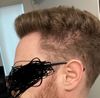
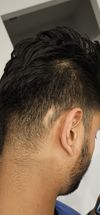
The post and conversation are about a user's 3-month progress using Minoxidil, Finasteride, Nizoral shampoo, and derma-rolling for hair loss. The user reports noticeable improvement in their hairline.
Verteporfin reduces scar tissue in hair transplants but doesn't significantly regrow hair follicles. More testing is needed to determine its effectiveness.
The user is experiencing hair loss and has been using treatments like minoxidil, finasteride, and ciclopirox olamine. Despite these treatments, they are concerned about increased shedding, dandruff, and possible additional hair loss conditions.
A user with diffuse thinning noticed stubble-like hairs on their scalp after using 2% ketoconazole shampoo, dermarolling, castor oil, Vitamin D3, biotin, and iron supplements. They are unsure if this indicates regrowth or miniaturized hairs.
The conversation discusses concerns about using cordyceps while on dutasteride due to potential DHT increase, with OP experiencing hair loss after using creatine. OP is advised to stop creatine and give dutasteride more time to evaluate its effectiveness.
PP405 is ineffective for miniaturized, fibrosed hair follicles in androgenetic alopecia. AMP303 may activate hair follicle stem cells, but minoxidil and finasteride are still the main treatments.
The user experienced eyebrow hair loss after COVID-19 and has not seen regrowth despite using Latisse. They are seeking new treatment options but are cautious about spending money on ineffective solutions.
Minoxidil can cause scalp itchiness, often due to propylene glycol, and users suggest alternatives like foam formulations without PG, using moisturizing oils, or reducing application frequency. Some recommend ketoconazole or zinc pyrithione shampoos to help with inflammation and itchiness.
Hair loss treatments discussed include cosmeRNA, minoxidil, finasteride, RU58841, and pyrilutamide. Users debate effectiveness, side effects, and upcoming treatments, with some expressing skepticism and others optimism.
Creatine might speed up hair loss in those prone to male pattern baldness, possibly due to increased DHT levels. Some users experience no issues when using creatine with treatments like finasteride, minoxidil, or dutasteride.
User reports 12-week progress with HIMS spray, Minoxidil, micro-needling, and biotin. Notable baby hairs on crown and temples, hoping for further improvement.
The user observed that stopping nicotine and caffeine improved their scalp health while using oral finasteride. However, relapsing with caffeine and nicotine caused scalp tightness and inflammation.
The conversation is about whether to use gloves when applying 5% RU58841 to avoid systemic absorption and if washing hands with water is sufficient. Users question the concern, noting it is applied to the scalp.
A user underwent a hair transplant with 3500 grafts after trying treatments like finasteride and minoxidil, preferring a local clinic in Toronto over traveling to Turkey. The user plans to continue using finasteride to maintain existing hair, as the transplanted hair is DHT resistant.
Exploring different treatments for hair loss, such as cosmeRNA and HMI-115 which are small interference messenger RNA that inhibits the DHT receptor and an antibody that binds to the prolactin (PRL) receptor respectively; and researching mechanism and environment of hyperresponders.
User added RU58841 to their hair loss treatment and experienced quick results. Others also reported positive effects, but one user experienced chest pains as a side effect.
A user shared progress pictures 1.5 months after a hair transplant of 3500 grafts, using oral finasteride, topical finasteride, minoxidil, and vitamins. They are concerned about potential shock loss and the thinning appearance.
PP405 shows initial promise for treating androgenetic alopecia, with safety confirmed in early trials, but skepticism remains due to limited data. Further trials are needed to determine its true efficacy and potential market impact.
The conversation humorously discusses using anal administration of Dutasteride as a novel method for treating hair loss, suggesting it could target DHT production more effectively. It includes satirical comments about the method's potential effects and absurd outcomes.
A 34-year-old male is experiencing hair loss on the sides of his head, with inflammation and itchiness, while the top remains thick. He is using topical dutasteride and keto shampoo to address the issue.
Training scalp muscles to absorb more DHT is suggested as a hair loss solution, but users debate its effectiveness compared to medications like dutasteride and finasteride. Concerns about side effects of DHT blockers, such as reduced libido, are discussed, with some advocating for natural remedies like scalp massages and healthy living.
Adipose-derived stem cells with ATP improved hair regrowth in male and female mice with androgenetic alopecia. The most effective treatments were low dose stem cells with ATP for males and medium dose stem cells with non-liposomal ATP for females.
The conversation is about when GT20029, a hair loss treatment, might be available on the grey market, with users discussing the challenges of compounding it and speculating it might be available after phase 2 results, similar to pyri. Specific treatments mentioned are pyri, RU58841, and GT20029.