Search
for
Sort by
Community Join
150-180 / 1000+ resultscommunity Shiseido RCH-01
Shiseido RCH-01 and Replicel's upcoming trial data release. Users discuss expected release timelines and clarify quarter dates.
community Hairloss and dandruff.. potential sebderm inflammation?
A 21-year-old is experiencing aggressive hair loss and dandruff, possibly due to seborrheic dermatitis, and is using pumpkin seed oil, scalp massages, and anti-dandruff shampoo as treatments. They are hesitant to use prescribed Finasteride and Minoxidil and have noticed some improvement after stopping Serenoa capsules.
community Jason Sorgi - Boston Hair Restoration- Crown MicroFUE (full detailed breakdown).
A user shared their positive experience with a crown MicroFUE hair transplant at Boston Hair Restoration, highlighting the smooth procedure, minimal pain, and significant growth over 12 months. They used oral minoxidil, finasteride (transitioning to dutasteride), PRP sessions, and a LaserCap, achieving excellent results and full confidence.
community Feeling A LOT of stubble on my scalp (I'm a diffuse thinner). What does this mean?
A user with diffuse thinning noticed stubble-like hairs on their scalp after using 2% ketoconazole shampoo, dermarolling, castor oil, Vitamin D3, biotin, and iron supplements. They are unsure if this indicates regrowth or miniaturized hairs.
community Anyone heard about this new revolutionary news about hair loss
A new treatment, clascoterone 5% solution, shows significant improvement in male hair loss but is considered expensive and only slightly effective by some. It has no side effects and may influence market competition.
community Clascoterone and Dutasteride for Stabilization
The user is considering increasing their dutasteride dose and trying clascoterone or RU58841 for hair loss stabilization. They have used finasteride, minoxidil, and dutasteride, with some success but recent setbacks.
community RU and cetosomal minoxidil topical
Mixing RU58841 with cetosomal minoxidil is discussed due to scalp irritation from ethanol PG vehicles. A mixture of the two turned bright pink when left to dry.

community Sudden Triangular Thinning Patch
A 31-year-old has been using finasteride, dutasteride, and oral minoxidil for hair loss. They noticed a sudden triangular thinning patch on their scalp and are seeking advice, questioning if it could be medication-related.
community Topical androgens for alopecia to treat sebum overproduction on the face
The conversation discusses using scalp antiandrogens like RU58841, pyrilutamide, or fluridil on the face to reduce sebum production, noting that clascoterone (winlevi) is an approved facial antiandrogen with underwhelming reviews.
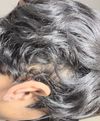
community Is this normal? (losing hair on side of head)
The user is concerned about potential alopecia areata. They are seeking advice on whether this condition is normal.
community Shiseido filed for this patent in May 2019. Let's get some big brain discussion on this.
The conversation discusses a patent filed by Shiseido for cloning Dermal Papilla (DP) cells to treat hair loss. The method involves using viral vectors to maintain the cells' growth-inducing properties, differing from Replicel's approach with Dermal Sheath Cup (DSC) cells.
community Mallia Aesthetics achieves key regulatory steps for novel sCD83-derived ingredient for hair growth
Mallia Aesthetics has developed MAL-838, a hormone-free product derived from sCD83, which stimulates hair growth without disrupting the skin microbiome. sCD83 promotes hair growth by activating hair follicles and preventing cell death, offering a localized treatment without systemic side effects.
community Here’s the rundown on scalp serums from a former cosmetic chemist
Most scalp serums are ineffective for hair loss, with Nécessaire’s “The Scalp Serum” being the only one showing noticeable results, though it's not worth the cost. For androgenetic alopecia, clinical treatments like minoxidil and finasteride are necessary, while caffeine and capixyl may offer some benefits.
community I have heard that Amplifica - Scube3 initiate a human study for AGA, but I cannot find any information about it from clinictrial.gov. Amplifica did not state it is a phase 1 clinic trial or not, it says it is "The initiation of our first-in-human clinical study"
The conversation is about a user seeking information on a clinical trial by Amplifica - Scube3 for Androgenetic Alopecia (AGA). The user is unsure if it's a formal phase 1 study.
community Any news on potential hair loss treatments?
The conversation is about seeking updates on new hair loss treatments, specifically mentioning scube3 and GT20029, with one person mentioning HMI_115 as showing promising results.
community Tattooed your scalp as a response to going bald? Show me!
A user is interested in seeing scalp tattoos as a response to hair loss, specifically looking for creative designs rather than scalp micropigmentation. They are considering this approach for their own Norwood 5 hair loss situation.
community Do you think clascoterone is going to be cheaper soon?
Clascoterone is currently expensive and not yet available for hair loss treatment. The conversation discusses its potential future affordability.
community [21M] seb derm + probably mbp.
Minoxidil and finasteride are being considered for hair loss due to seborrheic dermatitis and male pattern baldness. The user is also using ketoconazole and zinc pyrithione shampoo.
community Adding the final piece to my fin/min/derma stamp routine
The user has been using finasteride, minoxidil, and a derma stamp for 3 months with significant improvement. They are now adding ketoconazole to their routine.
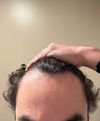
community M20 with Hair Loss - Clascoterone an Option?
A 20-year-old is experiencing hair thinning and is considering Clascoterone and Minoxidil as treatments, avoiding finasteride due to concerns about fertility and hormones. A suggestion was made to use Clascoterone for local DHT targeting and combine it with Minoxidil for maintenance and regrowth while avoiding systemic side effects.
community WHITE STUFF COMING OUT OF SCALP
The conversation discusses hair regrowth after a health condition, with the appearance of white substance on the scalp. Suggestions include it being sebum or White Piedra, with a recommendation to try Nizoral.
community My scalp punch biopsy results🤔?
Female using Rogaine foam for hair loss had scalp punch biopsy, diagnosed with Androgenetic Alopecia (AGA). Doctor recommended starting Spironolactone 50mg.
community I bought a Dermastamp instead of a roller and it's weird to hear it crunch into my scalp
A user describes using a Dermastamp for microneedling their scalp, noting a crunching sound when pressing it firmly. Another user suggests the crunching might be from breaking up scalp calcification.
community Has anyone tried tretinoin with seb derm and had any flare-ups as a result?
Tretinoin can irritate seborrheic dermatitis, but using it with a moisturizer on calm skin may help. Parallel Health's skin microbiome testing and phage therapy are suggested for persistent issues.
community Seb derm is eating my hair?!?!
A 22-year-old male is experiencing hair loss due to seborrheic dermatitis, not male pattern baldness, and is seeking advice. Suggestions include using Nizoral, sulfate-free and ketoconazole shampoos, cutting hair short, using cold water, avoiding picking scabs, and trying selenium sulfide shampoo or finasteride.
community Application tip for topicals. 1ml TB Syringe & Opthalmic Cannula.
The post and conversation discuss different methods of applying hair loss treatments directly to the scalp. The original poster suggests using a 1ml TB Syringe & Ophthalmic Cannula for precise application, while others share their own methods, including sprays, droppers, and simple syringes.
community When are we getting news about Scube3?
The conversation is about updates on Scube3 related to hair loss. Specific treatments mentioned are Minoxidil, Finasteride, and RU58841.
community Thinking about signing up for the setipiprant clinical trials
The conversation discusses hair loss treatments, with the original poster considering joining a clinical trial for setipiprant after experiencing side effects from finasteride and disinterest in minoxidil. Some users express skepticism about setipiprant's effectiveness, while others encourage participation in the trial for potential benefits.
community Is it possible/legal to buy clascoterone in Spain?
The user has tried various hair loss treatments, including topilutamide, alfatradiol, pyrilutamide, and topical spironolactone, but experienced headaches. They are inquiring about the availability and legality of clascoterone in Spain.