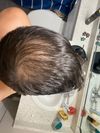
A user shared progress pictures showing significant hair improvement using finasteride and minoxidil, expressing satisfaction with the results. Another user accused them of having a hair transplant.
User shared progress pictures of hair regrowth on the crown/vertex after a transplant and using finasteride, Minoxidil foam, and a dermapen. They hope to fully regrow or increase density in the crown area.
The user is happy with their hair thickening after 4.5 months on Finasteride but wants faster crown growth. Replies suggest the results are above average for this timeframe and recommend continuing Finasteride for a year before considering adding Minoxidil.
A 39-year-old used dutasteride 0.5 mg and minoxidil 5% daily for three months to improve hair loss, with noticeable progress and no side effects. Dermarolling was initially used but stopped due to laziness.
The user shared progress pictures of their hair growth after using finasteride, oral minoxidil, and undergoing a hair transplant with 4,200 grafts in Istanbul. They reported thicker hair and noticeable crown regrowth, with no side effects from the treatments.
A user shared their hair regrowth progress using 1 mg finasteride, 10% minoxidil with 0.1% finasteride solution, and derma rolling, noting significant improvement in crown density over five months. They experienced initial shedding but reported no side effects from finasteride and plan to continue treatment for 10-11 months before deciding on future steps.
Estrogen injections significantly improved hair growth, particularly on the crown, after stopping finasteride. Monotherapy with estrogen led to hairline improvement, but also caused sterility and potential feminization effects.
A user shared their 1-year crown transformation after a second hair transplant with 4000 grafts, using finasteride, minoxidil, and vitamins. Another user commented that while the crown has filled in, they expected more coverage from 4000 grafts and suggested a possible shedding phase.
The conversation discusses hair loss treatments, including microneedling, Nizoral, LLLT, Minoxidil, and Finasteride. The user experienced initial shedding reduction with Nizoral and LLLT, but shedding resumed with Minoxidil and Finasteride, which is considered a normal part of the treatment process.
A 42-year-old man achieved significant hair regrowth in seven months using oral minoxidil, oral dutasteride, topical minoxidil, microneedling, and supplements. He experienced minimal side effects and noted dramatic improvements in hair thickness and health.
The user shared their successful hair regrowth using oral finasteride, minoxidil foam, a custom topical solution, ketoconazole shampoo, and microneedling, resulting in significant improvement at the crown. However, they experienced hairline recession after switching to a topical solution with finasteride and minoxidil, raising concerns about its effectiveness.
The user shared progress pictures showing crown recovery after 8 months of using 1mg finasteride, 2mg minoxidil, and 2% ketoconazole shampoo. They noted significant hair texture changes and are hopeful for temple recovery.
The user experienced significant hair regrowth on the crown using 1mg finasteride daily, 5% minoxidil at night, oral minoxidil 1mg, and daily vitamin D. They noted side effects like redness and dandruff from minoxidil, and others discussed the effectiveness and side effects of these treatments.
A user with kidney disease and high blood pressure experienced hair thinning, especially around the vertex. They are currently using finasteride and oral minoxidil but are considering whether to resume blood pressure medication despite managing symptoms with diet and exercise.
The post discusses a user's one-year experience using finasteride 1mg daily for hair loss, including initial irregular use, continued shedding of weak hair, acne in the thinning area treated with fusidic acid, and weekly use of Ketoconazole. A reply suggests adding Minoxidil for potentially full hair recovery.
The user experienced significant regrowth in the crown and hairline using 1.25mg finasteride daily for 13 months but noticed thinner scalp density. Suggestions included adding topical minoxidil or 0.5mg dutasteride, as scalp regrowth may lag behind other areas.
The user has been using minoxidil and finasteride for 7.5 months to address hair thinning, particularly at the crown and temples, and is considering additional treatments like tretinoin and dermastamping despite having chronic scalp folliculitis. They are experiencing progress but are concerned about side effects and the effectiveness of treatments on temple regrowth.
The user experienced significant hair maintenance using 0.25mg daily finasteride and minoxidil foam, with minimal side effects. They recommend oral finasteride for better results, especially for the crown area.
A user shared their success with 1mg daily finasteride, regrowing their crown hair significantly over 15 months without side effects. The user attributes their results to being a hyper responder and did not use minoxidil or other treatments.
A user recovered their crown using finasteride, dermarolling, and vitamins, and had a hair transplant for their hairline. They experienced no side effects from finasteride except increased libido and also take zinc, biotin, trace minerals, kelp, and vitamin D.
A 21-year-old shares crown regrowth results using a daily oral pill containing minoxidil, finasteride, and biotin, along with dermastamping, scalp massages, and Nizoral shampoo. Suggestions include reducing minoxidil dosage for safety and considering cost-effective alternatives for long-term use.
A 28-year-old male is experiencing temple regrowth but crown thinning while using 5mg minoxidil and 0.5mg dutasteride. The shedding phase is seen as a positive sign of treatment effectiveness, with expectations of noticeable improvements around 6 to 12 months.
Improved sleep has significantly benefited hair health, with noticeable regrowth at the hairline and possibly the crown, alongside better skin and mood. Consistent sleep, alongside treatments like finasteride and minoxidil, is recommended for better results.
A 28-year-old male reports progress in hair regrowth using 5mg Minoxidil and 0.5mg Dutasteride, noting improvement in the crown area. Another user shares similar positive results since starting treatment in January.
A 30-year-old male is considering starting finasteride for thinning hair at the crown and is seeking advice on whether to add minoxidil. A user suggests using both treatments for better results.
A 52-year-old is switching from finasteride to dutasteride to address crown balding, despite concerns about potential side effects. They have used finasteride for nearly 30 years, had a minor hair transplant, and are considering further treatments if dutasteride doesn't improve their condition.
A 26-year-old is experiencing hair loss at the crown and is using 1mg dutasteride daily with topical 7% minoxidil and 0.25 dutasteride. Another user, also 26, shares a similar experience and has started using a serum but not finasteride yet.
A user shared progress pictures showing significant hair regrowth in the crown area after oiling their hair and scalp twice a week for two months. They used a mix of rosemary, jojoba, coconut, argan, castor, and olive oils.