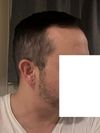
A male in his early 20s with CCCA (scarring alopecia) started treatment with Finasteride, Fluocinolone, and Doxycycline. Steroid injections were suggested but not yet done.
The user shared progress on hair regrowth using finasteride, minoxidil, dermastamp, Nizoral shampoo, and scalp massage, showing significant improvement in three months. The user reported no side effects and asked if early regrowth is normal.
PP405's effectiveness in increasing hair density is questioned due to a small sample size, despite investment from Google Ventures. Users express skepticism and suggest waiting for more conclusive results.
AHK-cu peptides are discussed for hair growth, with users comparing them to GHK-cu peptides and sharing sources to buy. AHK-cu is noted as more expensive, and users express interest in finding cheaper, reliable vendors.
PP405 is a potential hair loss treatment undergoing trials, with discussions on its effectiveness and comparison to existing treatments like finasteride and minoxidil. There is skepticism about its status as a cure, with hopes for future advancements in genetic treatments like CRISPR.
After suffering from hair loss and Seborrheic Dermatitis for three years with no improvement from various treatments, the individual found success with COQ10 and PQQ supplements, which led to new hair growth and a healthy scalp without flare-ups. They also plan to start additional supplements recommended by a dermatologist.
The user has seen significant hair regrowth using a routine of minoxidil, finasteride, microneedling, scalp massage, and Nizoral. They are considering adding red light therapy and PRP to their regimen.
PP405 is discussed as a potential hair growth stimulant, possibly more effective than minoxidil, but not a cure for hair loss. There is skepticism about its ability to regrow "deadzones," and concerns about its impact on those with hair transplants.
OP asks if face copper peptides from Sephora can be used on the scalp for hair benefits. User233 suggests AHK-CU is mainly for hair, but GHK-CU can also be used.
Hair regrowth using estradiol, spironolactone, minoxidil, and finasteride, showing significant improvement over four years. HRT is not advised for cis men solely for hair loss due to feminizing effects.
Copper peptides, specifically GHK-Cu, are being considered for hair regrowth, though skepticism exists due to questionable product sources. Users suggest finding reputable sources for potential benefits, while acknowledging traditional treatments like Minoxidil and Finasteride.
A user with PCOS experienced hair loss and found success using a triple dose of O.N.E Omega by Pure Encapsulations after discovering low Omega fatty acids. Biotin provided minimal improvement, but the Omega supplement significantly restored hair.
The user is considering a second hair transplant or scalp micropigmentation to address thinning in the crown area and hide scars from a previous transplant. They have been using finasteride and minoxidil for three years but are concerned about the appearance of their donor area and the effectiveness of scalp micropigmentation.
User experienced hair thickening with pyri but also side effects like reduced sex drive. Stopping pyri and returning to CB restored sex drive, suggesting pyri may go systemic or be incorrectly formulated.
The conversation discusses using topical Calcipotriol and Valproic Acid for hair loss, focusing on their mechanisms involving the VDR receptor and Wnt/beta-catenin pathway. Specific treatments mentioned are Minoxidil, Finasteride, and RU58841.
The user is happy with their hair thickening after 4.5 months on Finasteride but wants faster crown growth. Replies suggest the results are above average for this timeframe and recommend continuing Finasteride for a year before considering adding Minoxidil.
PP405 is considered a potential new treatment for hair loss, compared to finasteride and minoxidil. There is skepticism about its effectiveness in humans, with anticipation for more information from an upcoming conference.
A user underwent a hair transplant at Moart Clinic in Seoul, receiving 1100 grafts in the crown area after Dutasteride and oral Minoxidil failed to improve a stubborn bald spot. The procedure was successful, with minimal pain and good post-op recovery, costing $6900 USD before a tax refund.
Hair loss discussion includes alfatradiol (Pantostin/Ell Cranell) as a potential treatment. Users share opinions on its effectiveness in their regimen.
The user shared their successful hair regrowth journey using minoxidil 5% twice daily and weekly microneedling. Other users suggested adding finasteride to maintain gains long-term.
PP405 shows potential for hair growth by increasing terminal hair and converting vellus hairs, but results are modest and more waiting is needed. It complements existing treatments like minoxidil and finasteride, but won't replace them.
PP405 shows potential for hair growth, with 31% of advanced balding men experiencing over 20% increase in hair density in 8 weeks. However, skepticism persists due to selective data presentation and lack of long-term results, with comparisons to treatments like minoxidil and finasteride.
The user shared minimal results from using JXL-069 for hair loss, noting a slight lengthening of vellus hairs and plans to switch to a prodrug variant due to limited effectiveness. They also mentioned using finasteride and minoxidil, which have plateaued in results.
SCUBE3, a protein linked to hair growth in moles, was discovered over 25 years ago and is being developed by Amplifica for potential hair loss treatment. Concerns exist about SCUBE3's association with cancer, as it is a protein that promotes cell growth, which could potentially trigger cancer development if used for hair growth therapy.
The user shared their hair regrowth progress after a hair transplant and using Minoxidil (Regaine Foam) and Finasteride, hoping to regrow their crown. They started Minoxidil in September and Finasteride in November, and have noticed increased hair density.
Minoxidil 0.5% MMP® showed better results in parietal-vertex regions for less advanced female pattern hair loss compared to Minoxidil 5%. MMP® with Minoxidil can improve the quality of life for these patients.
The user "cooler1082" shared their progress pictures for hair loss after using topical finasteride, minoxidil, latanoprost, and biotin. Other users commented on the positive results and asked about the specific dosages used. One user mentioned that latanoprost is an eye medication that has shown some potential for treating hair loss.
The conversation is about comparing the effectiveness of fluridil and clascoterone in preventing hair loss and inquiring about their use as standalone treatments. There is a question about the concentration of the fluridil brand for efficacy.