Search
for
Sort by
Community Join
510-540 / 1000+ resultscommunity PELAGE PHASE 2 TRIALS FOR PP405 - Volunteers Needed
PP405 is a topical gel being tested for hair regrowth in adults with androgenetic alopecia. Volunteers aged 18-55 are needed for a 16-week trial in several US locations.
community Can nizoral cause hair to shed with different thicknesses/lengths or is that just miniaturization?
The user is experiencing hair shedding of different thicknesses/lengths and is using Nizoral, ciclopirox, and pyrithione zinc conditioner. They are concerned whether the shedding is due to these treatments, miniaturization, or their low-calorie diet.
community [PSA] - Do NOT swallow dutasteride capsule content.
Dutasteride capsules should not be bitten or opened due to their foul taste and potential caustic effects. Users shared experiences of accidentally biting capsules and the unpleasant taste, with some suggesting swallowing techniques to avoid this.
community Half year update on crown balding reversal
The conversation is about a user who started using finasteride to address crown balding, noticing reduced hair shedding and halted progression of male pattern baldness. The user also used a dermal stamp and expressed optimism about potential regrowth, despite a slight decrease in libido.
community [24M] Legendary Stress Thinning Recovery (7 months on 5% topical 2x per day)
community 4 months oral dut & topical min (m24)
community Both pictures are 18 months apart
The user started dutasteride and oral minoxidil but saw no improvement in crown hair regrowth. Users suggest increasing the minoxidil dose and seeking a second opinion.
community When Scube3 even start trial 1?
Scube3 trials have not started yet. Treatments discussed include Minoxidil, finasteride, and RU58841.
community 24M, 7 Months on Fin+Min, Seeking Advice for Frontal Density
A 24-year-old male has been using oral finasteride and minoxidil for 7 months with noticeable results but seeks advice for improving frontal hair density. A suggestion was made to add microneedling to enhance absorption and stimulate growth.
community Starting My Topical Finasteride Journey (Diffuse Patterned Alopecia) (Pictures in Comments)
A user is starting a topical finasteride treatment for diffuse patterned alopecia, having previously used minoxidil without success. They are cautious about side effects and have chosen topical over oral finasteride, while also using Nizoral and biotin in their routine.
community Severe diffuse thinning since 13 years old
A 15-year-old experiencing severe diffuse thinning plans to use minoxidil, dermarolling, and possibly ketoconazole, with hopes to later incorporate finasteride. Concerns about starting finasteride too young and the need for a dermatologist consultation are discussed.
community 6 years oral minoxidil 5mg, dut 0.5 everyday, dermarolling 2.5 weeks 1.5mm
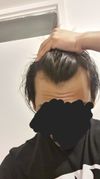
community 22M Considering Finasteride: Receding Hairline Concerns and Stability
A 22-year-old is considering starting finasteride for hair loss, questioning if their hairline is stable or if treatment is needed. They shared images of their hairline, which has been the same since their teenage years.
community Promising stem cell treatment
community Finastride hair texture change is wild
Finasteride changed the user's hair texture from wavy to curly, reverting after stopping. Minoxidil was more effective for temple hair regrowth than finasteride.
community Considering Hair Transplant for Natural Widow’s Peak and Large Forehead
The conversation discusses whether someone with a naturally large forehead and widow's peak can get a hair transplant and start finasteride early. It also mentions a surgery to lower the hairline as an alternative.
community Transitioning from topical Fin to oral Fin: anything I should know?
community is this regrowth or maintenance or loss? 4 months difference
The user experienced noticeable hair regrowth after using finasteride for 2 years, oral minoxidil for 1 year, and recently starting dermarolling. The right temple shows significant improvement, while the left remains similar.
community ASC-J9: Poor man’s GT-20029 that might work for regrowth. Anyone try this stuff?
The potential hair regrowth benefits of ASC-J9, a synthetic modified version of curcumin that is said to be more effective than Minoxidil and Finasteride. Reports from users suggest good thickening and temple regrowth with topical use at 0.025% concentration.
community Diffuse thinner- 2 months progress. Oral Fin,Min, topical RU
community Are there any vellus hairs in a longtime NW7 scalp under a microscope or is it completely smooth?
The conversation discusses whether a longtime NW7 scalp has vellus hairs under a microscope or is completely smooth. Treatments mentioned include Minoxidil, finasteride, and RU58841.
community Experiences starting with finasteride vs dutasteride in your early 20s? (Gym performance & long-term results)
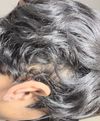
community Is this normal? (losing hair on side of head)
The user is concerned about potential alopecia areata. They are seeking advice on whether this condition is normal.
community Hey guys I’m in desperate need for opinions from long term finasteride users
Whether taking finasteride and dutasteride can cause penile shrinkage, with long-term users providing their personal experiences.
community Predicted Breezula format? (liquid/cream/foam etc)
The conversation is about the potential format of Breezula, a hair loss treatment, and concerns that it might be greasy or sticky. Specific treatments mentioned are Minoxidil, finasteride, and RU58841.
community Post TCA pic and two month in, just posting baseline and an update.
The conversation is about a user's hair loss treatment regimen, which includes Dutasteride, oral Minoxidil, topical Dutasteride, Minoxidil sulfate, antioxidants, and various supplements. The user is also using a derma stamp and has paused Tretinoin due to a TCA peel recovery.
community just found out dutasteride powder isn’t being absorbed properly
community Started balding at 20, tried everything, gave up. Then got a custom hair piece & it helped me embrace being bald! AMA
A user who started balding at 20 trying different treatments to combat hair loss before eventually embracing being bald and getting a custom hair piece as an option. Various people commented on his looks with and without the wig, generally agreeing that he looked better bald.
community Dutasteride might be better for your hairline. Some people have more type 1 5AR activity in their scalp than others.
Dutasteride might be better for hairline due to varying levels of 5AR activity in scalps. Genetic tests can determine if finasteride is enough or if dutasteride is needed.