Search
for
Sort by
Community Join
990-1000 / 1000+ resultscommunity 4 Months Results on Big 3.5
A 20-year-old male shared his 4-month hair regrowth results using finasteride, minoxidil, nizoral, and dermarolling. Commenters noted improved hair density and the potential for further progress.
community 1 year of finasteride.but from past month i am noticing my hair density is decreasing. I think it’s seasonal shed or 😭
User experienced hair density decrease after 1 year of finasteride. Others shared similar experiences, suggesting it could be a temporary shed and discussed various treatments like dutasteride, minoxidil, dermaroller, and ketoconazole.
community My male pattern baldness journey from age 18 to 29
A user shared their experience with male pattern baldness and accepting baldness after shaving their head at age 29. Some responses suggest treatments like minoxidil and finasteride, while others discuss acceptance and personal experiences with hair loss.
community Why only the top of the head?!
Why the top of the head is affected by hair loss more than other areas, and treatments such as surgery, medications like minoxidil, finasteride, and RU58841 to treat it.
community Random thought that I don't think I have seen here yet. If Verteporfin is able to stop scar formation successfully in humans to a large degree (assuming future studies show this), wouldn't this basically open up the door for it being a no brainer for strong NW2s and 3s to opt for hairline lowering?
The conversation discusses the potential for Verteporfin to reduce scarring, making hairline lowering surgeries more viable for men with mild hair loss. The user suggests that if scarring can be minimized, men might opt for hairline lowering instead of using grafts for other areas.
community Why is everyone still arguing about PP405 when clascoterone is already heading toward regulatory submission?
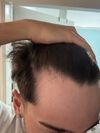
community 20-Year-Old Considering Finasteride After Hairline Change Post-Test
A 20-year-old noticed hairline changes after using testosterone and started finasteride to address it. They are considering using minoxidil but are advised to monitor progress on finasteride first before adding it.
community Day 22 progress report 2022 grafts
community What vehicle is being used in the breezula trial?
The conversation is about identifying the vehicle used in the Breezula (clascoterone) trial for hair loss. No specific treatments were mentioned.