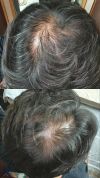
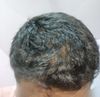
Celery juice is discussed as a potential treatment for crown balding, with skepticism from users. The conversation highlights differences between alopecia areata and male pattern baldness.
A 27-year-old male with androgenetic alopecia has been using finasteride, topical minoxidil, and microneedling for over six months to stabilize hair loss and prepare for a potential hair transplant. While some users suggest switching to dutasteride and increasing minoxidil usage, others note minimal progress, with some hair stabilization but concerns about thinning at the crown.
A 24-year-old from the EU is experiencing hair thinning at the crown, possibly due to androgenetic alopecia. Suggested treatments include minoxidil and finasteride, which can be used in topical or oral forms.
The user reported unexpected hair growth on their crown after using a derma stamp, ketoconazole, and other treatments like rosemary oil and biotin, but before starting finasteride or minoxidil. They questioned if the growth was due to these treatments or an underlying issue besides androgenetic alopecia.
A user experienced androgenic alopecia starting at the vertex without frontal hairline recession and is seeking information on this pattern. Another user noted that vertex or diffuse hair loss is common among men.
Androgenetic alopecia is caused by DHT affecting hair growth. Finasteride and minoxidil are used to manage hair loss by blocking DHT and promoting hair growth.
The user suspects scarring alopecia and is exploring NSAIDs and turmeric/pepper for inflammation-related hair loss, having experienced burning and thinning with finasteride and testosterone reduction. They are seeking feedback while unable to afford a dermatologist.
The user has been using minoxidil, dutasteride, and microneedling for hair loss but has noticed accelerated thinning at the crown and hairline recently. They plan to start using Nizoral and have a dermatologist appointment soon.
A user shared their 11-year journey with alopecia, using finasteride, dutasteride, and a hair transplant. They encouraged others not to panic, noting that hair miniaturization can take over 15 years to complete.
Lichen Planopilaris (LPP), a form of permanent hair loss, which can be mistaken for seborrheic dermatitis and is characterized by scalp itching, burning, redness, and dandruff. Treatment options discussed include steroidal creams, finasteride, minoxidil, and RU58841.
User on Dut, oral minox 20 mg, Saw Palmetto, Pumpkin Oil, RU, 8% topical minox, and topical fina for hair loss; top of head improves, but retrograde alopecia worsens. Asks for options besides exosomes and where to find topical melatonin.
A 26 year old female diagnosed with androgenetic alopecia who is interested in treatments such as spironolactone, finasteride and Minoxidil to help her hair loss but is worried about side effects like muscle gain, sex drive and effectiveness.
Estrogen injections significantly improved hair growth, particularly on the crown, after stopping finasteride. Monotherapy with estrogen led to hairline improvement, but also caused sterility and potential feminization effects.
A 24-year-old male with crown thinning and an oily scalp is seeking advice on shampoo recommendations and whether to restart minoxidil or try a hair growth serum. He is concerned about daily shampooing and managing greasy hair.
A 19-year-old male with diffuse and crown thinning is considering starting minoxidil as advised by a dermatologist but is unsure if he should seek a second opinion. Another user suggests consulting a reputable dermatologist to avoid wasting resources.
A 20-year-old is experiencing a receding hairline and thinning at the crown, using minoxidil 5% for 15 days. It is suggested to continue minoxidil and consider adding finasteride and ketoconazole shampoo for better results.
A user's progress pictures with Finasteride, showing positive results in 7 months; other users suggested additional treatments like biotin and nizoral shampoo, as well as changing to Dutasteride, while another mentioned it could take up to a year for further gains.
The user discusses their experience with diffuse unpatterned alopecia and acquired progressive hair kinkering, noting improvements with treatments including biotin, pantothenic acid, finasteride, ketoconazole, and zinc pyrithione shampoo. They report thicker, healthier hair and improved scalp condition, attributing success mainly to biotin, pantothenic acid, and finasteride.
User shared a 10-month update after a 4000-graft hair transplant, using finasteride, minoxidil, hair density shampoos, hair oils, and vitamins. Replies suggest patience as crown growth can take up to 18 months.
The conversation discusses a claim that avoiding coffee can lead to significant hair regrowth in individuals with androgenetic alopecia. Participants are skeptical, with some sharing personal anecdotes that contradict the claim, and others discussing the potential role of caffeine in hair loss and the effectiveness of other treatments like finasteride and minoxidil.
Hair loss can begin in early adolescence and cause mental anguish. Treatments mentioned include eating cruciferous vegetables, engaging in physical activity, and maintaining scalp hygiene.
Hair loss theory suggests imbalance between Vitamin D Receptor (VDR) and Androgen Receptor (AR) activation. Proposed treatment includes upregulating VDR, downregulating AR, and improving mitochondrial health.
A 27-year-old male physician improved hair density using minoxidil 5% foam and finasteride 1mg every other day, with initial sexual side effects that subsided. He recommends trying finasteride for a year but warns against dutasteride due to potential liver effects.
A 28-year-old male reported significant hair regrowth using 5mg minoxidil and 0.5mg dutasteride over five months, with occasional ketoconazole use. Users discussed side effects like stuffy nose and low libido, and shared experiences with different hair loss treatments.
The user experienced severe scalp itching and hair loss while on dutasteride, which they linked to caffeine and masturbation. They plan to cut out both to see if their hair density improves.
The user is experiencing hair loss with possible causes including chronic telogen effluvium, diffuse alopecia areata, and androgenic alopecia. They have tried treatments like Nizoral shampoo, minoxidil, and finasteride, and are considering a biopsy for further clarity.
Hair loss treatments like finasteride, minoxidil, and RU58841 are becoming more known, but many remain unaware of their effectiveness. There is hope for future advancements despite skepticism and misconceptions about current treatments.
A user shared a 9-month hair recovery journey from androgenic alopecia using 1 mg finasteride daily, 5% minoxidil twice daily, and weekly dermarolling with a 1.5 mm roller. Some responders were skeptical about the authenticity of the results, while others confirmed the consistency of the user's appearance and supported the effectiveness of the treatment.
In this conversation, 4990 discussed various treatments for hair loss, including oral minoxidil, PRP, transplan, Jak inhibitors, Dutasteride, Finasteride, Olumiant, Ketoconazole, RU58841, microneedling, baricitinib, and CCCA. They recommended scalp biopsies in unclear cases of DUPA, twice weekly to twice daily shampooing for topical minoxidil users, and two sessions spaced one month apart with follow up at month three to determine the effectiveness of PRP treatment.