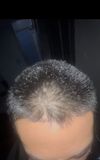
Dermastamp is preferred for hair growth and skin health due to fewer scars, with recommended needle sizes of 0.5-1.5mm. Dermapen is also favored over dermarollers, which are considered dangerous.
Clascoterone 5% solution is not yet commercially available, with only the 1% solution currently sold for acne. Users discuss the potential of Clascoterone as a hair loss treatment, comparing it to other anti-androgens like RU58841 and Eucapil.
A 19-year-old is experiencing worsening hair loss and severe seborrheic dermatitis despite using finasteride for six months. Nizoral (ketoconazole) is no longer effective, and they are seeking over-the-counter solutions and advice for an upcoming dermatologist visit.
Oral Dutasteride and topical Finasteride may have similar effects on scalp DHT, but topical Dutasteride might be less effective due to poor absorption. Combining oral Dutasteride with topical Finasteride could potentially enhance results by blocking DHT in both the scalp and serum.
The conversation discusses recommendations for using topical melatonin for hair loss treatment. It also mentions Minoxidil, finasteride, and RU58841 as other treatments.
A user shared their hair restoration journey using oral and topical finasteride, experiencing side effects with the former. They later switched to microneedling, scalp massages, and vitamins (D3, Zinc, Biotin, B complex, Vitamin E) with mixed feedback on progress.
The user has seen positive results after 16 months of using topical Finasteride/Minoxidil, microneedling weekly, and Tretinoin for hair loss. There are no reported side effects, and the user advises that the effectiveness of microneedling depends on the pressure applied.
The conversation is about using tretinoin to enhance the effectiveness of minoxidil for hair loss. Tretinoin should be applied at night on dry skin, and it can be used daily, either before or after minoxidil, with a starting dose of 0.025%.
Use retin-a cream and maintain a good skincare routine to counteract skin issues caused by topical minoxidil. Taking sublingual minoxidil can also be beneficial.
Hair loss from seborrheic dermatitis can be temporary. Treatments discussed include Minoxidil, finasteride, and RU58841, along with collagen and biotin supplements.
The user experienced significant hair regrowth using topical finasteride for 8-9 months, topical minoxidil for 3 months, and weekly microneedling with a stamp. They reported no side effects from the topical treatments and are considering a hair transplant for further improvement.
A user shared their hair regrowth success using microneedling with a dermaroller every 6 days and minoxidil, recommending betadine (povidone-iodine) before microneedling to sterilize the scalp and enhance results. Another user noted the potential risks of iodine toxicity.
A 23-year-old experiencing severe diffuse thinning after scalp inflammation is considering finasteride as a last resort after stopping minoxidil and using anti-inflammatory medication. Users suggest that inflammation causes temporary shedding and recommend consulting a dermatologist, with some advocating for finasteride as a reliable treatment option.
The conversation humorously discusses starting oral microneedling for hair loss, with mentions of side effects like internal bleeding and abdominal pain. It also references using treatments like minoxidil and finasteride, with exaggerated and satirical comments on their effects.
The conversation discusses hair loss treatments including finasteride, minoxidil, derma rolling, and tretinoin, with the user showing progress after five months. Tretinoin is mentioned to enhance the effectiveness of minoxidil.
Bryan Johnson uses Dutasteride, Latanoprost, Minoxidil with Tretinoin, and other unproven treatments, while Derek uses Finasteride, Minoxidil, Nizoral, RU58841, and Castor Oil. Kevin uses Finasteride, Minoxidil, RU58841, and Alfatradiol, but is against Nizoral and microneedling, preferring Tretinoin for absorption.
An 18-year-old is frustrated with a dermatologist who prescribed shampoos and Betnovate instead of Minoxidil and Finasteride for hair loss and seborrheic dermatitis. The user feels misled and is considering giving up on dermatologists.
Microneedling may risk scarring, potentially complicating future hair transplants. Alternatives like tretinoin with minoxidil are suggested for better hair growth.
The conversation discusses hair loss treatment using daily topical minoxidil and finasteride, daily 0.5mm dermarolling before application, and 2% ketoconazole shampoo three times a week. Users believe dermarolling enhances the absorption of the treatments and expect significant improvements over time.
People are discussing making a topical finasteride solution by crushing oral tablets and mixing them with minoxidil. Some users share their experiences and methods, noting varying dosages and results.
The user experienced side effects from oral finasteride and switched to a DIY topical solution, then to Essegen F. They noticed increased hair shedding with the topical finasteride and are concerned about its normalcy and duration.
A user experienced skin irritation and acne while using Minoxidil foam, but after stopping both the foam and a sea salt spray, their skin improved. They plan to try oral Minoxidil, suspecting the sea salt spray, not Minoxidil, was the main cause of their skin issues.
A user is experiencing severe hair loss, diagnosed with seborrheic dermatitis, and is using Ketoconazole and beclomethasone. They are concerned about potential female pattern baldness and are seeking reassurance and advice.
The conversation discusses hair loss treatments, specifically using topical minoxidil, oral finasteride, ketoconazole, and derma stamping. Users share their experiences, with one noting improved scalp health and slight regrowth, while another considers switching treatments due to lack of progress.
A user is deciding between oral and topical finasteride for hair loss, noting oral finasteride's ease of use but broader effects. Another user simply recommends oral finasteride.
The conversation discusses the use of topical finasteride from Hasson and Wong, with claims that none of their 800 users reported side effects. The user expresses skepticism about these claims and seeks others' experiences with the treatment.
The user suspects scarring alopecia and is exploring NSAIDs and turmeric/pepper for inflammation-related hair loss, having experienced burning and thinning with finasteride and testosterone reduction. They are seeking feedback while unable to afford a dermatologist.
Using ketoconazole shampoo for seborrheic dermatitis is generally fine, but opinions vary on frequency, with some suggesting every other day and others less often. Proper scalp cleaning is emphasized to prevent itching and burning.
Topical finasteride is believed to reduce scalp DHT more than oral forms, but its effectiveness is questioned due to inconsistent application and absorption. Oral finasteride is considered more effective because it consistently reduces systemic DHT, ensuring more reliable results.