Search
for
Sort by
Community Join
810-840 / 1000+ resultscommunity 2 months on 5% topical Kirkland min + 0.5mm dermaroller and keto shampoo
The user is using 5% topical minoxidil, a 0.5mm dermaroller, and keto shampoo for hair loss treatment, showing positive progress after two months. They plan to continue the regimen for maintenance.
community Killing the Norwood Reaper, a Journey
The user is treating hair loss with a regimen including Dutasteride, oral and topical Minoxidil, microneedling, and various supplements for overall health. They are considering adding tretinoin, stemoxydine/RU, DIM, Boron, and Fadogia Agretis to their routine.
community Does microneedling damage scalp?
Microneedling does not prevent future hair transplants, but some surgeons report the skin becomes "harder" in treated areas. There is no clear evidence to confirm this effect.
community What's up with everyone microneedling 1.5 mm per week?
The conversation is about microneedling for hair loss. The conclusion is that there are differing opinions on the depth and frequency of microneedling, with some studies suggesting positive results with 1.5mm depth once a week, while others prefer lower depths and less frequent sessions.
community 27M, 1.5 years of topical fin, min and saw palmetto, sometimes microneedling. Not there yet, but I feel like I have definitely made some progress so far!
Hair loss treatment using topical fin, min, saw palmetto, and occasional microneedling shows progress after 1.5 years. Microneedling frequency varies from weekly to every 4-5 weeks with 1.5mm needles.
community Mature Hairline or MPB?
community European release of clascoterone
Clascoterone's European release is expected in Q4 2026, with FDA approval anticipated by mid-2027. The discussion includes questions about the approval timeline and potential acceleration due to unmet needs.
community The regions where I’m loosing the most hair burn/are tender.
The conversation discusses hair loss, with users suggesting treatments like ketoconazole shampoo, finasteride, and dutasteride. Symptoms like burning and tenderness are mentioned, with recommendations to see a dermatologist for potential scarring alopecia.
community Self-Experiment - Topical Rapamycin or a-KB
A user plans to create a DIY topical treatment for hair loss using Rapamycin, possibly combined with alpha-ketoglutaric acid (a-KG). They discuss the concentration and formulation process for Rapamycin, considering safety and skin penetration, and intend to apply it every other day to the scalp.
community 5 years on minoxidil topical solution
community 3 week hair transplant update - HLC Ankara - How's it looking?
community No more hair transplants - a new FDA-cleared fractional laser treatment called FoLix
community ~3.5 Months on daily oral dut 0.5mg, oral min 2.5mg, topical RU 80mg, weekly microneedling at 1.5mm
The conversation is about a 23-year-old who started treating their hair loss with daily oral dutasteride (0.5mg), oral minoxidil (2.5mg), topical RU58841 (80mg), and weekly microneedling at 1.5mm after seeing others' success stories. Significant improvements have been noted, and there is optimism for even better results in the next 6 months.
community Rare Non responder to Finasteride, Dutasteride, and oral minoxidil
A user did not respond to finasteride, dutasteride, and oral minoxidil for hair loss after four years of treatment and is considering scalp micropigmentation (SMP). Other users suggest the hair loss pattern may indicate alopecia areata and recommend seeing a dermatologist.
community 2 months progress on oral and topical MIN
A user shared their 2-month progress using oral and topical minoxidil, oral finasteride, topical rosemary oil, keto shampoo, a derma pen, and scalp massages for hair loss. They reported significant improvement and plan to continue with updates.
community Looking for treatment to increase efficacy of minoxidil
User seeks treatment to increase minoxidil efficacy. Suggestions include microneedling, oral minoxidil, and Tretinoin, with mixed experiences and side effects.
community Minoxadil 5% wv topical only? Experienced sides on 1mg fin and ~0.25mg fin. Solutions from here
The user experienced sexual side effects from finasteride and switched to using only topical minoxidil without side effects. They are seeking alternatives to finasteride, such as topical finasteride, to maintain hair without adverse effects.
community 4 Months topical min/fin progress
community kx826 .05% month 8 | topical minoxidil .5% month 21 combo update.
The user used finasteride but stopped due to side effects, then used topical minoxidil for 13 months, and later added KX826/pyrilutamide for 8 months. They experienced shedding after starting pyrilutamide and use minoxidil and KX826 once daily.
community 88 days progress 1.25mg fin + topical minoxidil + weekly 1mm microneedling (27m)
A user shared their 88-day progress using 1.25mg finasteride, topical minoxidil, and weekly 1mm microneedling, noting improvement from NW 4.5 to around NW 3. Another user complimented the progress.
community Pelage Pharmaceuticals’ PP405 and its Impact on Follicular Regeneration to be Presented at the American Academy of Dermatology (AAD) Annual Meeting 2026 28th march
Pelage Pharmaceuticals' PP405 aims to treat hair loss by reactivating dormant hair follicle stem cells, showing promising results in early trials. The company plans to present their findings at the American Academy of Dermatology Annual Meeting in 2026.
community 19, Trichologist Avoiding Minoxidil, Slow Progress with Seborrheic Dermatitis Treatment
The trichologist avoids recommending Minoxidil, focusing instead on changing medications monthly for seborrheic dermatitis, resulting in only slight improvement in hair quality and loss. The user is considering starting Minoxidil independently due to slow progress and personal distress.
community A little under 2 months on minoxidil and weekly microneedling
Treatments for hair loss, including the use of minoxidil and microneedling; as well as discussing the potential of using finasteride or a ketoconazole shampoo.
community dermatologist diganostic - only 5 minutes - Finasteride 1mg/day since 1 month
A user started taking finasteride 1mg/day for hair loss but hasn't seen results yet. They also take vitamins and asked about adding minoxidil and the effectiveness of LLLT.
community 4,000 years on dut/oral min/microneedling
The conversation discusses hair loss treatments, specifically dutasteride, oral minoxidil, and microneedling. Users inquire about side effects, brands, and suggest using topical minoxidil.
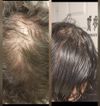
community 6 Months on Minoxidil: Bald Spots Still Visible, Seeking Advice Before Dermatologist Visit
The user has been using minoxidil for 6 months and has seen improvements but still has bald spots. They plan to consult a dermatologist to address their concerns.
community 22 male. 4 month progress. Min fin and micro-needling weekly
A 22-year-old male shared his 4-month progress using Minoxidil, finasteride, and weekly micro-needling for hair loss, reporting no negative side effects and feeling content with his results. Replies were supportive and encouraging.
community What vehicle is being used in the breezula trial?
The conversation is about identifying the vehicle used in the Breezula (clascoterone) trial for hair loss. No specific treatments were mentioned.
community Been using minoxidil 6%, finasteride 0.3%, and tretinoin 0.025% for about 2 and a half months and micro needling 2 times a week
User has been using minoxidil 6%, finasteride 0.3%, tretinoin 0.025%, and microneedling twice a week for 2.5 months. They are considering switching to oral treatments.