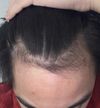
Users discuss hair loss and styling techniques to conceal thinning hair, mentioning treatments like finasteride and oral minoxidil. Some stop hair loss but not regrow hair, considering options like scalp micropigmentation or hair transplants.
Hair oils can cause severe allergic reactions, as seen in Jermel Brown's case, leading to significant health issues and legal action for damages. Users discussed concerns about various hair oils, including Mielle and Kiehl's, with some experiencing hair loss and others using treatments like Minoxidil and Finasteride to address damage.
The user is experiencing diffuse shedding but also hairline regrowth after starting finasteride, switching to dutasteride, and using oral minoxidil, ketoconazole shampoo, and RU58841. Other users advise patience, suggesting that the treatments need more time to show results and caution against using too many medications simultaneously.
The user is experiencing diffuse hair thinning despite using dutasteride and minoxidil for over five years and is considering adding oral minoxidil, microneedling, and nizoral to their regimen. They are concerned about the effectiveness and side effects of these treatments, especially with an upcoming event.
A user shared that taking vitamin E, specifically tocotrienols, seemed to reduce their hair shedding, and they are also using finasteride, minoxidil, and derma rolling for hair loss. Another user cautioned against high doses of vitamin E due to potential health risks.
Hair shedding is common when using minoxidil and finasteride, often indicating that the treatment is working as weaker hairs fall out to make way for stronger growth. Many users experience multiple shedding cycles before seeing significant hair regrowth.
A 22-year-old is experiencing hair thinning and is using oral finasteride and minoxidil chewables, along with microneedling and anti-dandruff shampoo, to manage it. Despite experiencing significant shedding, they remain hopeful for regrowth in the coming months.
The conversation discusses a user's 13-week experience using finasteride, topical minoxidil, and biotin for hair loss, noting initial shedding and subsequent improvement. Replies suggest some improvement may be visible, likely due to minoxidil, and encourage patience.
The user added witch hazel to their routine with finasteride and topical minoxidil to reduce scalp itching and potentially help with hair loss. They find witch hazel affordable and effective for itch relief, though its impact on hair loss is still uncertain.
The user experienced hair shedding and follicle shrinkage when using retinoic acid, despite trying different concentrations and frequencies. The hair loss persisted for six months but regrew after stopping the treatment.
A 25-year-old is experiencing mild hair loss and is using a regimen including scalp brushing, dermarolling, topical minoxidil, caffeine, melatonin, and a DHT-blocking shampoo. Another person shares their struggle with hair loss due to drug use and plans to start finasteride while trying to quit drugs.
The conversation is about a person struggling with inconsistent hair styling due to thinning hair, despite being on hair loss medications. They find that ketoconazole 2% shampoo helps, but conditioning makes their hair look worse; others suggest staying consistent with treatment and using hair fibers for events.
A 17-year-old is experiencing rapid hair loss from NW1.5 to NW3 in six months and feels dermatologists are unhelpful. They are using Minoxidil (Rogaine) and seeking advice on application.
The user discussed their hair loss treatment routine, which includes using Minoxidil, caffeine, biotin liquid, and RU58841 twice daily, Nizoral twice a week, and microneedling once a week. They plan to switch to rosemary essential oil after seeing full hair regrowth.
Ketoconazole shampoo helps reduce hair shedding and improve thickness for some, but can cause dryness or irritation. Its effectiveness compared to finasteride or minoxidil varies among users.
A 19-year-old male has been using topical finasteride and minoxidil for 8 months with no progress and is considering seeking a second opinion due to potential misdiagnosis. The discussion revolves around whether the hair loss is due to male pattern baldness, alopecia areata, or a vitamin deficiency.
The user has been experiencing sudden and aggressive hair shedding despite using oral dutasteride and topical minoxidil for six years, and recently added topical finasteride without improvement. Possible causes discussed include stress-related hair loss, dietary changes, or high DHT sensitivity, with suggestions to consult a doctor and consider adjusting treatments.
The conversation discusses how Caucasian men are more likely to experience hair loss due to genetic predisposition, with factors like the androgen receptor on the X chromosome playing a significant role. The user also expresses confusion about the evolutionary reasons for hair loss, especially in colder climates where it would seem beneficial to retain hair for warmth.
A 21-year-old is experiencing significant hair loss and considering treatments like dutasteride, minoxidil, and possibly a hair transplant. Others share their experiences with finasteride, scalp micropigmentation, and hair transplants, discussing the emotional impact and offering support.
Topical pirfenidone is highlighted as an effective anti-inflammatory and anti-fibrotic treatment for hair loss, particularly in addressing perifollicular fibrosis, which may enhance the effectiveness of standard treatments like finasteride and minoxidil. The user also uses calcipotriol, MCT oil, ciclopirox shampoo, and benzoyl peroxide shampoo as part of their regimen.
The user experienced significant hair loss after extended fasting, initially thought to be Telogen Effluvium, but later suspected male pattern baldness. They tried finasteride briefly but stopped due to concerns about side effects, and are unsure if the hair loss is due to Telogen Effluvium or another cause.
A 21-year-old's hair loss journey which involved using Minoxidil twice daily, finasteride 1mg/day, and PRP treatments every month for 2 months with the results seen in two videos; as well as beliefs about no poo concept.
Korea launched its first OTC oral hair loss drug, dexpanthenol B5. Users discuss its anti-oxidative and anti-inflammatory effects but note a lack of efficacy studies.
The user experiences significant hair shedding during seasonal changes while using oral minoxidil 2.5mg and finasteride 1mg daily. They question if shedding miniaturized hairs is normal or if a stronger treatment is needed.
Microneedling for hair loss involves sterilizing tools and possibly using serums like minoxidil or hyaluronic acid. Users report different routines, including applying minoxidil immediately after microneedling, using finasteride, and washing with ketoconazole shampoo.
Hair loss treatments and celebrity hair maintenance, mentioning finasteride, minoxidil, RU58841, biotin, ketoconazole, saw palmetto, dutasteride, and Nutrafol. The tone is satirical, speculating on celebrities' use of hairpieces and transplants.
The user started using a hair loss treatment regimen including 5% minoxidil spray twice daily, 1% finasteride spray once daily, microneedling weekly, and ketoconazole shampoo twice a week, experiencing significant hair shedding. The shedding is seen as a positive sign, indicating hair follicles are entering a new growth phase.
A user started using minoxidil daily, finasteride every other day, keto shampoo twice a week, and a dermaroller twice a week for hair loss. After one month, they experienced some shedding but no side effects.