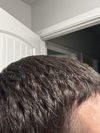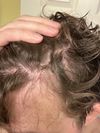
Exercise may be improving hair thickness and reducing thinning for a 50-year-old man using topical finasteride, minoxidil, Nizoral, and microneedling. The improvement could be due to exercise, the treatments, or a placebo effect.
The user underwent a biopsy two years ago and was diagnosed with keratosis pilaris, leading to hair issues. They tried treatments including Minoxidil, betamethasone, lymecycline, topical Accutane, and dutasteride, as well as diet changes, without improvement in hair thickness or skin dryness.
The user experienced hair regrowth after using finasteride for three months and microneedling with a dermapen for a month and a half. Many responses confirm noticeable hair thickening, though some suggest waiting longer for more definitive results.
Microneedling daily at 0.3mm combined with topical finasteride and minoxidil is effective for hair thickening, with added benefits from near-infrared therapy. The approach may not improve the front hairline, and deeper microneedling is done monthly for better results.
The user Consistent-Gene1334 shared their positive results in regrowing hair by using topical minoxidil and oral finasteride. Other users in the conversation praised the results and discussed the effectiveness of these treatments for diffuse thinning.
Hair regrowth from treatments like finasteride, dutasteride, and minoxidil can take several years, with most visible results appearing within 1-2 years and potential improvements continuing up to 10 years. Consistency and patience are crucial for achieving maximum hair thickness, as hair miniaturization and regrowth are gradual processes.
A user shared progress pictures after 4 months of using topical finasteride and minoxidil, dutasteride, rosemary oil shampoo, ketoconazole, and pumpkin seed oil, reporting great results and increased hair thickness. Other users commented on the mild initial hair loss and congratulated the user on their success.
Microneedling with 0.6 mm needles combined with 5% minoxidil is more effective for hair count and thickness than minoxidil alone or with 1.2 mm needles. Biweekly microneedling at 0.6 mm depth is recommended for better results in treating androgenetic alopecia.
Lighting and camera angles can greatly affect the appearance of hair thickness in photos. Consistent conditions are crucial for tracking progress, and treatments like Minoxidil and finasteride can show results in about 6-8 months.
A 26-year-old is experiencing worsening hair thinning despite using dutasteride 0.5 mg and oral minoxidil 5 mg, alongside ketoconazole for seborrheic dermatitis. Users suggest patience, as results may take 12–18 months, and consider increasing the dutasteride dosage or consulting a dermatologist.
The user has been experiencing diffuse hair thinning despite using finasteride, minoxidil, dermarolling, clobetasol cream, and PRP sessions. They seek advice on additional treatments and are advised to check vitamin D, iron, and thyroid levels.
The user has been using a hair solution with 0.3% finasteride and 5% minoxidil, along with microneedling, but is experiencing more thinning on one side. Suggestions include checking application techniques and ensuring microneedling is not overdone.
The user discusses their experience with diffuse unpatterned alopecia and acquired progressive hair kinkering, noting improvements with treatments including biotin, pantothenic acid, finasteride, ketoconazole, and zinc pyrithione shampoo. They report thicker, healthier hair and improved scalp condition, attributing success mainly to biotin, pantothenic acid, and finasteride.
Switching from 2% liquid minoxidil to 5% foam minoxidil reduced scalp irritation but increased eyebrow flakiness and thinning. The user speculates that propylene glycol in the liquid formulation might have been protecting against seborrheic dermatitis while causing contact dermatitis.
The user is concerned about potential hair thinning and has been using minoxidil and finasteride for a year, noticing some new hair growth. They recently started microneedling to improve minoxidil absorption and seek advice on applying it to the crown area.
Piroctone olamine and ketoconazole are both effective for reducing dandruff and hair shedding, with potential benefits for hair thickness and scalp health. Piroctone olamine may be as effective or better than ketoconazole in certain conditions, yet it is often overlooked.
Hair loss treatments discussed include leave-in conditioner, volumizing powder, styling products, and hairspray for thicker appearance without fibers. User shares routine and product suggestions for people with thin hair that lacks volume.
A user is frustrated with slow and thin hair regrowth at the temples despite using Minoxidil for six months, along with dermastamping, oiling, vitamins, and exercise. They are seeking advice on why vellus hairs are not thickening.
Finasteride can slow beard growth, but minoxidil and dermarolling may enhance beard thickness. Minoxidil is suggested for permanent beard gains, while finasteride is mainly for scalp hair maintenance.
A user shares progress on hair thickening using finasteride, minoxidil, RU58841, and dermastamping. Another user notes slow but ongoing improvement with a similar treatment routine.
A user reported thickening their hairline using a nightly mixture of castor oil, peppermint oil, rosemary oil, and sandalore, without using minoxidil due to side effects. They also continued using alfatriodol for DHT blocking and saw modest improvements after 6 months.
User asks for advice on using hair thickening products and their order of application. Experienced styler suggests using thickening tonic with a blow dryer, followed by styling powder and clay, then hair fibers, and finishing with hairspray.
Tea tree oil shampoo resolved redness, itching, and increased hair thickness for the user, suggesting demodex mites as a possible cause. Nizoral was ineffective, but tea tree oil showed significant improvement over several months.
Switching from finasteride and minoxidil to dutasteride and minoxidil can potentially lead to over 40% improvement in hair thickness in some cases, especially in young individuals who have plateaued after initial success. Generally, a 20% improvement is expected after six months.
A user discusses using a hair thickening spray similar to L'Oreal Root Touch Up, noting it provides volume and covers thinning temples but may cause hair to fall out when washed. They speculate the fallen hairs might have been loose already.
A user experienced hair thinning and scalp issues after using a sebum-regulating shampoo and perm treatments. They are advised to consider potential allergies, try a simple shampoo, and research treatments like finasteride for possible male pattern baldness.
The conversation is about a user's progress in treating diffuse hair thinning using a topical regimen including finasteride, minoxidil, ketoconazole, microneedling, saw palmetto, collagen, and vitamins, along with lifestyle changes. The user plans to switch from topical to oral finasteride for potentially better results.
Keratin fusion bonds are discussed as an alternative to clip-on hair patches for men with diffused thinning. The conversation explores different styling options for hair loss.