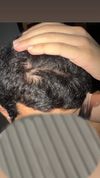
The conversation discusses the use of TRT, dutasteride, minoxidil, and potentially RU58841 for hair loss. Concerns about the risk of developing Cutis verticis gyrata with minoxidil and TRT are raised.
People discuss taking finasteride and dutasteride with various drinks, noting that water is common, while some avoid grapefruit juice. Opinions vary on whether the choice of beverage affects drug absorption.
The conversation is about a person experiencing significant hair loss in the donor area after a hair transplant, with others suggesting it might be shock loss. The person is taking oral minoxidil and dutasteride to help with the issue.
Dermal incision with verteporfin is being explored as a potential hair loss treatment by dermatologist Melissa Toyos, with promising before-and-after photos shared on social media. The conversation discusses its potential effectiveness compared to other treatments like Minoxidil, Finasteride, and RU58841.
A monoclonal antibody clinical trial for potential hair loss treatments in Victoria, Australia and the discussion of their efficacy. People shared information about similar drugs already on the market, speculated about potential side effects, and discussed how to spread the word about the trial.
A 19-year-old male has been using topical finasteride and minoxidil for 8 months with no progress and is considering seeking a second opinion due to potential misdiagnosis. The discussion revolves around whether the hair loss is due to male pattern baldness, alopecia areata, or a vitamin deficiency.
The user is using a hair loss regimen involving 2ddr applied twice daily, tretinoin weekly, and occasionally micro-needling. They report feeling increased scalp thickness and seeing some hair growth progress.
The user has been using finasteride and minoxidil, then switched to dutasteride and minoxidil for six months without significant results, noticing thinning after increasing creatine dosage. They plan to consult a dermatologist to explore potential causes beyond androgenetic alopecia.
A user ingested RU58841 orally and experienced severe heart and breathing issues, requiring emergency medical assistance. They concluded that MV supplements is a legitimate supplier but warned of the serious side effects.
Experimenting with the effects of creatine and finasteride on DHT levels, as well as a discussion regarding the potential link between creatine supplementation and hair loss.
A user is experiencing side effects like less hard erections and sensitive nipples while on finasteride, with bloodwork showing high prolactin levels. They are seeking suggestions to address the prolactin issue.
The conversation is about a person starting a hair loss treatment regimen including 1mg finasteride, 2ml minoxidil twice daily, dermarolling with a 1mm needle, and taking vitamin C, biotin, and vitamin D3. They plan to share their results in 6 months to a year.
User took Dutasteride, Minoxidil, and Vitamin D for hair loss treatment and saw improvement in 2 months. Vitamin D deficiency played a role in recovery.
The conversation is about the progress of verteporfin in hair loss trials, with users expressing curiosity about its effectiveness and updates. Specific treatments mentioned include FUE (Follicular Unit Extraction) combined with verteporfin, with one reported case of donor area regrowth after a year, and three patients being monitored post-treatment by Dr. Bloxham with monthly updates on YouTube.
A 22-year-old male with high estrogen levels is considering finasteride for hair loss but is concerned about potential side effects due to his hormone levels and family history of diabetes. Users suggest consulting a doctor, possibly an endocrinologist, and considering lifestyle changes like diet and exercise to address visceral fat and insulin resistance before starting treatment.
Veradermics' oral minoxidil shows promise for hair regrowth, with some users reporting significant improvements, while Pelage's PP405 results are less convincing and lack transparency. There is skepticism about both treatments' long-term effectiveness and potential side effects.
Fluridil, also known as Topilutamide or Eucapil, is discussed as a treatment for hair loss. It is noted as an androgen receptor antagonist, not a vasodilator.
The user shared a 5-month update on using finasteride, minoxidil, and ketoconazole shampoo for diffuse thinning, along with supplements like B-Vitamins, D-Vitamins, Iron, and Beta carotene. They noted improvement in hair condition and encouraged others to check previous posts for more information.
The user experienced rapid diffuse hair thinning for five years despite no signs of AGA or miniaturization. They tried finasteride and oral minoxidil without success and have checked thyroid, iron, and vitamin D levels.
A 20-year-old with thinning hair has low vitamin D and normal testosterone. They are prescribed oral minoxidil and vitamin D, and are questioning if finasteride is also necessary.
A user experienced severe chest pains and shortness of breath after using RU58841 for hair loss and was advised by a doctor that blocking androgens can weaken the heart. They decided to continue with finasteride, minoxidil, and a hair transplant instead.
A user on finasteride for 7+ months shared bloodwork results, questioning if high DHT levels and testosterone could affect cholesterol. Replies suggest consulting a doctor and question the high testosterone levels.
The conversation discusses a botanically derived treatment for androgenetic alopecia using ingredients like saw palmetto, green tea, and evening primrose, showing impressive results over 270 days. Concerns include the study's uncontrolled nature and potential product motivation, with suggestions to enhance absorption through derma rolling.
The conversation is about whether doctors are offering hair transplants using verteporfin. Dr. Bargouthi in Jordan and Dr. Bloxham in New York are currently conducting trials on it.
A 22-year-old with high estradiol levels is considering starting finasteride for hair loss. They have an upcoming endocrinologist appointment to discuss whether they should proceed with the treatment.
The conversation discusses whether topical caffeine is effective for hair loss, with some users questioning its role due to its vasoconstrictive and vasodilative properties, while another suggests that temporary vasoconstriction might be beneficial by promoting angiogenesis. Specific treatments mentioned include caffeine shampoo, which one user believes is ineffective.
Hair loss discussion includes using fluridil (eucapil), minoxidil, and finasteride. One person takes 1 vial of fluridil daily and 1mg of finasteride every other day for effective treatment with minimal side effects.
The conversation is about the potential side effects of using verteporfin in conjunction with a hair transplant. Specific treatments discussed include verteporfin, a hair transplant (HT), minoxidil (Min), finasteride (Fin), and RU58841 (RU).