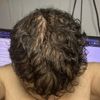
The post and conversation discuss the effectiveness of pyrilutamide for hair loss, with comparisons to finasteride and RU58841. Users express skepticism due to failed trials and high costs, with some waiting for more data before trying pyrilutamide.
The acne medication Winlevi, which contains Clascoterone, is available in the U.S. and may slow down hair loss until a higher concentration treatment, Breezula, is released.
A dermatologist prescribed a topical hair loss treatment containing finasteride, biotin, melatonin, and caffeine without alcohol. The user is skeptical about its effectiveness.
The user started balding at 16/17 and tried various treatments including minoxidil, finasteride, and dutasteride with little success. They recently started applying diclofenac gel to their bald areas and noticed some hair regrowth, attributing this to diclofenac's ability to lower prolactin levels and its anti-inflammatory effects.
The conversation is about using a product containing dutasteride and tamsulosin for hair loss. Users discuss separating the components and potential side effects like frequent urination and changes in libido.
The user is using a hair loss treatment involving dutasteride, minoxidil, finasteride, microneedling, and supplements like multivitamins, D3 K2, and Omega 3 fish oil. They are considering adding tretinoin and are open to suggestions while managing gut issues.
User switched from finasteride to combination dutasteride and finasteride for hair density improvement. They noticed less hair shedding and more youthful skin, with a reply suggesting less DHT could increase elastin in skin.
The conversation discusses the potential effects of ashwagandha on hair loss and anxiety, with users sharing mixed experiences. Some users caution against ashwagandha due to its potential to increase testosterone and DHT, which could counteract finasteride's benefits, while others suggest alternative methods like exercise, cold showers, or different supplements for managing anxiety.
The user is experiencing breast tissue growth from taking dutasteride and minoxidil, and is considering reducing the dosage or stopping the medication. Suggestions include seeing an endocrinologist, using Raloxifene or Arimidex, and considering topical treatments or surgery if necessary.
Breezula's effectiveness is uncertain, with some users skeptical about its potential and others noting its recent availability on the grey market. A user reported success with a stack of Dutasteride (oral), Minoxidil (topical), and RU58841 (topical), achieving significant hair improvement after 18 months.
Dutasteride and finasteride have similar risk profiles despite Dutasteride blocking more types of 5AR in the brain. Some users report no mood issues with either drug, and it is suggested that Dutasteride's larger molecular size may limit its ability to cross the blood-brain barrier.
Comparing the effectiveness of RU58841, Pyrilutamide and CB-03-01 as treatments for hair loss, with people discussing different aspects such as binding affinity, time of inhibition, safety data and cost.
The user has been using finasteride, minoxidil, and ketoconazole for hair loss, showing good progress without significant side effects. They plan to have a hair transplant in March and hope to eventually stop using oral minoxidil.
Pyrilutamide (KX-826) is discussed as an anti-androgen treatment for hair loss, with mixed user experiences. Some users report no results, while others find it mildly effective.
Increasing dutasteride from 0.5mg to 2.5mg may not significantly reduce hair loss and can cause side effects like sleep disturbances and brain fog. Many users find 0.5mg effective enough, while some switch to topical finasteride due to side effects.
The discussion is about a hair loss drug called pyrilutamide. Users discuss its efficacy, safety, and expected market release around 2025-2026, with some expressing concerns about the authenticity of current market offerings.
The conversation discusses the use of dutasteride (0.5 mg daily) for hair loss, with additional treatments like minoxidil, derma rolling, and nizoral shampoo. The user reports positive progress over two years with no significant side effects, emphasizing the importance of consistency and patience.
The conversation discusses using liquid cetirizine as a topical treatment for hair loss. It mentions Minoxidil, finasteride, and RU58841 as other treatments.
Dutasteride may be better for the brain than Finasteride, potentially increasing dopamine levels and causing fewer side effects. For those switching from Finasteride to Dutasteride to prevent hair loss, it's recommended to continue Finasteride for 3-4 months while starting Dutasteride to avoid shedding due to Dutasteride's long half-life.
The user continues to experience hair loss despite using dutasteride 2.5mg, minoxidil 5mg, and ciclopirox shampoo, and plans to reassess after one year. Others report similar issues with dutasteride, with some switching to finasteride or adding RU58841.
An 18-year-old is using a high-dose hair loss treatment with 40mg daily dutasteride, finasteride, minoxidil, tretinoin, and topical bicalutamide. Despite health risk concerns, especially liver issues, they report hair regrowth progress and intend to continue the regimen.
The user is happy with their crown after 2 years on finasteride and topical minoxidil but is still losing hair at the hairline. They plan to switch to dutasteride.
A 33-year-old male has been using finasteride 1mg for nearly 4 years, experiencing stabilized hair loss and some regrowth but also cognitive issues. He is considering reducing the dose or switching to topical finasteride with minoxidil to maintain hair while minimizing cognitive side effects.
A user experienced significant hair growth using oral dutasteride and minoxidil but developed severe erectile dysfunction, likely exacerbated by obesity and diabetes. They plan to lose weight and possibly adjust medication to alleviate side effects.
The user switched from finasteride to dutasteride and is seeking feedback on hair changes after 4 months. The current regimen includes oral dutasteride, oral minoxidil, and topical minoxidil.
Fluridil was discussed as a hair loss treatment, with some users experiencing side effects like lethargy and chest tightness. Users also mentioned other treatments like RU58841 and finasteride, with mixed opinions on their effectiveness.
Transitioning from finasteride to Pyrilutamide as a treatment for hair loss, and the potential risks associated with taking such a drug. People have discussed the need to wait at least 6 months in order to assess results, and are willing to risk their health trying this new medication.
The user experienced mental side effects from both oral and topical finasteride and is considering trying dutasteride or liposomal topical finasteride. They are concerned about potential worsening of hair loss if they quit dutasteride.
The conversation discusses using 0.5mg Dutasteride once a week for hair loss, with suggestions to increase frequency for better results. The user plans to reassess the need for a hair transplant in six months and is concerned about potential side effects like gynecomastia.