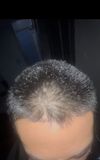
The user is experiencing hair loss after a hair transplant and is considering using fluridil (Eucapil) and possibly alfatradiol as treatments, as they couldn't tolerate finasteride or minoxidil. The manufacturer of Eucapil confirmed they won't produce higher concentrations due to lack of efficacy.
Using topical finasteride with creatine might help reduce hair loss by targeting local DHT while maintaining normal systemic levels, but results are uncertain without testing. Users report mixed experiences with topical treatments like finasteride, dutasteride, RU58841, and minoxidil, with some seeing regrowth and others experiencing side effects.
27F with androgenic alopecia since 17 seeks treatment. Tried spironolactone, caused low blood pressure; believes finasteride is safer and wants to try it.
The conversation discusses a hair loss prevention regimen using a custom topical treatment with Dutasteride, Minoxidil, Latanoprost, Cetirizine, Tretinoin, Vitamin D3, and caffeine, along with supplements like iron, selenium, vitamin D, and vitamin B. The user advises against expensive treatments like LLLT caps and unnecessary natural supplements.
Dutasteride in semen is considered a very small risk for partners, and fertility typically improves after stopping the medication. It is recommended to stop Dutasteride 3-6 months before trying to conceive to avoid potential impacts on fertility and fetal development.
The user used finasteride, minoxidil, and ketoconazole for hair loss prevention. After one year, there was no noticeable hair regrowth, but no further hair loss occurred.
The user used 0.5 mL of 0.5 mg of Pyrilutamide for 60 days for hair loss, but didn't notice any hair growth. They shared their hormone panel results and are seeking advice on next steps.
A 19-year-old is experiencing worsening hair loss and severe seborrheic dermatitis despite using finasteride for six months. Nizoral (ketoconazole) is no longer effective, and they are seeking over-the-counter solutions and advice for an upcoming dermatologist visit.
Ethosomes are suggested as an effective delivery method for topical finasteride solutions, requiring the addition of a phospholipid like soya lecithins. The user questions why do-it-yourself solutions don't commonly use ethosomes despite their potential benefits.
The user is concerned about the interaction between dutasteride and ketoconazole, leading them to stop using ketoconazole shampoo, which has resulted in an oily and painful scalp. They are unsure whether ketoconazole increases or decreases the potency of dutasteride.
The DNA Trichotest is considered unreliable for predicting hair loss treatment responses, and topical spironolactone is questioned for its effectiveness and safety in cis males. Finasteride and Dutasteride are recommended as more reliable treatments for androgenic alopecia.
Ketoconazole, once popular for hair health, is now less mentioned, with mixed reviews on its benefits for scalp health. Microneedling is discussed as a potential alternative to traditional treatments like finasteride and minoxidil, with varied opinions on its effectiveness.
Breezula (clascoterone) and Formula 82F (topical finasteride) are treatments for hair loss that block DHT differently; Breezula competes with DHT at the hormone receptor site without systemic effects, while 82F inhibits the enzyme that converts testosterone to DHT. Breezula may work for those who don't respond to finasteride and vice versa.
The conversation discusses the use of Finastopic, a carrier for finasteride solutions by Isdin, and compares it to a standard propylene glycol (PG) solution. The user was prescribed a 1% finasteride solution using Finastopic and has been using a self-compounded 0.025% topical finasteride with minoxidil.
The user is starting dutasteride mesotherapy and seeks information on checking serum DHT levels in Germany. They previously tried finasteride but experienced unpleasant side effects.
The conversation discusses using GHK-Cu copper peptide from Bulk Naturals for hair loss, comparing its price and quality to Peptide Sciences. Concerns about the product's legitimacy are mentioned, but COA documents are available.
The conversation discusses verteporfin as a potential treatment for hair regeneration, which could lead to unlimited hair transplants by healing the donor area. Some users are considering using verteporfin now, while others are hopeful it will be available for future hair transplants.
The small soft-gel capsule inside Duodart contains dutasteride, and the powder/beads contain tamsulosin. You can open the large capsule and take only the dutasteride soft-gel.
The user discusses a galenic hair lotion containing progesterone, estradiol, cyproterone, hydrocortisone butyrate, and cetirizine pheniramine, which has effectively stopped their hair loss over two years. They are curious about the compatibility of finasteride with the lotion's components and note that their trichologist has successfully used minoxidil and finasteride in similar treatments for others.
The user stopped using finasteride due to side effects and is considering Fluridil (Eucapil) as an alternative for hair loss treatment. They are exploring other options like RU58841 and are interested in the experiences of others with Fluridil, noting its good safety profile despite the cost.
User tried various hair loss treatments with limited success. RU58841 was effective but caused side effects, now trying Eucapil and continuing Finasteride.
Hair loss discussion focuses on adding an anti-androgen to stack with topical finasteride. Eucapil (fluridil) is suggested for its safety and minimal side effects.
A user is considering adding crushed finasteride pills to a serum containing redensyl, procapil, and anagain to treat hair loss. Another user shared their experience, noting some improvement in hair health but no significant reduction in hair loss, and plans to continue the treatment for six months.
A hair loss treatment protocol involving topical and oral medications such as Minoxidil, RU58841, Finasteride, Dutasteride, Melatonin, Zinc, Vitamin B6, NAC, Caffeine, Biotin, Ginseng, and Semen; other treatments including Microneedling, Laser Helmet, Nizoral shampoo, Scalp Massage and supplements like Vitamin C, Vitamin D, Fish Oil, and Biotin; and the potential side effects of using this protocol.
Pyrilutamide is considered to work for hair loss but less effectively than expected, similar to RU58841, and may cause side effects like chest tightness and sexual issues. It's unclear if it's suitable for diffuse thinners, and one user cannot use minoxidil or finasteride due to side effects and personal circumstances.
Amino acids, particularly Cysteine, are important for hair growth and may be lacking in a normal diet. Using a protein powder that includes these amino acids can help improve hair growth and strength.
The user experienced hair thinning despite using finasteride and switched to a ketoconazole shampoo without sulfates to address scalp itching and dandruff. They hope this will stop further hair thinning.
The conversation discusses using ketoconazole, an anti-androgen, for hair loss and whether mesotherapy with dermarolling could enhance its absorption into the scalp. The user questions if the typical 2% ketoconazole shampoo dose would be effective when used after dermarolling to target androgen receptors in the scalp.
Hair loss treatments RU55841, CB-03-01, and Eucapil were discussed, with concerns about needing increased dosages over time and potential side effects. A user suggested that CB's results could be due to various factors and that combining it with finasteride might slow down any upregulation.