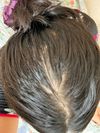
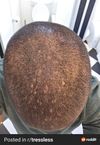
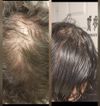
The conversation is about using micro needling and PTD-DBM for hair loss treatment. The user applies PTD-DBM drops on weekdays and performs micro needling weekly.
A 29-year-old female is experiencing severe hair loss and bald patches, seeking advice on shampoos, conditioners, hair masks, or topical medications. A user suggests starting an oral supplement.
The conversation is about a female experiencing hair loss and seeking advice on why it's difficult to regrow hair. Specific treatments like Minoxidil, finasteride, or RU58841 are not mentioned.
A 27-year-old male with diffuse hair loss, including the donor area, did not respond to finasteride, dutasteride, or minoxidil. He suspects his hair loss may be linked to a mild connective tissue disorder, possibly affecting the structural support of hair follicles, rather than being purely hormonal.
The user noticed small circular hairless spots after a buzz cut and has been using finasteride, dutasteride, and oral minoxidil for hair loss. They are experiencing continuous shedding and thinning, and it is suggested they consult a dermatologist for a scalp examination and possible biopsy to determine if it's alopecia areata or androgenetic alopecia.
Exosomes combined with fractional picosecond laser treatment were effective in treating androgenetic alopecia and promoting repigmentation in white hair patches. The role of exosomes in hair repigmentation, particularly in conditions like poliosis, is not well-studied.
The user is experiencing diffuse thinning and inflammation despite using 2.5mg dutasteride daily, ciclopirox, and ketoconazole shampoos. They are considering treatments like hydroxychloroquine and JAK inhibitors due to suspected scarring alopecia and have faced challenges in obtaining a scalp biopsy.
A user's 6-month progress after using oral finasteride, topical minoxidil, and weekly dermaroller treatments for hair loss. Replies praised the user for their results so far.
The user has been using a daily topical spray of finasteride and minoxidil, along with occasional microneedling, to address hair loss since August 2023, and is considering switching to oral medication for convenience and cost reasons. Despite progress, they are exploring options like increasing microneedling frequency or potentially undergoing a hair transplant to address a stubborn spot.
A user with diffuse thinning noticed stubble-like hairs on their scalp after using 2% ketoconazole shampoo, dermarolling, castor oil, Vitamin D3, biotin, and iron supplements. They are unsure if this indicates regrowth or miniaturized hairs.
The conversation discusses a hair loss treatment regimen involving minoxidil, finasteride, RU58841, JXL069, and nizoral shampoo. The user reports seeing new black dots in areas where hair hasn't grown in years, suggesting potential regrowth.
A user experiencing diffuse thinning since age 18 describes their hair as unhealthy, dry, thin, and hard, with texture changes cycling between good and bad every few weeks. They are not on any medication, only taking vitamins and supplements.
The user experienced red pimples and a rash from using topical minoxidil, possibly due to propylene glycol. Suggestions included seeing a dermatologist, switching to foam without propylene glycol, using Nizoral, and adjusting application timing.
Keratin fusion bonds are discussed as an alternative to clip-on hair patches for men with diffused thinning. The conversation explores different styling options for hair loss.
The conversation discusses severe hair shedding and thinning, with the original poster using finasteride, oral minoxidil, and other supplements without improvement. The discussion highlights the possibility of telogen effluvium and the importance of addressing potential underlying health issues, such as stress and gut health, rather than assuming diffuse unpatterned alopecia (DUPA).
A user shared their experience with Finasteride for hair loss, noting improvement but still some thinning. They plan to get a hair transplant to address remaining thin spots and strengthen their hairline.
PP405 updates are seen as vague and lacking substance, causing frustration among users. Some users report positive effects from using minoxidil and dutasteride, while others remain skeptical about new treatments.
The user has been experiencing hair loss since having COVID and has low vitamin D levels; they are seeing some improvement in their crown and hairline after starting vitamin D supplements. Commenters suggest the hair loss pattern is consistent with male pattern baldness (MPD) and varies by individual.
The conversation discusses hair loss and treatments like finasteride, minoxidil, and ketoconazole shampoo. Users suggest scalp massages, warm showers, and other methods to address scalp tension and tight spots, with some mentioning the potential effects of medications like escitalopram and probiotics.
Hair loss treatments discussed include microneedling, minoxidil, tretinoin, finasteride, dutasteride, pumpkin seeds, saw palmetto, and scalp massage. The consensus is that finasteride or dutasteride is necessary for significant regrowth, while other methods may only slow hair loss.
The user has been using minoxidil for 6 months and has seen improvements but still has bald spots. They plan to consult a dermatologist to address their concerns.
A user is concerned about a growing thin spot on their boyfriend's head despite using Rogaine, Vitamin K, Vitamin E, Biotin, and Ubiquinol. Another user suggests starting finasteride, minoxidil, and dermarolling for better results.