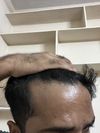
A user discusses a topical treatment combining Minoxidil, Betamethasone Valerate, Canrenone, Finasteride, and Dutasteride for hair loss. The treatment is RX-only and provided by a dermatologist.
The user is seeing slow hair regrowth using Minoxidil, Finasteride, a derma roller, vitamins, and zinc. Some suggest switching to dutasteride or adding other treatments, but others doubt significant cosmetic improvement due to advanced hair loss.
User shared 8-month hair loss treatment progress using topical fin/min, topical dut, mk677, RU, and microneedling. They experienced watery semen as a side effect but saw significant improvement in hair growth.
The conversation is about a user's hair regrowth progress using topical minoxidil, with plans to start finasteride. The user also takes Vitamin D and washes their hair 2-3 times a week.
The user experienced significant hair regrowth using dutasteride (0.5 mg three times a week) and RU58841 (5% once a day), with no side effects reported from RU58841. They are considering increasing the RU58841 dose or adding minoxidil for further improvement.
A 23-year-old male is using 0.5 mg dutasteride daily, 5% minoxidil twice daily, and ketoconazole with zinc pyrithione shampoo twice a week to address diffused thinning and hair loss. He is seeking advice on whether his hair will regrow and if additional treatments are needed.
The user has been using 0.5 mg dutasteride and 5 mg oral minoxidil for 9 months and has started experiencing hair shedding, losing 70-80 hairs per day. They noticed good density in the crown area within the first month of treatment.
User experienced rapid thinning on crown, used dutasteride for 3 months with significant improvement. Microneedling and ketoconazole were also used, but no minoxidil or finasteride.
A user discusses using topical dutasteride 0.025% once a week for hair maintenance, alongside fortified minoxidil, RU58841, and Reviv Hair Serum. They seek feedback on the effectiveness of this regimen.
The conversation discusses experimenting with microneedling for hair loss, with OP considering using a 3mm derma-stamp. Other users advise against going beyond 1.5mm to avoid damage.
Significant hair regrowth was achieved using Minoxidil, Dutasteride, and derma stamping. The user noted improved hair quality and thickness with no side effects.
The user experienced significant hair regrowth after 7 months using topical minoxidil once a day and 0.5mg dutasteride every other day, with noticeable results in the last two to three months. They reported no side effects and did not use dermarolling.
A 26-year-old male has been using Redensyl for nearly two months without progress and recently switched to minoxidil. He is also taking multivitamins with biotin and using ciclopirox shampoo for dandruff.
The user has been using topical Minoxidil (5%) and finasteride (0.1%) twice daily for 2 months, with occasional missed applications. They also use a zinc pyrithione shampoo every 2 days and do not dermaroll.
The conversation discusses maintaining hair regrowth using minoxidil and finasteride and whether using gt20029, which degrades androgen receptors, would affect this. Fluridil, a similar treatment, can disable over 90% of active androgen receptors.
The conversation is about a user's hair loss treatment regimen, which includes Dutasteride, oral Minoxidil, topical Dutasteride, Minoxidil sulfate, antioxidants, and various supplements. The user is also using a derma stamp and has paused Tretinoin due to a TCA peel recovery.
The user continues to experience hair loss despite using dutasteride 2.5mg, minoxidil 5mg, and ciclopirox shampoo, and plans to reassess after one year. Others report similar issues with dutasteride, with some switching to finasteride or adding RU58841.
A 43-year-old male saw significant hair regrowth and increased density after three months using topical Minoxidil (5%), topical Finasteride (0.025%), and 0.75mm microneedling every two weeks, with no side effects. He plans to continue and may reduce Finasteride concentration if progress continues.
A user's 3-month progress with a combination of finasteride, minoxidil and dermarolling for hair loss; other users shared their experiences and advice.
GHK-Cu peptide injections are discussed for hair growth, but users report mixed results and suggest focusing on DHT management first. Some users combine GHK-Cu with treatments like Minoxidil and Dutasteride, but emphasize its benefits for skin rather than hair.
Clascoterone 5% solution (Breezula) is a promising alternative for androgenetic alopecia, showing continued hair growth with consistent use and no significant side effects. It may be suitable for those who cannot tolerate finasteride or dutasteride, especially when trying to conceive.
The user shared their 8-week hair regrowth progress using 0.5mg dutasteride, twice-daily topical minoxidil, and weekly 1.5mm microneedling. They noted visible improvement, though some users suggested reducing microneedling depth to avoid potential scalp damage.
The conversation discusses concerns about Scube3's effectiveness and potential cancer link. It questions whether Scube3 can regrow hair and how well it works according to researchers.
The user is experiencing positive results in hair regrowth using a regimen of 0.5 mg dutasteride, 5 mg oral minoxidil, ketoconazole shampoo, microneedling, and a combination of topical minoxidil with RU58841. They report no side effects and express gratitude for the support and inspiration from the community.
A 24-year-old male shares his two-month progress on hair regrowth using 0.5mg Dutasteride, 2.5mg Minoxidil, 10mg Biotin, and Ketoconazole shampoo, noting significant crown improvement. Users discuss the effectiveness of oral Minoxidil, with some expressing skepticism about photo angles and the necessity of Biotin unless deficient.
The conversation discusses interest in peptides for hair loss, specifically mentioning ahkCU and ghkCU. A user is considering adding ghkCU to their treatment regimen.
A 36-year-old man with androgenetic alopecia suspects copper and zinc deficiencies may be accelerating hair loss and is supplementing copper to address this. He is also monitoring blood sugar levels due to previous prediabetes concerns and plans to test for insulin resistance.
FCE 28260 (PNU 156765), an under-explored 5α-reductase inhibitor, showcases promising results in research by Giudici et al., outperforming well-known treatments like Finasteride in reducing the conversion of testosterone to DHT. Its superior efficacy, demonstrated through lower IC50 values in both natural and human recombinant enzyme studies, suggests it could offer more effective management of DHT-related conditions. Additionally, its lower molecular weight hints at better potential for topical application, potentially offering advantages in treating conditions such as androgenic alopecia. Despite its potential, it has not advanced in development, possibly due to financial limitations, leaving its therapeutic prospects and side effect profile largely unexplored.