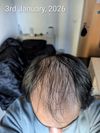
A 22-year-old experiencing intense hair loss across the scalp seeks advice, considering factors like nutrition and genetics. Suggestions include checking vitamin, mineral, and thyroid levels.
A user suspects low iron might be causing hair loss and plans to get tested. They doubt low iron is the issue due to a balanced diet but want to rule it out.
The user is experiencing significant hair shedding and suspects it may be due to low serum ferritin levels rather than worsening androgenetic alopecia. They have resumed iron supplementation and are seeking additional solutions to address the shedding.
A 21-year-old has been using daily oral finasteride, minoxidil, biotin, and vitamins since January 2026 for hair loss, adding topical treatments and microneedling in May. They observed initial shedding and scalp issues but noted significant progress after adjusting their routine.
A person struggling with hair loss is using treatments like dutasteride, oral minoxidil, and has had a hair transplant but remains deeply unhappy. Others suggest alternative treatments, acceptance, and focusing on other life aspects, emphasizing mental health and therapy.
The user has been using oral minoxidil, dutasteride, RU58841, and other treatments for hair loss over nine months, seeing some improvement in hair thickness and crown volume but continued thinning at the hairline. They plan to continue treatment for another nine months despite being sensitive to DHT fluctuations and are considering increasing dosages or other options like a hair transplant.
A permanent hair loss solution could involve reprogramming hair follicles to resist DHT using mRNA and siRNA. However, high costs, safety concerns, and the pharmaceutical industry's preference for ongoing treatments over one-time cures are major obstacles, with finasteride and minoxidil remaining standard treatments.
DHT is not the only cause of male pattern hair loss; genetic sensitivity, inflammation, and fibrosis also contribute. GHK-Cu, a copper peptide, is being explored as an alternative treatment to finasteride and minoxidil, showing potential in improving follicle health.
Hair loss treatments like minoxidil, finasteride, dutasteride, and RU58841. Users stress early prevention and discuss challenges with different hair loss patterns.
Common misconceptions about hair loss treatments include the belief that lower doses of finasteride are as effective as higher doses, and that ketoconazole is effective for androgenetic alopecia without scalp issues. Additionally, minoxidil's effects can be seen sooner than commonly thought, and topical dutasteride is effective.
The conversation discusses a user's hair growth routine involving scalp massages, dermastamping, and rosemary oil, with mixed opinions on its effectiveness. Some users suggest proven treatments like minoxidil and finasteride, while others debate the merits of alternative methods.
Red light therapy has shown promising results in hair regrowth for the user, who avoids minoxidil and finasteride due to side effects. The user follows a healthy lifestyle with diet, exercise, and sauna use, and will continue monitoring the therapy's effectiveness.
The conversation is about hair loss treatments, specifically the lack of improvement after one year of using oral finasteride and topical minoxidil. Suggestions include switching to stronger medications like dutasteride and oral minoxidil, considering a hair transplant, and possibly using microneedling or tretinoin.
A 26-year-old male with high testosterone is experiencing diffuse hair thinning despite using a comprehensive treatment regimen including dutasteride, oral minoxidil, RU58841, ketoconazole shampoo, microneedling, and low-level laser therapy. Suggestions include adjusting dutasteride dosage, monitoring iron levels, and consulting a dermatologist for further evaluation.
Finasteride is effective and affordable for preventing hair loss but may cause side effects like low libido. Some users combine it with minoxidil for better results, while others consider alternatives like dutasteride due to side effects.
PP405 shows promise in activating dormant hair follicles and increasing hair counts but lacks detailed efficacy data compared to minoxidil and finasteride. Opinions are mixed, with some optimism and skepticism about its effectiveness.
A 42-year-old male has reached a plateau in hair regrowth after 8 months using Dutasteride, Minoxidil, a dermaroller, and Ketoconazole. Suggestions include continuing treatment, considering a hair transplant, and improving nutrition.
A 30-year-old man is frustrated with hair loss despite using finasteride, topical minoxidil, ketoconazole shampoo, and PRP. Suggestions include trying oral minoxidil, dutasteride, RU58841, or considering a hair transplant.
Oral minoxidil caused changes in hair texture, making it curly, dry, and lifeless, raising concerns about whether this is a temporary phase or permanent. Users discussed potential side effects of oral minoxidil, including heart issues, and suggested consulting a dermatologist and monitoring health markers.
Hair loss involves more than just DHT, with genetic factors like TRPS affecting hair follicles. Treatments such as Amplifica's AMP-601 and AMP-303 target stem cells for potential hair growth solutions.
A 27-year-old male with androgenetic alopecia has been using finasteride, topical minoxidil, and microneedling for over six months to stabilize hair loss and prepare for a potential hair transplant. While some users suggest switching to dutasteride and increasing minoxidil usage, others note minimal progress, with some hair stabilization but concerns about thinning at the crown.
The user experienced hair regrowth with dutasteride but later lost progress despite using minoxidil foam and dermastamping. Suggestions included reducing dermastamping frequency, conducting blood tests, and considering oral minoxidil or different brands of dutasteride.
A 23-year-old is using 2.5 mg dutasteride, 5 mg oral minoxidil, RU58841, a laser cap, and PRF injections for hair loss. They are hesitant about microneedling due to concerns about RU58841 absorption and are considering other treatments.
Switching from finasteride to dutasteride can improve hair regrowth with fewer side effects for some users. Concerns about shedding, lack of improvement, and the long-term safety of oral minoxidil remain.
Dutasteride and finasteride can cause watery ejaculate, which may persist for some users. Zinc supplements or switching to topical treatments are suggested to alleviate this side effect.
A user shared their hair regrowth progress using oral finasteride, biotin, topical minoxidil, and DS thickening shampoo over five months, reporting significant improvements in hair texture and growth. They experienced minor side effects like a slight headache from switching minoxidil forms but noted no issues with finasteride.
A user is frustrated that their dermatologist requires blood and sperm tests before prescribing oral finasteride, despite already taking oral minoxidil. They prefer oral medication over topical treatments due to sensory issues and are considering asking their GP for a finasteride prescription or seeking alternatives online.
The user tried Dutasteride, Finasteride, and Minoxidil for hair loss but saw no improvement after nearly two years, feeling frustrated and considering giving up. Other users suggested trying different dosages, oral Minoxidil, RU58841, or considering a hair transplant, while some noted that stabilization without regrowth is common.
DHT is important for sexual function and mood, but finasteride and dutasteride can reduce DHT, causing side effects like reduced libido and erectile dysfunction. These treatments are effective for hair loss, but their impact on DHT leads to debate.
Scalp tension from the occipitalis muscle is theorized to contribute to hair loss, but most believe DHT and genetics are the main causes. Treatments like finasteride and minoxidil are considered more effective than addressing scalp tension.