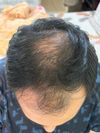
Doctors are testing verteporfin topically for healing and potential regeneration after transplants. The user is asking how it is formulated for topical use, such as if it's mixed with a carrier gel.
A 28-year-old male is experiencing temple regrowth but crown thinning while using 5mg minoxidil and 0.5mg dutasteride. The shedding phase is seen as a positive sign of treatment effectiveness, with expectations of noticeable improvements around 6 to 12 months.
The conversation discusses the safety and cost of 2.5mg Dutasteride, and the potential for increased DHT reduction by combining Dutasteride with topical Finasteride. The original poster is currently using 0.5mg Dutasteride, 1.25mg oral Minoxidil, and a topical treatment, and is considering increasing the dosage to maximize results while avoiding less known treatments like RU58841.
The user experienced side effects from finasteride and is considering adding Alfatradiol or Fluridil to their regimen, which includes Minoxidil, dermarolling, and ketoconazole. Fluridil is noted to be more effective than Alfatradiol but less effective than finasteride, with mild side effects reported.
Amplifica has not provided updates on SCUBE3 and AMP-303, raising concerns about their trial outcomes. Users also mention other treatments like Minoxidil, finasteride, RU58841, PP405, and ET-03.
A 31-year-old Indian male has been using oral minoxidil and finasteride for hair loss without visible improvement. He is considering taking DUT tablets against his doctor's advice due to potential side effects and is contemplating buzzing his hair instead.
DUPA is considered more treatable than FAPD, as FAPD involves scarring that prevents hair regrowth. The user has started treatment with oral dutasteride and minoxidil, hoping for better results than previous treatments.
Many users report better results with finasteride than dutasteride for hair loss, despite studies suggesting otherwise. Some suggest that dutasteride's effectiveness may depend on the delivery method, such as using lipids for absorption.
PTD-DBM is a Korean-developed treatment for hair loss, with limited information available and some users testing it personally. A user purchased PTD-DBM for $115 and plans to test it on their temples, but its effectiveness and authenticity remain uncertain.
The conversation discusses the use of finasteride for hair loss, comparing every day (ED) versus every other day (EOD) dosing. It suggests that both dosing schedules can be effective, but individual tolerance may vary.
Dutasteride is more effective than finasteride, has neuroprotective benefits, and may prevent acne. Despite initial concerns about metabolic effects, further research suggests it is safe for most users, especially if not hypogonadal.
The conversation is about someone's 4-month hair regrowth progress using 0.5mg dutasteride and topical minoxidil. Another person is inspired and is using 5mg finasteride and 5% minoxidil topically twice daily, hoping for similar results.
The user experienced significant hair regrowth using dutasteride (0.5 mg three times a week) and RU58841 (5% once a day), with no side effects reported from RU58841. They are considering increasing the RU58841 dose or adding minoxidil for further improvement.
The conversation discusses the delay in bringing FAK inhibitors and Stanford's hydrogel to market for hair transplants, with a preference for FAK inhibitors over Verteporfin due to their superior potential in preventing scarring. The user expresses frustration over the slow progress and hopes for faster development by companies like FAKnostics.
The user reports positive results from using 0.5 mg dutasteride daily for four months and 2.5 mg oral minoxidil for three months, with no side effects. They switched from topical minoxidil to this oral combination.
The user has been using 0.5 mg dutasteride and 2.5 mg oral minoxidil for a year, recently adding microneedling and topical minoxidil, with some improvement but the crown remains the weakest area. Consistency and realistic expectations are advised, as progress is slow and coverage is challenging with fine hair.
A 19-year-old is experiencing hair loss and has been using Rogaine for a month and finasteride for four days without improvement, while also experiencing testicular discomfort. They are concerned about losing hair density and potential DUPA, comparing their situation to their father's hair condition.
A user shared their hair regrowth success using microneedling with a dermaroller every 6 days and minoxidil, recommending betadine (povidone-iodine) before microneedling to sterilize the scalp and enhance results. Another user noted the potential risks of iodine toxicity.
19 year old male's three month results from using a combination of Minoxidil, finasteride and dermarolling for hair loss. It was suggested that adding Minoxidil could help with further progress.
People discussed switching from finasteride to dutasteride for hair loss treatment. They reported satisfaction with dutasteride, noting it was more effective than finasteride, particularly after finasteride's effects diminished, and some experienced additional benefits like cost savings and stabilized hair loss, rating dutasteride highly as a treatment.
Some users experienced side effects like low libido and erectile dysfunction with finasteride but found relief and hair regrowth with dutasteride. Others reported no issues with either drug, while some preferred dutasteride for long-term hair maintenance.
A user is concerned about the legitimacy of a hair growth serum called Lavdik, which they ordered after seeing an ad for Jemros. The product contains ginger extract, ginseng extract, fleece flower root, grape seed oil, glycerol, carbomer, propylene glycol, and rosemary oil, and the user is unsure if it is effective or a scam.
High dose topical Finasteride solutions are speculative and not proven more effective than low dose solutions. Users report varying results with different concentrations, with some preferring lower doses to minimize side effects.
A user is considering a hair transplant in a "mohawk" pattern with scalp micropigmentation (SMP) on the sides and back, questioning its feasibility and appearance. Others discuss donor region quality, potential scarring, and alternative treatments like dutasteride and RU58841.
A user shared their 7-month progress on hair regrowth using a regimen of dutasteride, minoxidil, stemoxydine, microneedling, and keto shampoo. They noted significant improvement, particularly in vellus hair growth, and discussed the potential addition of RU58841, though they experienced side effects with it previously.
User tries dermapen for hair loss and plans to use non-mainstream topicals like c60, ghk-cu, and ptd-dbm with valproic acid. They also use a head massager and modified LLLT belt for additional treatment.
A 22-year-old male shares his 2-month progress using a regimen of 0.5mg dutasteride daily, 1.5mm dermarolling weekly, a daily multivitamin, and a topical serum with 10% minoxidil and 0.1% finasteride. He reports impressive hair regrowth, especially at the hairline, and has experienced no sexual side effects.
The conversation is about a 23-year-old man's 5-month progress using minoxidil, finasteride, and dermarolling to treat hair loss, with before and after photos taken in the same location and lighting. One commenter notes difficulty in assessing the improvement due to the way the hair is combed over the bald spots.
User shared progress pictures after 3 months of using 1mg finasteride, 5% minoxidil, a dermaroller, and castor oil. They humorously commented on their results.