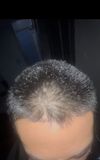
User experienced scalp itching and hair loss, but found relief with oral minoxidil. Others suggest "DHT itch" as a possible cause and recommend finasteride and ketoconazole to address it.
The conversation discusses concerns that Anagenic's version of GT20029 might not be as effective or safe as Kintor's, with comparisons to issues faced by pyrilutamide. The chemical structure of the drug has been published.
The conversation humorously discusses using "pure willpower" as a method to combat hair loss, alongside treatments like dutasteride, finasteride, and RU58841. The original poster claims that this unconventional approach, involving shouting affirmations and avoiding distractions, has led to noticeable hair regrowth.
Diet and specific shampoo improved scalp health and hair regrowth for someone with seborrheic dermatitis, while medications like Minoxidil and finasteride had no effect. A low-sugar, keto diet was key to their success.
This post and conversation are about using receipt paper as a satirical treatment for hair loss. Users humorously discuss various absurd methods, including rubbing, ingesting, and making suppositories out of receipts.
Minoxidil use may worsen seborrheic dermatitis, causing itching and dandruff. Users consider stopping minoxidil or switching to foam to improve scalp condition.
The user visited a trichologist due to ineffective topical finasteride treatment for hair loss. The trichologist recommended a new regimen including a two-month course of locoidon (cortisone 0.1%), followed by a solution containing minoxidil, hydrocortisone butirrate, estrone, progesterone, tocopherol acetate, trichosol, and transcutol.
A user shared their 14-month progress using Pyrilutamide and Minoxidil for hair loss, noting improvement and no side effects with these treatments, unlike their negative experiences with Finasteride and RU58841. They emphasized the importance of consistent application for seeing results.
A satirical discussion about a 2-year-old cat experiencing hair thinning, humorously suggesting treatments like minoxidil and finasteride. Users joke about the effectiveness and risks of these treatments.
A user shared a blog post by "swissTemples" claiming to have reversed hair loss using a combination of treatments including suppressing PGD2 and increasing PGE2. The user noted that "swissTemples" has been banned from forums, possibly due to conflicts of interest.
Hair loss discussion includes treatments like Minoxidil, finasteride, and RU58841. Platelet rich plasma treatment is considered expensive but cheaper than hair transplant.
The user is experiencing hair shedding of different thicknesses/lengths and is using Nizoral, ciclopirox, and pyrithione zinc conditioner. They are concerned whether the shedding is due to these treatments, miniaturization, or their low-calorie diet.
Using lice as an alternative to microneedling for hair loss treatment, with concerns about effectiveness and practicality. Some users humorously suggest genetically altering lice to produce beneficial compounds.
The user humorously describes trying various hair loss treatments, including minoxidil, finasteride, and RU58841, with a satirical twist involving psychedelic experiences and imaginary entities. They mistakenly used LSD instead of RU58841 and plan to continue experimenting with other substances.
Aloe vera gel can help reduce scalp inflammation and "DHT itch" associated with hair loss, particularly in those with androgenic alopecia and seborrheic dermatitis. It's suggested to use aloe vera alongside treatments like finasteride and ketoconazole shampoo to manage symptoms and promote scalp health.
A user suggests using a poop-based solution for hair growth, comparing it to fertilizing nails. Others humorously respond, with one mentioning microneedling as a similar concept.
A 19-year-old is experiencing worsening hair loss and severe seborrheic dermatitis despite using finasteride for six months. Nizoral (ketoconazole) is no longer effective, and they are seeking over-the-counter solutions and advice for an upcoming dermatologist visit.
The user is using dutasteride, oral minoxidil, and ketoconazole shampoo for hair loss but still experiences hair shedding. Despite using these treatments for about 1.5 years, the user jokes about the ineffectiveness and dandruff issues.
A 26-year-old male is unhappy with his current hair loss routine, which includes microneedling, ketoconazole shampoo, and a topical formula with Minoxidil, Finasteride, and other ingredients. He struggles with consistency due to ADHD and is considering switching to oral medication for simplicity, but is concerned about side effects and effectiveness.
The user is experiencing hair regrowth using a combination of oral finasteride, a minoxidil/finasteride topical spray, and dermarolling. They plan to continue this regimen and may consider adding dutasteride if needed.
The conversation is about whether the phase 2 results for pyrilutamide, a potential hair loss treatment, were presented at a dermatology convention and inquiries about the completion of phase 3 trials. Specific treatments mentioned include pyrilutamide.
Young individuals with seemingly healthy hairlines are using treatments like finasteride, dutasteride, and minoxidil, possibly due to paranoia or proactive prevention of hair loss. Some believe social media influences this behavior, while others argue for waiting until actual hair loss begins before starting treatment.
A 24-year-old is struggling with severe depression and anxiety due to hair loss, despite using dutasteride and oral minoxidil for two years. They are advised to consider shaving their head, exploring wigs or hair systems, and focusing on other aspects of life like health, relationships, and career.
Oral minoxidil is considered unsafe due to severe side effects and requires close medical supervision, while oral finasteride is viewed as safe and effective. There is debate over the fear-mongering around finasteride and the downplaying of minoxidil's risks, with some users advocating for proper health screenings before use.
The user believes Retrograde Alopecia may be linked to vitamin imbalances, specifically from taking too much Vitamin E, A, Zinc, and Selenium, and suggests it could be a middle ground between Androgenic Alopecia and Telogen Effluvium. Treatments for hair loss mentioned include Androgen inhibitors and improving lifestyle factors like nutrition and sleep, with topical melatonin also recommended for Retrograde Alopecia.
The user experienced significant hair loss after extended fasting, initially thought to be Telogen Effluvium, but later suspected male pattern baldness. They tried finasteride briefly but stopped due to concerns about side effects, and are unsure if the hair loss is due to Telogen Effluvium or another cause.
Elevated PGD2 levels in bald scalp tissue may contribute to hair loss, and treatments like castor oil, finasteride, and minoxidil are discussed as potential solutions. Some users explore alternatives like oral castor oil and cetirizine for those who cannot use finasteride.
A user experienced sleep paralysis after starting finasteride and is seeking others' experiences. Another user suggests finasteride might affect neurosteroids, potentially altering sleep patterns.
Pelage Pharmaceuticals raised $120M for their hair loss treatment, PP405, showing strong investor confidence despite limited data. There is skepticism about its efficacy and long-term effects compared to treatments like GT20029.