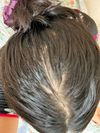
The user shared progress pictures showing hair regrowth over 55 days. They used 1mg finasteride, a 1mm dermaroller once per month, and 5% minoxidil twice daily.
The user has been using topical finasteride (0.1%) and minoxidil (5%) for over 8 months, experiencing significant hair shedding and loss of density, and is considering switching to topical dutasteride. They are hesitant to switch due to potential shedding but plan to wait until the 12-month mark before making a decision.
A 19-year-old male with no family history of androgenetic alopecia (AGA) is experiencing hair loss and considering using a topical minoxidil and finasteride mixture. Despite low vitamin D levels and normal DHT serum levels, he seeks confirmation of AGA before starting treatment.
The user is considering topical Saw Palmetto or Pumpkin Seed Oil due to sensitivity to finasteride and cost issues. They also use dermastamping for Minoxidil absorption and seek advice on timing to avoid systemic absorption.
User reports 2 months progress using daily oral fin 1mg, twice daily topical min 5%, and intermittent dermapen. Others share their experiences, suggesting patience and additional treatments like alternating shampoos, using conditioner, tretinoin, and vitamins.
A user with alopecia totalis, borderline universalis, seeks advice on getting into a Xeljanz trial or appealing insurance for coverage. They experienced significant hair regrowth but are now seeing hair loss again and want to try Xeljanz.
The conversation discusses the potential of new hair loss treatments, with a focus on pyrilutamide, gt20029, and topical alfatradiol, and the possibility of improving their effectiveness through methods like increased concentration and microneedling. Dutasteride is also mentioned as a stronger option.
The user observed new tiny white hairs after 12 days of using minoxidil, finasteride, microneedling, and biotin, hoping they will become terminal hairs. Others advise that while some hairs may not fully grow, consistent treatment, patience, and scalp massages could enhance results.
The user switched from oral minoxidil to topical minoxidil and added JXL-069/PP405-3HP, along with topical dutasteride, melatonin, and tretinoin. They also use low-level laser therapy (LLLT) but doubt its effectiveness.
User shared 13 months of progress using finasteride, microneedling, vitamins, and scalp care, and recently started stemoxydine. The post includes before and after photos.
People have reported hair thickening with Pyrilutamide, particularly using a 1% concentration. Some users are curious about the availability of different concentrations like 0.9%.
PP405 may induce new hair growth but cannot revive completely dead follicles, and its effectiveness on hairlines is uncertain. It is expected to be available by mid-2028, but users are advised to manage expectations and consider using other treatments like minoxidil and finasteride.
The user shared their 5-month progress using Minoxidil, finasteride, and weekly dermastamping, noting improvements in their hairline and crown. They also use a saw palmetto shampoo and have not experienced shedding yet.
A 36-year-old Latino man has seen progress in hair loss treatment over 4 months using consistent finasteride, topical/oral minoxidil, ketoconazole shampoo, and microneedling. He initially experienced dizziness from oral minoxidil but is hoping for increased hair density in the coming months.
The user noticed increased hair loss over the past three years and is seeking advice. A suggestion was made to consult a dermatologist or trichologist and consider blood tests, particularly for vitamin D levels, to address potential androgenetic alopecia (AGA).
The conversation discusses a 4-month hair loss treatment progress using RU58841, topical Minoxidil, ketoconazole shampoo, and micro-needling. The user shares progress pictures taken at the start, after 1 month, and the current state, all under the same conditions.
Chinese company gets green light for Pyrilutamide Phase II trial for androgenetic alopecia. Androgen receptors downregulate in androgen deficient environments.
A 43-year-old male saw significant hair regrowth and increased density after three months using topical Minoxidil (5%), topical Finasteride (0.025%), and 0.75mm microneedling every two weeks, with no side effects. He plans to continue and may reduce Finasteride concentration if progress continues.
The user experienced hair regrowth using dutasteride daily, microneedling weekly, and Nizoral shampoo, after stopping minoxidil due to side effects. They also use a mix of pumpkin seed, rosemary, and peppermint oil, and are considering RU58841 for more temple area thickness.
A user created a tracker for hair loss treatments in clinical development, including compounds like Dermaliq, RU58841, and Pyrilutamide. The tracker updates with new information and allows filtering by conditions like androgenetic alopecia (AGA) and alopecia areata (AA).
Tiny blond hairs on the vertex may indicate early hair regrowth from using dutasteride and minoxidil. Consistent treatment is advised, with potential for thicker hair over time, but a hair transplant might be needed for significant results.
The conversation is about finding the optimal concentration of topical melatonin for hair loss treatment. The user is considering making their own solution and is unsure whether a higher concentration is more effective for deactivating prolactin receptors.
PP405 is a new hair loss treatment advancing quickly in trials, generating excitement and skepticism about its effectiveness and marketing claims. Some see it as a potential alternative to minoxidil and finasteride, but concerns about long-term effects and the need for DHT blockers persist.
PP405 is seen as promising but uncertain, with users advised to continue using existing treatments like minoxidil and finasteride. Concerns include its cost, availability, and interaction with hair transplants, while some hope it could complement current treatments.
User experienced side effects from oral finasteride and tried topical Alfatradiol for hair loss. Alfatradiol provided maintenance without significant regrowth, and user suggests it as an alternative for those struggling with finasteride side effects.
The conversation is about someone's progress with hair loss treatment using a combination of topical finasteride and minoxidil, and dermastamping once a week. They are considering increasing the dermastamp needle size from 1.25mm to 1.5mm.
Clascoterone in Winlevi, a topical AR antagonist, is being re-examined due to concerns about HPA axis suppression in adolescents, but it's unlikely to be banned for adult use in androgenetic alopecia (AGA). The European Medicines Agency recommended refusing Winlevi for acne vulgaris, but this may not affect Breezula's approval for AGA.
AH-001 is a new topical treatment designed to degrade androgen receptors, targeting the root cause of androgenetic alopecia without the side effects of oral treatments like finasteride. It has shown a strong safety profile and good local tolerability in early trials.
The user is pleased with their hair transplant results but is concerned about the vertex area. They use Minoxidil and finasteride daily and had the procedure at a clinic in Athens.
Significant hair regrowth was achieved using a topical combination of 0.3% finasteride and 6% minoxidil, with weekly dermastamping and ketoconazole shampoo, without side effects. Others suggested additional treatments like red light therapy and PRP.