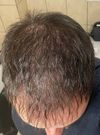
The progress of a user who has been using Minoxidil, micro needling and ketoconazole shampoo for 3 months to improve their hair and confidence; other users have suggested different treatments such as DHT blockers or finasteride.
The post is about a user's progress with using finasteride, minoxidil, and dermarolling for hair loss. The conversation includes comments about different treatments and methods used.
The user uses a 1.5mm derma stamp weekly for hair loss and applies minoxidil afterward, feeling a slight burn but no bleeding. They question if bleeding, seen in others using a derma pen, indicates proper technique.
User shared 1-year progress using Finasteride, Minoxidil, and dermarolling with no side effects. Others discussed their experiences and asked questions about the treatments.
The conversation is about managing a hair loss routine using Minoxidil twice daily, Tretinoin cream once daily at night, and microneedling once daily at night. The user is seeking advice on how to incorporate these treatments effectively without overlapping too much at night.
Topical roflumilast is effective for reducing inflammation in various scalp conditions like seborrheic dermatitis, psoriasis, and eczema, but not proven to stop scarring alopecia. Alternatives like apremilast and Vtama are also discussed for their anti-inflammatory benefits.
Minoxidil is discussed for its potential to decrease collagen production, with users sharing experiences about skin improvement after stopping its use. Some mention using it on their face for beard growth.
The user "natiggiz" shared their early progress in filling in bald patches using topical finasteride, minoxidil, RU58841, ketoconazole, and derma stamp. Other users commented on the great results and expressed jealousy.
The user has been using topical minoxidil and dermarolling for hair regrowth but is hesitant to start finasteride due to potential side effects. Many suggest adding finasteride for better results in addressing DHT-related hair loss.
The user discusses their hair regrowth progress over almost three months using a dermaroller, Minoxidil foam, finasteride pills, and biotin gummies. They share before and after pictures to show the improvement.
A user is exploring Kadeso, a product with Capilia Longa™ for hair regrowth, and seeks real-world experiences, comparing it to Minoxidil and Finasteride. They are interested in results, timeframe, side effects, and the credibility of the product's founder.
Minoxidil may cause skin aging effects like wrinkles and dark circles, but evidence is mixed. Alternatives like dermarolling and retinol are suggested.
The conversation discusses using Rogaine (Minoxidil) and ketoconazole for hair regrowth, with interest in trying a formulation with Azelaic Acid for potentially better results. Concerns about Azelaic Acid's effectiveness and safety, including skin sensitivity to sunburn, are mentioned.
Pelage Pharmaceuticals' PP405 aims to treat hair loss by reactivating dormant hair follicle stem cells, showing promising results in early trials. The company plans to present their findings at the American Academy of Dermatology Annual Meeting in 2026.
The conversation is about a 40-year-old trying a homemade topical hair loss treatment combining finasteride and minoxidil, and considering microneedling after previous side effects from oral finasteride. They plan to provide updates on the results and any side effects.
The 24-hour waiting period after dermarolling before applying minoxidil is unnecessary. New research supports the simultaneous application of minoxidil with microneedling for better hair growth results.
A dermatologist stated that minoxidil does not cause skin aging, despite online claims. A study found no significant impact of minoxidil on collagen content or skin aging.
The conversation discusses the use of a derma roller versus a derma stamp for microneedling to prevent hair loss. The user has been using topical minoxidil for 2 months without results and seeks advice on needle length.
Improving hair health involves not only using treatments like finasteride, minoxidil, and ketoconazole but also focusing on a healthy lifestyle, including diet, exercise, and stress management. A balanced approach enhances treatment effectiveness and overall well-being.
A 19-year-old trans female has been using topical minoxidil and dermarolling for nearly two months, alongside oral minoxidil, finasteride, spironolactone, and estrogen. She noticed significant hair improvement after starting topical minoxidil and dermarolling.
Dihydrotestosterone (DHT) impacts various skin conditions, including Androgenetic alopecia and seborrheic dermatitis, by causing overactivity in sebaceous glands. Topical medications Tacrolimus and Clobetasol can reduce these inflammatory conditions, and treatments like RU58841, Minoxidil, and Finasteride may also be beneficial.
The user is using a hair loss treatment involving dutasteride, minoxidil, finasteride, microneedling, and supplements like multivitamins, D3 K2, and Omega 3 fish oil. They are considering adding tretinoin and are open to suggestions while managing gut issues.
The user is experiencing increased hair shedding after using oral minoxidil and is considering topical dutasteride but is concerned about potential worsening. They are also exploring other topical treatments like latanoprost, caffeine, and melatonin, and seeking advice on application methods without pulling out existing hair.
The conversation discusses hair thinning potentially caused by seborrheic dermatitis, with the user considering over-the-counter treatments like Head and Shoulders, Selsun Blue, and Nizoral, while maintaining keratin-treated hair. A suggestion is made to use raw organic honey as a hair mask to treat seborrheic dermatitis without affecting keratin treatments.
A user discusses the potential of caffeine and DMG in shampoo for treating hair loss, citing a pending patent and personal plans to test it. They find it more convenient than using minoxidil, tretinoin, and microneedling.
The conversation discusses a patent filed by Shiseido for cloning Dermal Papilla (DP) cells to treat hair loss. The method involves using viral vectors to maintain the cells' growth-inducing properties, differing from Replicel's approach with Dermal Sheath Cup (DSC) cells.
Finasteride may help users look younger by suppressing DHT, affecting skin and hair. Users also emphasize skincare, sunscreen, and lifestyle for maintaining a youthful appearance.
The conversation discusses hair regrowth results after using finasteride, minoxidil, and dermarolling for four months. Users inquire about dosages and when results were first noticed.
The post discusses a user's 2-month progress in treating hair loss using topical Du once a week, microneedling, and red light therapy. The user notes that red light therapy is primarily for face and body inflammation but also applies it to the scalp.