Search
for
Sort by
Community Join
690-720 / 1000+ resultscommunity 6 months oral fin + min + keto and occasional derma rolling
A user shared progress pictures after 6 months of using oral finasteride, minoxidil, ketoconazole, and occasional derma rolling for hair loss. Another user complimented the hair improvement but suggested a different hairstyle.
community Six Month Progress Update - Hair Darker than Ever
The user experienced significant hair darkening and progress in hair regrowth over six months using 5% topical minoxidil, 5 mg oral minoxidil, 1 mg finasteride, and weekly microneedling. No side effects were reported from these treatments.
community Comparison of styled hair, similar haircut 9 months apart. (Oral Fin/Topical Min/Microneedling)
The user "Bishiop" shared a comparison of their hair progress over 9 months using oral finasteride, topical minoxidil, and microneedling. Other users commented on the results and shared their experiences with hair loss treatments.
community My hairline after 10 months of treatment
The user shared their 10-month hair loss treatment progress using Finasteride, Topical Minoxidil, and microneedling, noting significant improvement in their hairline. They also mentioned that Finasteride helped with acne, and other users discussed additional treatments like tretinoin and observed hair regrowth patterns.
community Is Stemoxydine an appropriate vehicle for mixing topical finsateride?
community Veradermics is now public with a billion dollar market cap.
Veradermics has a market cap over a billion dollars, comparable to Cosmo pharmaceutical. Users discuss using Kintor's Pirylutamide for hair loss.
community 2 years progress. Topical min/fin
community (24M) About 4 month progress (fin/min/microneedling). 1mg fin every day, 1ml 5% min once a day, derma stamping every two weeks
A 24-year-old shares 4-month progress using finasteride, minoxidil, and microneedling for hair loss. They report positive results and plan to update in a few months.
community How obvious is it that I am using hair fibers to thicken my hairline?
The user uses Toppik hair fibers to thicken their hairline and has switched from finasteride to dutasteride and oral minoxidil, noticing more hair thickening. Most responses indicate the hair fibers are not noticeable, and many suggest the user doesn't need them as their hair looks natural and good for their age.
community Should I Derma Stamp on Oral Dut/Min?
The user switched to oral dutasteride and minoxidil and is questioning the need for derma stamping, which is typically used with topical treatments. They are considering whether derma stamping is necessary with their current oral regimen.
community 6 month results on topical min, oral fin, and microneedling
A user (Majestic-Head3874) who has had successful hair regrowth with the combination of topical minoxidil, oral finasteride and microneedling treatments. People are asking for details about these treatments and Majestic-Head3874 is sharing the regimen they used.
community Do the more newer gen topical retinoids e.g. tazarotene outperform tretinoin in inducing follicular sulfotransferase activity?
community about homemade topical finasteride
A user started using homemade topical finasteride with PG-free liquid minoxidil for hair loss. They noticed the solution became milky with floaters and asked if it needed filtering.
community 4 months into topical minoxidil+fin solution
community Dermatologist tells me I don't have any serious signs of hair loss. This is my hairline.
A user is confused about a dermatologist's positive assessment of their scalp despite concerns about their hairline. They discuss using oral minoxidil, concerns about side effects from finasteride, and difficulty finding topical finasteride.
community 15 months total on Dut/Min/RU and microneedling 1mm every other week
The user reported significant hair improvement over 15 months using dutasteride, minoxidil (oral and topical), RU58841, ketoconazole, and microneedling. They are considering a hair transplant in 4-6 months.
community Research Backed Dutasteride Simulator (Serum/Scalp DHT included for all doses)
A dutasteride simulator predicts that daily 0.5 mg dosing results in higher DHT suppression compared to less frequent dosing. Twice-weekly dutasteride may be as effective as finasteride 5 mg, providing a balance between efficacy and ease of use.
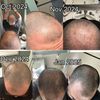
community Am I shedding? Cooked? Progress seems to be regressing
The user started taking 1 mg finasteride daily in September 2024 and began derma stamping twice a week, noticing progress initially but now experiencing increased scalp visibility. They are considering adding oral or topical minoxidil to their routine for further improvement.
community One last shot: DIM + Zinc from today + Topical Fin MWF
The user resumed using topical finasteride after a two-week break and will update on side effects like water retention and gynecomastia in a month. They are also starting DIM and zinc.
community 10 month progress - Dut, topical min, 1.5mm roller
The conversation is about hair loss progress using treatments such as Dutasteride, topical minoxidil, and a 1.5mm roller.
community 4 months min/dut/needling Norwood 6
The user is using oral Minoxidil, oral Dutasteride, microneedling, and RU58841 for hair loss, noticing slow progress with small hairs appearing. They are inconsistent with microneedling frequency, sometimes doing it weekly or skipping weeks.
community Is Scalp DHT more important than Serum DHT?
The user lost ground on oral finasteride and plans to switch to topical finasteride/minoxidil and microneedling. They are curious if topical treatments are more effective than oral ones.
community Will i have good results by using other treatments beside finastiride/dutasteride?
The user is using 5% topical minoxidil, tretinoin 0.05% cream, and weekly derma rolling for early-stage male pattern baldness and has seen some progress. They prefer not to use finasteride or dutasteride due to potential side effects.
community Progress assessment 2 years apart.
community Best brand of topical melatonin?
People are using topical melatonin for diffuse thinning and retrograde alopecia. They are discussing the best brands and application methods.
community 9 months on topical finasteride (0.05%) + 5% minoxidil.
community microneedling efficacy for male pattern baldness?
Microneedling, when combined with finasteride and topical minoxidil, can enhance hair regrowth for male pattern baldness, especially at the temples. Users report varying success with needle depths between 0.5mm and 1.5mm, with stamps preferred over rollers to minimize scalp damage.
community 7 Months Progress -- 1 Mg Finasteride, 5 mg Minoxidil, and Derma rolling
Significant hair regrowth was achieved using 1 mg Finasteride, 5% Minoxidil, and dermarolling, with a switch from a 0.5 mm to a 1 mm roller after two months. The user is happy with the results but is still considering a hair transplant for more density.
community 3 months on fin/min/derma stamp. 2.5 weeks of hair growth in both pictures
A user shared progress pictures after 3 months of using finasteride, minoxidil, and a derma stamp, showing 2.5 weeks of hair growth. They reported no side effects and take 1 mg of finasteride daily.