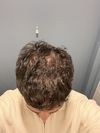
Managing seborrheic dermatitis using ketoconazole shampoo, Nizoral, and oils like MCT and coconut oil. The user considers shaving their head and consulting a dermatologist.
A 15-year-old is concerned about hair loss, possibly at Norwood 2 or 3, and is using shampoos and conditioners recommended by a trichologist. Suggestions include considering topical minoxidil and consulting a doctor about topical anti-DHT treatments like finasteride or RU58841, but avoiding 5-alpha-reductase inhibitors at this age.
Microneedling combined with minoxidil and finasteride shows significant hair regrowth, though opinions on its effectiveness vary. Some users report substantial benefits, while others highlight the need for more research and consistency in application.
A user is concerned that finasteride isn't working after 4 months and is considering switching to dutasteride due to severe hair loss. Others suggest continuing finasteride, adding minoxidil, and being patient.
User experienced significant hair improvement after 9 months using topical fin/min spray. Noticed positive changes around 3-month mark and chose topical treatment due to fewer side effects.
The conversation is about using vitamin C and Magnesium L-Threonate for hair growth by reducing DHT binding to dermal papilla cells. The original post about vitamin C's pH levels and sebum control was possibly removed by a moderator.
A 26 year old female dealing with hair loss who is considering treatments such as Spiro, minoxidil and finasteride. Other potential solutions mentioned are PRP treatment, a wig, and bio-identical estrogen combined with bica.
A 14 year old who is experiencing hair loss and has not received any help from the doctor, with advice being given to try different doctors, get tested for underlying conditions and intolerances, buzz it short as an option and treatments that could slow down or reverse the hair loss such as minoxidil, finasteride, RU58841 and addressing the cause of the hair loss.
A user started taking finasteride 1mg/day for hair loss but hasn't seen results yet. They also take vitamins and asked about adding minoxidil and the effectiveness of LLLT.
Hair loss requires proper diagnosis as it can have various causes, and treatments like finasteride, minoxidil, and dutasteride are often used. Many people express frustration with dermatologists and turn to self-research and alternative sources for treatment.
The clinic diagnosed the user with NW3 and AGA, noting thinning hair despite using finasteride for 3 years, and suggested PRP and Mesotherapy before considering a transplant. The user questions the necessity of these treatments without confirming retrograde alopecia and its treatability.
A 29-year-old male diagnosed with male pattern baldness was prescribed Minoxidil with Azelaic Acid but not Finasteride due to a history of mild depression. He is considering getting Finasteride online without waiting for a 3-month evaluation and is questioning the cost of his Minoxidil prescription.
A young female diagnosed with Lichen planopilaris (LPP) experienced years of misdiagnosis and ineffective treatments, including a hair transplant and other procedures. She is considering litigation due to the misdiagnosis and has learned that LPP is chronic, hair loss can be stopped with ongoing medication, but lost hair cannot regrow.
The user is experiencing hair loss, possibly due to androgenic alopecia or telogen effluvium, and is considering treatments like Minoxidil, Finasteride, or RU58841. They also mention potential iron deficiency and sleep deprivation as contributing factors.
A female user's diagnosis of androgenetic alopecia, and the advice shared in response which suggests taking spironolactone and minoxidil together to prevent hair loss.
Dutasteride may not be effective for everyone due to underlying issues, suggesting scalp biopsies for further diagnosis. Users discuss using higher doses of dutasteride, topical treatments, minoxidil, and pyrilutamide for hair loss management.
The user is seeking a knowledgeable trichologist or dermatologist in Belgium for a thorough scalp examination due to diffuse thinning and a previous diagnosis of male pattern baldness. They are interested in procedures like a trichogram and scalp biopsy.
Men with hair loss might have lichen planopilaris (LPP), which can mimic androgenetic alopecia, leading to misdiagnosis and ineffective treatment with finasteride or dutasteride. Proper diagnosis, including biopsies, is crucial to distinguish between androgenetic alopecia and conditions like LPP.
DUPA and retrograde alopecia may not be solely DHT-based, and a biopsy is crucial for accurate diagnosis and treatment. Treatments mentioned include dutasteride, oral minoxidil, pioglitazone, clobetasol, calcipotriol, ketoconazole, and doxycycline, depending on the specific condition.
An 18-year-old experiencing hair loss seeks a finasteride prescription but faces skepticism from doctors who only recommend vitamins. A suggestion is made to consult a dermatologist for a proper diagnosis and potential treatment with finasteride or minoxidil.
A 26-year-old is experiencing hair thinning and has received conflicting diagnoses of androgenetic alopecia and telogen effluvium. They are considering treatments like dutasteride, oral and topical minoxidil, and are unsure whether to start treatment or pursue further diagnosis like a scalp biopsy.
The user is concerned about potential hair thinning after getting a buzzcut and shares photos for comparison. A suggestion is made to consult a dermatologist for a proper diagnosis.
COVID and COVID vaccination can trigger hair loss, primarily telogen effluvium, due to stress and immune system activation. Proper diagnosis and addressing factors like nutrition and stress are crucial for recovery.
A 25-year-old experiencing hair thinning all over the body and head, despite using minoxidil and having low vitamin D levels, is advised to seek a second opinion from a dermatologist specializing in hair loss. The likely diagnosis is diffuse alopecia areata, which may require treatment with a JAK inhibitor.
Male pattern baldness and diffuse thinning can both be forms of androgenetic alopecia (AGA), and it's important to consult a doctor for proper diagnosis. Treatments like Minoxidil, Finasteride, and biotin are discussed, but their effectiveness varies, and side effects are a concern.
The user experienced significant hair loss after 9 months of using 0.5mg dutasteride and oral minoxidil, possibly due to alopecia areata. It is advised to consult a doctor for accurate diagnosis and treatment, as dutasteride and finasteride may not be effective.
White spots on a bald scalp, likely tinea versicolor, can be treated with ketoconazole or selenium sulfide shampoos like Selsun Blue. Consulting a dermatologist is recommended for proper diagnosis and treatment.
A 20-year-old experiencing hair loss uses minoxidil, Nizoral shampoo, vitamin D, and biotin. They are considering finasteride or dutasteride and are advised to consult a doctor for diagnosis and possible oral treatments.
The user is concerned about using dutasteride for potential hair loss, fearing it might accelerate balding if not effective. They are unsure about the doctor's diagnosis and are considering starting with finasteride instead.