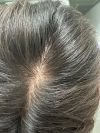
KX-826 is discussed as a hair loss treatment, with comparisons to finasteride. It is noted to be more expensive, harder to source, and generally used for stabilization rather than growth.
A 23-year-old male reported significant hair improvement using 0.5 mg finasteride and 2.5 mg minoxidil daily, along with 0.5 mg dutasteride twice a week. He noticed increased hair thickness, density, and darker color, attributing the changes mainly to oral minoxidil and DHT blockers.
A user shared their 4-year hair loss journey, starting with finasteride and minoxidil, then adding dutasteride and oral minoxidil, which improved their hair. They are now considering RU58841 and a hair transplant in the future.
Charts show how long Finasteride and Dutasteride stay in the blood, explaining why 0.5 mg Finasteride is less effective than 1 mg. Dutasteride accumulates over time, leading to gradual results compared to the immediate effects of Finasteride.
CRISPR treatments for blood disorders have been approved, leading to discussions about its potential for treating hair loss (AGA). A study showed that editing a gene related to DHT sensitivity could lead to hair regrowth, suggesting CRISPR may eventually be used for AGA, but it's expected to be expensive and not soon available.
The user shared their 4-month hair loss progress, noting initial hair loss followed by improvement. They used a dermaroller twice a week with varying needle sizes.
A user's progress with hair loss treatments, including Finasteride, Minoxidil, dermarolling and ketoconazole shampoo; showing results of going from bald to having some hair growth. Replies include encouragement, admiration, and disappointment at not seeing similar results.
A user reported significant hair improvement using ginseng oil along with Minoxidil, finasteride, RU58841, and microneedling, leading them to cancel a hair transplant. Other users requested more details and proof.
The post discusses a user's hair loss treatment involving Dutasteride 2.5 mg 5 times per week, Finasteride 1mg 4 times per week, RU58841 daily, and Minoxidil twice daily. A reply suggests that the combination is excessive, particularly the use of both Dutasteride and Finasteride, and labels it as a "chemical castration protocol".
The user experienced hair density loss after increasing finasteride dosage from 3x to 7x a week. It was suggested that this might be a temporary adjustment issue, and adding minoxidil could help.
PP405 is being discussed as a potential new approach to hair loss by targeting follicle stem cells, suggesting a different mechanism from existing treatments like finasteride and minoxidil. However, there is skepticism about whether it will lead to meaningful long-term outcomes or follow the pattern of previous treatments that showed promise but lacked consistent results.
The conversation discusses hair loss treatments, specifically mentioning Minoxidil, finasteride, RU58841, and TB-500 Thymosin Beta-4. It critiques the credibility of biohacking claims.
A 25-year-old shares 4 months of hair loss progress using 0.5mg Dutasteride, 2.5mg Minoxidil, and 10mg Biotin in one capsule. They experienced significant improvement by month 2, despite a big shed at month 3, with no side effects reported.
New hair loss treatments like VDPHL01, PP405, Gt20029, and Breezula are anticipated, with VDPHL01 possibly releasing in 2027/28. Current treatments include finasteride, dutasteride, and minoxidil, but new options are eagerly awaited.
People are hopeful about future hair loss treatments like PP405, GT20029, and VDPHL01, while some are currently using finasteride and minoxidil. There is skepticism about the effectiveness of new treatments, and some advise against hair transplants until more promising drugs are available.
The conversation discusses using 1 mg finasteride daily and adding 0.5 mg dutasteride once a week to improve hair loss results. The user is curious if this combination is more effective than finasteride alone.
Extended-release oral minoxidil (VDPHL01) shows promising results for hair growth with improved safety, achieving significant hair count increases and minimal side effects compared to placebo. The treatment is designed to maintain effective concentrations while reducing side effects, making it a safer option for those who cannot tolerate standard minoxidil.
Dutasteride reduces DHT more effectively in hair follicles than finasteride, but some individuals still experience hair loss despite treatment. Combining oral and topical finasteride may improve results, and some users experiment with topical dutasteride despite uncertainties about its absorption.
A 21-year-old male suffering from male pattern baldness is using topical finasteride and minoxidil, and oral minoxidil. His bloodwork shows normal DHT levels and slightly high testosterone, leading to discussions about the role of DHT sensitivity in hair loss, the potential impact of finasteride on his DHT levels, and the suggestion to proceed with oral finasteride due to his high testosterone.
A user discussed their hair transplant progress and mentioned using 1mg Finasteride, 5% Topical Minoxidil, and recently starting 5% RU58841. They are seeking advice on whether to use RU58841 at month 4 post-transplant.
A 19-year-old with NW2-2.5 hair loss is starting finasteride soon, considering low dosages of 0.25mg daily or 0.5mg 3-5 times a week. They are also using derma stamping, ketoconazole shampoo, ACV washes, and various oils to maintain hair quality and reduce scalp itch.
The conversation humorously discusses various unconventional and satirical hair loss treatments, including Minoxidil, RU58841, dutasteride, and microneedling. It also mentions bizarre suggestions like topical sharpie, spray paint, and Nutella.
A user shared their 4-month progress using a topical solution with 5% minoxidil and 0.1% finasteride, applied twice daily. They reported good results despite occasional missed applications.
Finasteride has been effective for maintaining hair density, but due to a slight dip in temple hair, the user switched to dutasteride as an additional measure. Users discuss varying experiences with side effects from finasteride, dutasteride, and minoxidil, highlighting that reactions can differ significantly among individuals.
The conversation confirms that to make a 5% RU58841 solution, 1.5 grams should be added to 30 mL of KB Solution. The discussion involves calculating the correct dosage for hair loss treatment.
A user is experiencing severe dandruff and hair loss, considering using ketoconazole shampoo 2% to manage these issues. They seek advice on application frequency and effectiveness, with suggestions to use it 2-3 times a week and to consider other treatments like finasteride for hair loss.
Dutasteride once a week may be a cost-effective alternative to daily finasteride for reducing DHT levels, with potential benefits for those seeking a lighter approach to hair loss treatment. Some users combine dutasteride with finasteride, minoxidil, and dermarolling for improved results.