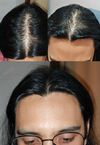
User started finasteride at 18, added minoxidil later but stopped due to side effects. Hairloss continued despite treatments, considering dutasteride but hesitant. Others suggest trying dutasteride and discussing with a dermatologist.
This conversation discusses the advancements in treatments for hairloss, including finasteride, dutasteride, minoxidil and new promising treatments such as pyrilutamide and verteporfin. Other treatments discussed were taking minoxidil orally, tretinoin to turn non-responders into responders and microneedling to further boost growth.
The conversation discusses CRISPR-on & CRISPR-off as a potential cure for baldness, contrasting it with hair cloning and other treatments like Minoxidil, finasteride, and RU58841. It also mentions the potential of mRNA for gene expression control and the prioritization of gene editing for severe genetic conditions.
The conversation discusses using finasteride for hairloss, with iron supplements helping to slow shedding. The user emphasizes that shedding doesn't necessarily mean permanent hairloss.
The user discusses their experience with diffuse unpatterned alopecia and acquired progressive hair kinkering, noting improvements with treatments including biotin, pantothenic acid, finasteride, ketoconazole, and zinc pyrithione shampoo. They report thicker, healthier hair and improved scalp condition, attributing success mainly to biotin, pantothenic acid, and finasteride.
A 33-year-old male experienced sudden, rapid hairloss, possibly due to a reaction to mentholated shampoo and undiluted tea tree oil, with a history of seborrheic dermatitis. He is currently taking finasteride, vitamin D3, a multivitamin, and biotin, and is seeking further medical evaluation.
Finasteride is used for hair stabilization, while minoxidil is avoided due to side effects. Styling tips include using hair fibers, washing hair less frequently, and managing anxiety related to appearance.
The conversation suggests that abstaining from ejaculation for a few months may help stop or reverse hairloss by potentially increasing testosterone and reducing DHT levels. It also mentions the use of minoxidil and finasteride as effective treatments for maintaining hair after a hair transplant.
Minoxidil alone can work for some people, but it may not address DHT-related hairloss. Adding a derma roller and using ketoconazole shampoo might improve results.
Creatine does not cause or worsen hairloss, despite some anecdotal reports of hair thinning. The discussion emphasizes that these reports are not supported by scientific evidence.
A user is experiencing diffuse thinning and is using oral minoxidil, dutasteride, and plans to add finasteride temporarily. They express frustration with local dermatologists' lack of knowledge on hairloss treatments.
The conversation is about a user's one-year hairloss treatment using dutasteride, oral and topical minoxidil, ketoconazole, tretinoin, and PRP. Users discuss treatment effectiveness, potential issues with diffuse thinning, and sourcing affordable treatments.
Diet and lifestyle changes can reduce hair shedding but won't regrow hair lost to genetic male pattern baldness. Treatments like finasteride and dutasteride are necessary for significant hair regrowth.
Dutasteride at 2.5mg is considered a potential hairloss cure due to its DHT-blocking ability, but there are concerns about side effects and individual responses. Minoxidil, finasteride, and RU58841 are also discussed, with mixed opinions on their effectiveness and safety.
A 24-year-old male shared his 8-month progress in fighting hairloss using 1mg finasteride daily, 5mg minoxidil daily, 5mg biotin daily, and topical minoxidil nightly. He experienced no side effects and noted improved confidence and reduced shedding.
The conversation highlights the general public's lack of knowledge about hairloss, with various ineffective remedies suggested, such as not wearing hats or using hair fibers. The only effective treatments mentioned for male pattern baldness are medications like minoxidil and finasteride, and hair transplants.
Topical melatonin was found to significantly increase hair density and decrease scalp conditions like seborrheic dermatitis. The user is considering using it alongside finasteride and oral minoxidil for treating hairloss and scalp health.
The conversation is about the effects of steroids on hairloss. Some users believe that steroids can cause hairloss, while others argue that it depends on individual sensitivity to DHT. There is also discussion about the appearance of balding individuals who use steroids.
A user who buzzed their hair off after five years of struggling with hairloss, and the replies discussing whether or not they should go completely bald, as well as advice on cutting it shorter and potential treatments such as finasteride and minoxidil.
A 21-year-old is using a topical solution with minoxidil and finasteride for hairloss, along with supplements and specific shampoos, and is considering switching to oral treatments if no progress is seen in a few months. They are concerned about diffuse thinning and potential future hair transplants, and are exploring additional treatments like microneedling and tretinoin.
There is no natural way to stop hairloss; pharmaceuticals like minoxidil, finasteride, and RU58841 are the only effective treatments. Some users report success with minoxidil and microneedling, while others discuss the side effects of finasteride.
The conversation discusses using Vitamin E, Minoxidil, finasteride, and RU58841 for hairloss treatment. The link provided offers more information on the benefits of Vitamin E for hairloss.
A 23-year-old male is using 0.5 mg dutasteride daily, 5% minoxidil twice daily, and ketoconazole with zinc pyrithione shampoo twice a week to address diffused thinning and hairloss. He is seeking advice on whether his hair will regrow and if additional treatments are needed.
A dental technician claims malocclusion causes pattern hairloss due to poor scalp circulation. Users debate this, noting treatments like finasteride, minoxidil, and microneedling focus on DHT and blood flow.
DUPA and retrograde alopecia may not be solely DHT-based, and a biopsy is crucial for accurate diagnosis and treatment. Treatments mentioned include dutasteride, oral minoxidil, pioglitazone, clobetasol, calcipotriol, ketoconazole, and doxycycline, depending on the specific condition.
The conversation is about identifying nutritional factors that should be checked and supplemented to address diffusehairloss, including Vitamin D, Biotin, Vitamin C, Vitamin B, Iron, Zinc, Protein, and Omega-3. No specific treatments were mentioned.
Oral minoxidil is considered more convenient and effective for some users, with positive results reported, but concerns about side effects and availability persist. Finasteride remains a standard treatment, while some users explore combinations with other treatments like dutasteride and laser devices.
A 20-year-old experiencing diffuse thinning is using a regimen of oral minoxidil, dutasteride, finasteride, and ketoconazole to address hairloss. They are considering increasing the minoxidil dosage or adding topical treatments due to minimal shedding observed after 16 days.
A 20-year-old experiencing diffuse thinning for two years has been using topical minoxidil and finasteride but hasn't noticed significant regrowth or reduced hairloss. They are seeking advice on whether to switch treatments, with suggestions including oral minoxidil, topical finasteride, and maintaining scalp health.