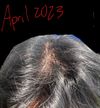
The conclusion of the conversation is that dying the hair can be an effective method for managing hair loss, particularly for those with diffusethinning.
Keratin fusion bonds are discussed as an alternative to clip-on hair patches for men with diffusedthinning. The conversation explores different styling options for hair loss.
Despite using treatments like Dutasteride, Minoxidil, RU58841, and GHK-Cu injections, the individual continues to experience aggressive hair thinning and is seeking a specialist for further help. Suggestions include trying finasteride, dermarolling, or another hair transplant.
The user has been using oral minoxidil, dutasteride, RU58841, and other treatments for hair loss over nine months, seeing some improvement in hair thickness and crown volume but continued thinning at the hairline. They plan to continue treatment for another nine months despite being sensitive to DHT fluctuations and are considering increasing dosages or other options like a hair transplant.
Individuals with oily scalps, dandruff, and diffusethinning hair loss who have managed to either halt the loss or regrow their hair by using topical finasteride and minoxidil as well as microneedling and ketoconazole 2% shampoo.
The user is considering switching from oral to topical minoxidil due to lack of improvement and side effects, while continuing with dutasteride or finasteride. They seek advice from others with diffusethinning.
The conversation is about someone who has been using finasteride and minoxidil for over three years without satisfactory results for hair thinning. They have started using dutasteride and added RU58841 seven months ago but have not seen improvements yet.
The user is considering switching from finasteride and minoxidil to dutasteride for better hair regrowth results, as they are experiencing thinning and shedding despite current treatments. They have also tried microneedling, Clobetasol, and salicylic acid to manage scalp issues and inflammation.
A user experienced significant hair regrowth after 5 weeks by taking zinc, vitamin D, and biotin supplements, correcting deficiencies that were contributing to hair loss and thinning. They report a decrease in hair shedding, faster hair growth, and a thickening of their hairline without using common hair loss medications like Minoxidil or Finasteride.
Hair appearance fluctuates due to factors like styling, product buildup, and humidity, causing frustration for those with diffusethinning. Treatments mentioned include minoxidil, finasteride, ketoconazole shampoo, and RU58841, with mixed results.
A 25-year-old male has been using finasteride since October 2022 to combat diffusethinning and hairline recession, experiencing initial shedding but later stabilization. He plans to add oral minoxidil to improve hair density and is open to trying dutasteride if necessary, with minimal side effects reported.
The user is experiencing diffusethinning and excessive sebum production, considering Accutane as a potential solution after trying dutasteride and oral minoxidil without success. Other users suggest treatments like Nizoral shampoo, finasteride, beclomethasone dipropionate lotion, and topical androgen receptor inhibitors.
The user is experiencing diffusethinning after 10-11 months on oral finasteride and is concerned about whether this is a normal shedding phase. They have been using topical finasteride and minoxidil for over a year.
A user is experiencing diffusethinning and is using oral minoxidil, dutasteride, and plans to add finasteride temporarily. They express frustration with local dermatologists' lack of knowledge on hair loss treatments.
A 22-year-old male experiencing diffusethinning and frizzy hair has been using finasteride for nine months and is seeking advice on improving hair quality. Suggestions include using conditioners, biotin, rosemary oil, and addressing scalp conditions like seborrheic dermatitis or psoriasis, while finasteride may help reverse miniaturization and improve hair health.
OP experienced diffusethinning for 11 years and used Minoxidil and Finasteride previously. They now use Pyrilutamide 0.5% and Alfatradiol 0.1%, resulting in significantly reduced hair loss.
The user started using Hims Finasteride and Minoxidil topical in July 2023, added daily microneedling in November, and switched to chewable Finasteride and Minoxidil in January with increased microneedling frequency. They observed hair regrowth, suggesting diffusethinning may be easier to treat.
A user with diffusethinning, currently using finasteride, biotin, minoxidil, and nizoral shampoo, is considering a topical solution called "82M" but is skeptical due to its high cost and lack of supporting research. They seek others' experiences with "82M."
A 23-year-old male is using 0.5 mg dutasteride daily, 5% minoxidil twice daily, and ketoconazole with zinc pyrithione shampoo twice a week to address diffusedthinning and hair loss. He is seeking advice on whether his hair will regrow and if additional treatments are needed.
The conversation is about using minoxidil for diffusethinning after finasteride showed no regrowth. Tips include applying minoxidil directly to the scalp, considering potential shedding, and being cautious with combining tretinoin due to possible irritation.
The user is experiencing diffuse hair thinning after 8 months on topical finasteride and 11 months on minoxidil, and is considering switching to oral finasteride due to lack of effectiveness. They also mention scalp itchiness and use of a 1% ketoconazole shampoo.
The user is experiencing diffuse hair thinning despite using dutasteride and minoxidil for over five years and is considering adding oral minoxidil, microneedling, and nizoral to their regimen. They are concerned about the effectiveness and side effects of these treatments, especially with an upcoming event.
The user experienced rapid diffuse hair thinning for five years despite no signs of AGA or miniaturization. They tried finasteride and oral minoxidil without success and have checked thyroid, iron, and vitamin D levels.
A 22-year-old male experiencing diffusethinning started finasteride and 2% minoxidil 8 months ago, then switched to 5% minoxidil with tretinoin 4 months ago. Despite initial improvement in hair density, he is now experiencing increased hair shedding, losing 100-200 hairs daily.
A 29-year-old male with diffusethinning plans to start minoxidil and finasteride soon but is concerned about potential shedding before a big event in late April/early May. He is considering whether to start treatment now or wait until after the event.
A 20-year-old experiencing diffusethinning is using a regimen of oral minoxidil, dutasteride, finasteride, and ketoconazole to address hair loss. They are considering increasing the minoxidil dosage or adding topical treatments due to minimal shedding observed after 16 days.
A 20-year-old experiencing diffusethinning for two years has been using topical minoxidil and finasteride but hasn't noticed significant regrowth or reduced hair loss. They are seeking advice on whether to switch treatments, with suggestions including oral minoxidil, topical finasteride, and maintaining scalp health.
A 22-year-old with advanced diffusethinning is considering oral dutasteride after stopping finasteride due to side effects like brain fog and testicular pain. They are also contemplating a hair transplant combined with oral dutasteride and topical finasteride, noting a thick donor area.
A 22-year-old male experiencing diffusethinning is using oral minoxidil and finasteride but notices his hair looks thin in sunlight. Suggestions include using hair products, considering topical minoxidil, addressing seborrheic dermatitis, and possibly trying dutasteride or a hair transplant.