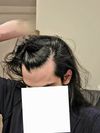
A 24-year-old male experiencing diffused thinning discusses his DHT levels and hair density issues. He has not used finasteride or dutasteride and is considering AR inhibitors.
The user is considering switching to oral dutasteride and oral minoxidil after being happy with their 4.5-month hair loss treatment progress using oral and topical finasteride, topical minoxidil, tretinoin, and microneedling. They thanked the community for information on medications.
Users discuss switching from finasteride to dutasteride for hair loss treatment. Some report better results with dutasteride, including hair regrowth and stabilization.
The conversation discusses the safety and cost of 2.5mg Dutasteride, and the potential for increased DHT reduction by combining Dutasteride with topical Finasteride. The original poster is currently using 0.5mg Dutasteride, 1.25mg oral Minoxidil, and a topical treatment, and is considering increasing the dosage to maximize results while avoiding less known treatments like RU58841.
A 30-year-old male is experiencing hair loss and is concerned about his receding hairline, seeking advice on his Norwood scale classification. He is apprehensive about using Minoxidil and finasteride as treatments.
Dutasteride, finasteride, and minoxidil are considered the top hair loss treatments. Other suggested treatments include Nizoral shampoo, tretinoin, pyrilutamide, zinc, biotin, and low light laser therapy, though opinions on their effectiveness vary.
A 28-year-old male shares progress on hair loss treatment using 0.5mg dutasteride and 5mg minoxidil, experiencing initial shedding but encouraged by community support. He also uses ketoconazole occasionally based on scalp oiliness.
The user switched from finasteride to dutasteride for hair loss and saw significant improvement in under two months. They also microneedle, take supplements including collagen and vitamin D3, use ketoconazole shampoo, and noticed accidental hair regrowth with retinol application on their face.
The user experienced significant hair regrowth using dutasteride 0.5 mg daily, 5% topical minoxidil twice a day, and microneedling over several months. They also used ketoconazole shampoo and rosemary oil, reporting some side effects but overall positive results.
The user reported significant improvement in hair thickness and color in the crown area after 3 months on Dutasteride 2.5 mg and oral Minoxidil 5 mg, with temporary side effects that resolved. They switched from Finasteride to Dutasteride due to lack of results with the former.
The conversation is about someone experiencing hair regrowth using Minoxidil and Dutasteride, along with other treatments. They report their hairline is improving and their forehead appears smaller.
Topical finasteride concentrations are likely much higher than necessary for effective follicular DHT suppression, with current standards being 100-1000 times above the theoretical minimum. Lower concentrations (0.001-0.0025%) might still work locally while minimizing systemic exposure.
The user discusses their hair loss experience, exploring various hypotheses including thyroid levels, vitamin D, DHEA, nutritional deficiency, diabetes, seborrheic dermatitis, lack of nutrition to hair follicles, chronic inflammation, female pattern hair loss causes, cortisol, and prolactin levels. They are currently using finasteride, beta-sitosterol, and have tried topical dutasteride and microneedling therapy.
Switching from finasteride to dutasteride led to hair density loss, prompting consideration of returning to finasteride. Consistency with dutasteride and adding RU58841 did not prevent the loss, and users suggest giving dutasteride more time or consulting a dermatologist.
The user is experiencing potential hair regrowth after 3 months of using 0.5mg Dutasteride, 2.5mg Minoxidil, and 2% Ketoconazole shampoo, along with supplements like pumpkin seed oil and vitamin D. They notice tiny hairs on their scalp and seek opinions on whether this indicates regrowth.
The user has been using dutasteride for 8 months, oral minoxidil for 3 years, and topical minoxidil on temples, with recent microneedling. They experienced thinning after switching from finasteride to dutasteride and are hoping for improvement by the 12-month mark.
A 23-year-old male is using 0.5 mg dutasteride daily, 5% minoxidil twice daily, and ketoconazole with zinc pyrithione shampoo twice a week to address diffused thinning and hair loss. He is seeking advice on whether his hair will regrow and if additional treatments are needed.
The post and conversation are about a user's 6-month progress using topical dutasteride, 8% minoxidil, tretinoin, 2% ketoconazole shampoo, microneedling, oral finasteride, pumpkin seed oil, Vitamin D3, a men's multivitamin, rosemary oil, and 5% minoxidil foam for hair loss treatment.
The user experienced significant hair regrowth using a combination of minoxidil, finasteride (later switching to dutasteride), and tretinoin over two years. They noticed regrowth almost immediately, with no major initial shedding phase, and reported recession and diffuse hair loss patterns.
The conversation discusses a person's hair loss treatment over 1.1 years with finasteride, 1.5 years with minoxidil, and 2 months of microneedling, noting less shedding since starting vitamin D3 a month ago. Commenters are impressed with the results.
A user shared progress pictures showing improvement from NW6 diffuse to NW1 after 5 months of finasteride and 2 months of dutasteride. Another user asked if these treatments affected beard or body hair thickness.
The conversation discusses a 13-month hair loss treatment update using dutasteride, minoxidil, nizoral, and a 1.5mm derma roller, with the original poster reporting no side effects and some improvement in hair thickness. Participants request before-and-after pictures with consistent hairstyles to better assess the treatment's effectiveness.
Dutasteride might be better for hairline due to varying levels of 5AR activity in scalps. Genetic tests can determine if finasteride is enough or if dutasteride is needed.
The user has been using oral minoxidil, dutasteride, RU58841, and other treatments for hair loss over nine months, seeing some improvement in hair thickness and crown volume but continued thinning at the hairline. They plan to continue treatment for another nine months despite being sensitive to DHT fluctuations and are considering increasing dosages or other options like a hair transplant.
The conversation discusses whether adapalene (Differin) increases sulfotransferase like tretinoin does, in the context of combining it with minoxidil for hair treatment. The responses indicate that adapalene does not have the same effect as tretinoin.
The user is using oral Minoxidil, oral Dutasteride, microneedling, and RU58841 for hair loss, noticing slow progress with small hairs appearing. They are inconsistent with microneedling frequency, sometimes doing it weekly or skipping weeks.
The user has been treating hair loss with Minoxidil, Finasteride, Derma stamping, Nizoral shampoo, and hair and nail vitamins for two months, experiencing mood swings from Finasteride that stabilized over time. They are seeking opinions on their progress.
The user has been using dutasteride, oral minoxidil, and vitamin D for 8 months with no improvement in hair loss. They are considering trying RU58841 or a hair transplant due to the ineffectiveness of current treatments.
The user resumed using topical finasteride after a two-week break and will update on side effects like water retention and gynecomastia in a month. They are also starting DIM and zinc.