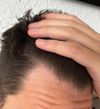
The user is experiencing hair loss and has been using RU58841 but is considering pyrilutamide and minoxidil, avoiding finasteride due to side effects. Another user suggests finasteride or dutasteride as essential, possibly in topical form, while dismissing saw palmetto as ineffective.
A 17-year-old is experiencing diffuse thinning, dandruff, body hair shedding, and other symptoms, possibly linked to seborrheic dermatitis or telogen effluvium. They are using ketoconazole shampoo and considering blood tests to check for thyroid issues or deficiencies.
A user experiencing hair loss received three different diagnoses: androgenic alopecia, traction alopecia, and scarring alopecia, and tried treatments like minoxidil and finasteride without success. They are considering dutasteride but were advised to seek anti-inflammatory medication instead.
The user noticed hair thinning and has been using a treatment with minoxidil 2%, hydrocortisone butyrate, and 17 alpha estradiol for three months, seeing some regrowth. The user had dermatitis, now cured, which worsened the hair loss.
A user is considering a hair transplant in a "mohawk" pattern with scalp micropigmentation (SMP) on the sides and back, questioning its feasibility and appearance. Others discuss donor region quality, potential scarring, and alternative treatments like dutasteride and RU58841.
The conversation is about whether to use gloves when applying 5% RU58841 to avoid systemic absorption and if washing hands with water is sufficient. Users question the concern, noting it is applied to the scalp.
Seborrheic dermatitis improved after a hair transplant. Effective treatments include Sebamed Anti-Dandruff Shampoo, Vichy Anti-Dandruff Shampoo, Nizoral, and medications like finasteride, dutasteride, and minoxidil.
A user is seeking advice on making a topical bicalutamide solution as an alternative to RU58841 for hair loss, while already using dutasteride and minoxidil. They are considering crushing bicalutamide pills and adding them to their minoxidil.
The user has been using minoxidil and finasteride for hair loss without positive results and switched to dutasteride 1.5 months ago. They suspect seborrheic dermatitis might be affecting the effectiveness of these treatments.
White spots on a bald scalp, likely tinea versicolor, can be treated with ketoconazole or selenium sulfide shampoos like Selsun Blue. Consulting a dermatologist is recommended for proper diagnosis and treatment.
Clascoterone is a topical treatment for androgenetic alopecia, showing modest to moderate hair regrowth, and may be available by 2027-2028. It is considered safer than finasteride, with discussions on its effectiveness compared to RU58841 and pyrilutamide.
Mixing Nizoral and T-Gel in a 1:1 ratio and using it three times a week provided relief from persistent seborrheic dermatitis. This treatment is recommended for those with stubborn SD.
The user started using minoxidil foam daily after two years on finasteride and is managing seborrheic dermatitis with antifungal shampoo. They seek advice on moisturizing products that won't worsen their condition, with suggestions including gentle shampoos and light ceramide serums.
The efficacy of degrading the androgen receptor through dermal application in DP cells, a delivery system for topical drugs that involves dissolving microneedles, and rosemary oil as an alternative anti-androgen.
The conversation discusses managing seborrheic dermatitis (sebderm) and male pattern baldness (MPB) with treatments like finasteride, coal tar shampoo, Nizoral, and oral minoxidil. Users suggest dietary changes, regular shampooing, and using antifungal products to control sebderm before considering minoxidil.
The conversation is about managing an itchy, flaky scalp, possibly due to psoriasis, and the use of a hydrating conditioner to address dryness. The user is concerned about using conditioner due to experiencing telogen effluvium.
8 months post hair transplant, OP experiences asymmetrical shedding despite using finasteride and starting minoxidil. The doctor suggests it might correct itself or be due to transplant trauma, recommending a wait-and-see approach.
The dermatologist diagnosed androgenic alopecia and prescribed minoxidil and a shampoo for dandruff, avoiding finasteride due to side effects. The user questions the dermatologist's approach and considers seeking a second opinion due to concerns about the lack of a physical scalp check initially.
The user has been on finasteride for 8 months and minoxidil for 3 months, experiencing minor regrowth at the temples but overall worse hair loss, with constant shedding and itching. They are concerned about thinning on the sides and nape, questioning if it's diffuse unpatterned alopecia (DUPA) and seeking advice on what to do next.
A user discusses using a serum called Dallixa, containing minoxidil-like and bimatoprost-like compounds, for hair loss and greying. The user's dermatologist advised against finasteride and suggested the serum might improve hair pigmentation.
The user experienced significant hair regrowth after 2.5 years of using Minoxidil 5% and hormone replacement therapy (HRT) with Lupron, despite initial scalp irritation. Finasteride was ineffective for them.
A user is participating in a phase 3 trial for Clascoterone, a topical acne medication that may stimulate hair growth, and will share results after 6 months. They will have a section of their hair shaved and marked with a tattoo for the study.
Switching from 2% liquid minoxidil to 5% foam minoxidil reduced scalp irritation but increased eyebrow flakiness and thinning. The user speculates that propylene glycol in the liquid formulation might have been protecting against seborrheic dermatitis while causing contact dermatitis.
A dermatologist prescribed Betnovate scalp, a corticosteroid, for a 21-year-old male's hair loss due to DHT. The individual is considering using Nizoral shampoo, topical finasteride, a derma roller, and minoxidil, but is unsure about the effectiveness of two other products suggested by the dermatologist.
User deciding between oral and topical minoxidil, concerned about hypertrichosis and myocarditis interaction. They're using topical finasteride, LLLT, natural oils, dermastamping, and scalp massage, and considering adding oral minoxidil.
The post discusses a user's 2-month progress in treating hair loss using topical Du once a week, microneedling, and red light therapy. The user notes that red light therapy is primarily for face and body inflammation but also applies it to the scalp.
The conversation discusses hair loss treatments, specifically Dutasteride, Minoxidil, RU58841, and derma pen use over six months. One user mentions RU58841 is effective but personally wouldn't use it.
RU58841 is discussed as a treatment that stops scalp itching when used with finasteride or dutasteride. The user is considering trying RU58841 due to persistent itching despite using the "big 3" treatments.