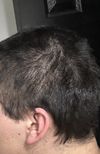
The user has been experiencing continuous hair loss despite using finasteride, minoxidil, and dermastamping. They are seeking advice on what to do next.
The conversation discusses using scalp massage, balms like Ethera and L'Occitane, and dietary changes such as rosemary tea and tofu to address hair loss. The user is also considering high-intensity interval training and slow breathing to improve hair regrowth.
The user has been experiencing diffuse hair thinning despite using finasteride, minoxidil, dermarolling, clobetasol cream, and PRP sessions. They seek advice on additional treatments and are advised to check vitamin D, iron, and thyroid levels.
A user's 1 year progress using a combination of treatments, including Minoxidil BID, finasteride, microneedling, tretinoin, and ketoconazole shampoo, for hair loss. Replies included advice such as to consider switching the strength of minoxidil or getting a shorter haircut.
Topical tretinoin applied to the face may exacerbate hair loss in some individuals, potentially triggering conditions like frontal fibrosing alopecia. Experiences vary, with some users reporting no impact on hair, while others experience significant hair loss.
A person experienced hair loss due to a crash diet and is now seeking advice on recovery, including dietary changes and potential treatments like biotin and pumpkin seed oil. They are concerned about nutrient deficiencies and considering a dermatologist visit for further guidance.
8 months post hair transplant, OP experiences asymmetrical shedding despite using finasteride and starting minoxidil. The doctor suggests it might correct itself or be due to transplant trauma, recommending a wait-and-see approach.
Hair loss treatments discussed include microneedling, minoxidil, tretinoin, finasteride, dutasteride, pumpkin seeds, saw palmetto, and scalp massage. The consensus is that finasteride or dutasteride is necessary for significant regrowth, while other methods may only slow hair loss.
The conversation discusses managing hair loss and scalp issues, with users sharing experiences using treatments like dutasteride, finasteride, ketoconazole, sulfur soap, and topical anti-androgens. Suggestions include trying sulfur soap, scalp massages, spironolactone, and dietary changes to reduce sebum production and dandruff.
A user shared their 3.5-month progress using oral finasteride, topical minoxidil, biotin, and weekly 1.5mm derma rolling. Another user commented that the original poster's hairline has improved significantly.
The user is using 5% topical minoxidil, a 0.5mm dermaroller, and keto shampoo for hair loss treatment, showing positive progress after two months. They plan to continue the regimen for maintenance.
Ultrasound imaging can non-invasively detect active and inactive hair follicles, inflammation, and fibrosis, potentially reducing unnecessary biopsies. It may help assess hair growth potential and diagnose scalp issues, but some users believe in trying treatments regardless of ultrasound results.
Microneedling depth should be customized based on hair type and scalp area, with many users finding 0.5-0.6mm effective for miniaturized hairs to avoid damage. Users report varying pain levels and results, with some preferring shorter needle lengths and others using longer ones like 1.75mm for scalp health and density improvement.
A 21-year-old experiencing significant hair loss despite using dutasteride, oral minoxidil, ketoconazole shampoo, and low-level laser therapy seeks advice. Suggestions include adding microneedling, checking for vitamin deficiencies or thyroid issues, and considering a scalp biopsy for other conditions.
Hair loss from seborrheic dermatitis can be temporary. Treatments discussed include Minoxidil, finasteride, and RU58841, along with collagen and biotin supplements.
The conversation discusses using minoxidil and finasteride for hair loss, with concerns about absorption and considering adding tretinoin for better results. Microneedling is suggested as a method to improve absorption, with varying depths and frequencies recommended.
The user is using minoxidil, finasteride, and recently added tretinoin to address hair loss, specifically around a receding hairline. They are seeking advice on application methods and mention experiencing mild skin rashes potentially from tretinoin.
A user shares their hair loss treatment regimen, which includes oral finasteride, oral and topical minoxidil, RU58841, LLLT cap, microneedling, ketoconazole shampoo, biotin, vitamin D3, NAC supplement, MK677, collagen, and other hair care products. They seek opinions on its effectiveness.
A treatment showed a 20% hair density increase in weeks, with nearly a third of participants experiencing significant results, while questions remain about its long-term efficacy and effectiveness across different scalp areas. There is interest in combining it with finasteride and minoxidil for potentially better outcomes.
The user noticed temple recession and front thinning. Their treatment includes microneedling, topical minoxidil and finasteride, biotin, zinc, selenium, vitamin D3, rosemary oil, and specific shampoos.
Hair loss possibly caused by a fungal infection might be treated with antifungal shampoos or oral medications. If not fungal, treatments like minoxidil or finasteride may be necessary.
Tea tree oil shampoo resolved redness, itching, and increased hair thickness for the user, suggesting demodex mites as a possible cause. Nizoral was ineffective, but tea tree oil showed significant improvement over several months.
The user has been using dutasteride, lymecycline, betamethasone, and minoxidil for hair loss but struggles with eczema and dry skin. They feel hopeless as no treatments or moisturizers have helped, and they are concerned about their appearance due to their soft facial features.
A person dealing with hair loss is considering shaving their head, using scalp micropigmentation to cover a FUT scar, or trying a hair system. They are also contemplating treatments like minoxidil, finasteride, and dutasteride.
A user who is using a combination of oral and topical treatments, including finasteride, minoxidil, pyrilutamide, dutasteride, microneedling, and ketoconazole shampoo in order to combat hair loss. Another user gave the original poster a word of warning about overusing the ketoconazole shampoo.
A 47-year-old with significant hair loss tried Happy Head, micro needling, Pura D’Or Shampoo, and various vitamins for three months. The user shared progress pictures showing improvement.
A 43-year-old male with advanced hair loss is experimenting with alternative treatments, including red light therapy, microneedling, scalp massages, an oil mix, and ketoconazole shampoo, after previously experiencing side effects from finasteride and minoxidil. He noticed some minor changes with red light therapy but remains skeptical about significant improvement.
DHT promotes hair growth in certain areas but causes scalp hair loss, highlighting a frustrating irony. Minoxidil is mentioned as a treatment that grows hair everywhere, including the scalp.
The user is starting a new hair loss treatment routine with Minoxidil, Redensyl, Ketoconazole shampoo, and microneedling. They are avoiding finasteride due to potential side effects and are considering future treatments like pyrilutamide.
A man's successful hair regrowth after using finasteride, minoxidil, microneedling, hair supplements, and scalp massages. He noticed significant improvements and is excited about future progress.