Search
for
Sort by
Community Join
240-270 / 1000+ resultscommunity Pili migrans? Lichen something? Seb derm?
The conversation is about a female experiencing hair loss and seeking advice on why it's difficult to regrow hair. Specific treatments like Minoxidil, finasteride, or RU58841 are not mentioned.
community I tried mixing 3 grams RU58841 into 60ml minoxidil 5% solution and shook for 5 minutes and I can still see tiny crystals floating around like a snow globe when I shine a torch in the bottle
OP mixed RU58841 with minoxidil and initially saw crystals, but realized they were bubbles. They asked for advice on application frequency for a 5% solution.
community Is diffuse thinning wise to do HT?
community Hair Multiplication Projects in China - Promising clinical trial results on Mice
A breakthrough in hair follicle cultivation using induced pluripotent stem cells (iPSCs) has been achieved, producing large hair follicles suitable for transplantation. Clinical trials for this hair multiplication technology are planned in partnership with Yinguan Biotechnology.
community M21. Fin/Dut/Minox hair loss jorney
community Berlin scientists growing hair from adult stem cells
community We need to create a Discord KX-826 Monotheray group:
The conversation is about starting a Discord group for people using KX-826 as their only treatment for hair loss, excluding those who are not serious or use multiple treatments. Someone agrees with the idea but mentions "GP :3," which is unclear.
community Is micro needling at .25 useless compared to other depths?
Microneedling at .25 depth may not be as effective as other depths for hair loss treatment. Minoxidil and tretinoin are used, but DHT blockers are also recommended for better results.
community Killing the Norwood Reaper, a Journey
The user is treating hair loss with a regimen including Dutasteride, oral and topical Minoxidil, microneedling, and various supplements for overall health. They are considering adding tretinoin, stemoxydine/RU, DIM, Boron, and Fadogia Agretis to their routine.
community Thoughts on Lactobacillus Reuteri 6475?
Lactobacillus reuteri 6475 is being used by a person who reports healthier hair after one month, despite initial shedding. The discussion includes speculation about its effects on gut bacteria and scalp inflammation.
community 8 Weeks Progress. DUT and topical MIN
The user shared their 8-week hair regrowth progress using 0.5mg dutasteride, twice-daily topical minoxidil, and weekly 1.5mm microneedling. They noted visible improvement, though some users suggested reducing microneedling depth to avoid potential scalp damage.
community Scientists discover hair growth signaling molecule SCUBE3 as potential baldness cure- 🧐
Scientists discover SCUBE3 molecule for potential baldness cure. Mice used in research for hair growth signaling.
community HMI 115 Phase 2 - Leaked pics from Discord
The conversation discusses HMI 115, a new hair loss treatment with promising results, showing a significant increase in hair density after two months. Some users are skeptical, while others are hopeful for its release and potential affordability.
community Topicals for sensitive scalp (+sed derm)
community Diamond Hair Clinic in Istanbul - Doctor Mehmet Demircioglu - 20/04/25
A user shared their positive experience with a hair transplant at Diamond Hair Clinic in Istanbul, performed by Dr. Mehmet Demircioglu, using the Sapphire FUE technique with 4500 grafts. They previously used minoxidil and finasteride, which helped slightly, and plan a follow-up surgery for further improvements.
community Any info on where to buy solution for diluting my topical solution from 1mg/ml to 1mg/2ml
The user plans to make a hair loss treatment combining minoxidil, finasteride, and melatonin, and wants to dilute it for a larger coverage area. They are seeking advice on how to dilute the solution and where to purchase the diluting agent.
community Preparing Topical Finasteride with Stemoxydine
Creating a topical solution combining finasteride and stemoxydine to treat hair loss, and the discussion of whether 15mg of finasteride would be sufficient for 60ml solvent.
community 0-6 Months of Finasteride Results (20 M)
community M30 6M hair growth journey (Min & Fin Combo)
community Month 7. Dut/min/stemoxydine/microneedle. Nw7.
A user shared their 7-month progress on hair regrowth using a regimen of dutasteride, minoxidil, stemoxydine, microneedling, and keto shampoo. They noted significant improvement, particularly in vellus hair growth, and discussed the potential addition of RU58841, though they experienced side effects with it previously.
community NW7 - Progress over 5 Months (HIMs Topical Fin/Min, Micro Needle 1.5mm, RU-58841)
A user shared their 5-month progress in treating hair loss using HIMs topical finasteride and minoxidil, micro-needling with a 1.5mm needle, and RU-58841. The post includes progress pictures showing improvement from a NW7 hair loss stage.
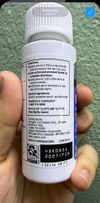
community Help Identifying Authenticity of Kirkland Minoxidil
The conversation is about determining if a purchased Minoxidil product is genuine. The user shared images for verification.
community I bought a microscope, how does my scalp/hairs look? I've been suffering diffuse thinning and hair loss after covid and never recovered (2 yrs ago) I eat healthy, in shape and workout.
A person with hair loss since COVID-19 is considering treatments like finasteride and minoxidil but is hesitant due to potential side effects. Suggestions include visiting a dermatologist, using a ketoconazole shampoo, and considering that post-COVID hair loss might be an autoimmune response.
community DHI 3k grafts front. Photo order: -1 month, 2 weeks, 1 month, 2 months
The user underwent a DHI hair transplant with 3,066 grafts at Hairtec in the Netherlands and is using finasteride and minoxidil to restore hair, particularly at the crown. They plan to adjust minoxidil dosage and consult with a dermatologist in September.
community 4 month is in - 2 pics - fin/min+
The user shared a 4-month update on their hair regrowth journey using finasteride, minoxidil, and microneedling, reporting significant progress and styling ability. They emphasized persistence, shared their regimen details, and addressed side effects like weaker erections and blurry vision, which improved with lifestyle changes.
community I see your Fin/Dut/Min/Kezo/RU/Dermarolling plans and raise you with.. the Cocker Spaniel.
The conversation is a satirical discussion about hair loss treatments, jokingly suggesting using a Cocker Spaniel as an alternative to actual treatments like finasteride, minoxidil, RU58841, ketoconazole, and dermarolling.
community Why not move miniaturized hair follicles somewhere else to treat them? Alternative to hair cloning?
Exploring the idea of transplanting miniaturized hair follicles to healthier areas to potentially reverse hair loss, with concerns about DHT sensitivity and scar tissue formation. The conversation also humorously considers using mice for hair growth experiments.
community the ordinary retinol & minoxidil
Using retinol with minoxidil may not be as effective as tretinoin, but retinaldehyde or adapalene could be alternatives. A micro-roller with minoxidil is suggested for better results.
community I bought a Dermastamp instead of a roller and it's weird to hear it crunch into my scalp
A user describes using a Dermastamp for microneedling their scalp, noting a crunching sound when pressing it firmly. Another user suggests the crunching might be from breaking up scalp calcification.