Search
for
Sort by
Community Join
480-510 / 1000+ resultscommunity Vitamin D and D3 are the same thing?
Vitamin D and D3 are the same. Treatments discussed include Minoxidil, finasteride, and RU58841.
community trichoscopy: for those of you with microscopes
The conversation discusses using USB microscopes for scalp photos and provides a link to an overview of trichoscopy. Treatments mentioned include Minoxidil, finasteride, and RU58841.
community Minoxidil and seborrheic dermatitis
Minoxidil use may worsen seborrheic dermatitis, causing itching and dandruff. Users consider stopping minoxidil or switching to foam to improve scalp condition.
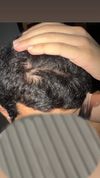
community Should i be worried dut 6 months
The user has been using finasteride and minoxidil, then switched to dutasteride and minoxidil for six months without significant results, noticing thinning after increasing creatine dosage. They plan to consult a dermatologist to explore potential causes beyond androgenetic alopecia.
community Are these Multivitamin and zinc tablets safe while on Finasteride
The conversation discusses the safety of taking multivitamins and zinc tablets while using finasteride. Users share experiences with additional supplements like vitamin D3, K2, biotin, and oral minoxidil.
community 5 months, min/fin, biotin/folic acid/zinc, mn, massages, niacin, cipaxil
The conversation discusses hair loss treatments, including minoxidil, finasteride, biotin, folic acid, zinc, micro-needling, niacin, and cipaxil, with the user preparing for a hair transplant. The user experiences side effects with topical finasteride and is hesitant to try oral dutasteride.
community rudirect ru58841 seems bunk to me
RU58841 from rudirect caused more hair shedding and itch, while anageninc's RU58841 improved the situation. Users are concerned about the quality and authenticity of RU58841 from different suppliers, including those from China.
community Korean 2021 study shows efficacy of sulforaphane.
Sulforaphane shows potential for hair regrowth, with users reporting reduced shedding and regrowth. Some users combine it with Minoxidil and finasteride for better results.
community Switching over to oral Dut and adding RU and Keto enriched Min and after 4 months of use the DHT itch is still there. It’s killing me. What else to do?
The user switched to oral Dutasteride, added RU58841, and used Ketoconazole-enriched Minoxidil but still experiences scalp itch and hair loss after 4 months. They are advised to give Dutasteride more time, consider seeing a dermatologist, and explore other topical solutions.
community RU58481, are side effects exegerated?
RU58841's side effects may be exaggerated due to anxiety, with some users experiencing no issues and others reporting symptoms like chest pain. RU58841, minoxidil, and finasteride are used for hair loss treatment, with varying individual reactions.
community 13 months Progress on Dut + Minox. I am happy.
The conversation is about someone's 13-month hair regrowth progress using 0.5 mg Dutasteride daily, 5% Minoxidil twice daily, Biotin tablets, and Sebizole shampoo. They are happy with the results.
community 2 years on Dutasteride, 5mg oral minoxidil, 7 months Ru58841. There is sorta of a lighting difference, but the results show themselves.
User shared 2-year progress with Dutasteride, 5mg oral minoxidil, and 7 months of RU58841 for hair growth. RU58841 was most effective, stopping itching and promoting significant growth.
community Cure/better treatment options in the future
The conversation is about future hair loss treatments. Current treatments mentioned include finasteride, minoxidil, and RU58841, with potential future treatments like GT20029, TDM-105795, JW0061, and follicle cloning.
community Switch to Dut??
Considering a switch from finasteride to dutasteride for hair loss treatment, and the use of minoxidil as a last resort due to its effects on hair texture.
community Take multivitamins if you have sexual side effects! it's amazing
A user shared that taking multivitamins, specifically Myprotein "Alpha Man," improved their sexual energy while on finasteride. They believe the benefits come from Zinc and Vitamin B6/12.
community Anyone wanna try and interview the developers of RU?
The conversation discusses arranging an interview with the developers of RU58841 to clarify its safety and reasons for halted research, with some users expressing concerns about potential risks and others citing financial reasons for the discontinuation of studies. Specific treatments mentioned include RU58841, minoxidil, and finasteride.
community Shedding about 4 years, now smth between NW3-4. Believed reasin was my low ferretin, but still has hairlost. Dht level is 425. Could it be dht that is the reason?
Loose-Message9596 has been experiencing hair loss for 3-4 years, initially due to low ferritin and vitamin D levels, and has tried treatments like vitamins, System 4, and PRP therapy. They are considering starting finasteride and minoxidil but are unsure due to their relatively low DHT level of 425.
community New angles to attack beyond DHT
Exploring hair loss treatments beyond DHT, including Minoxidil, pyruvate, Gt20029 targeting androgen receptors, and vasodilators. Other options like Kx826, adenosine signaling, growth factor topicals, and microneedling are also discussed.
community When are we getting news about Scube3?
The conversation is about updates on Scube3 related to hair loss. Specific treatments mentioned are Minoxidil, Finasteride, and RU58841.
community Tretinoin vs. micro-needling: what increases sulfotransferase activity more?
Tretinoin and microneedling both enhance hair growth through different mechanisms, with microneedling being considered safe for long-term use. Optimal microneedling needle length varies, but 0.8 mm is suggested for hair growth, and a Dermastamp is recommended to avoid skin damage.
community Vitamin c serum after dermarolling.
Using Vitamin C serum after dermarolling may help with healing and hair health. The safety of additional ingredients like Glycerin, Propylene Glycol, Phenoxyethanol, Sodium Benzoate, and Sodium Metabisulfite in hair regrowth is questioned.
community Does RU58841 in Glycerin works?
RU58841 in glycerin may cause less irritation than in PG form, but its effectiveness might be reduced. Users discuss the potential trade-off between irritation and efficacy.
community anti-androgens help with chronic seborric dermatitis ?! and hence diffuse thinning
An 18-year-old experiencing hair loss and seborrheic dermatitis has tried finasteride, dutasteride, and various shampoos without success. They are considering anti-androgens like RU58841 and KX-826 for oil control and dandruff reduction.
community Why don't do it yourself topical solutions not talk about ethosomes as delivery mechanism?
Ethosomes are suggested as an effective delivery method for topical finasteride solutions, requiring the addition of a phospholipid like soya lecithins. The user questions why do-it-yourself solutions don't commonly use ethosomes despite their potential benefits.
community Chinese source for pyrilutamide or ru8841 ?
The conversation is about finding a reliable Chinese source for pyrilutamide or RU58841, ideally with a third-party Certificate of Analysis from Janoshik Analytical. The user is seeking recommendations for these hair loss treatments.
community INTEGRITY ISSUE - Melissa Toyos Verteporfin Treatment Marketing
community Duality of (diffuse thinning) man
The user has been using finasteride for over two years with mixed results and is considering starting dutasteride and oral minoxidil, though both are hard to obtain. They are also contemplating a hair transplant in the future due to diffuse thinning.
community Does anyone know the chemical formula for pelage pp405?
The conversation discusses the lack of public information on the chemical structure of PP405, a hair loss treatment, and the challenges of synthesizing it without a patent. It also explores a patent related to hydrogen-based topical formulations for reducing oxidative stress and inflammation.
community Janoshik tests of Actifolic RU-58841 powder and GhK-Cu peptide
Actifolic RU-58841 powder and GhK-Cu peptide were tested and found to be accurate. The user is satisfied with the product's authenticity for hair loss treatment.