17-alpha-estradiol may work for hair loss by inhibiting 5-alpha reductase, similar to finasteride. It might lower testosterone in the scalp, reducing DHT conversion.
Ethosomes are suggested as an effective delivery method for topical finasteride solutions, requiring the addition of a phospholipid like soya lecithins. The user questions why do-it-yourself solutions don't commonly use ethosomes despite their potential benefits.
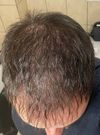
A 22-year-old male uses dutasteride, a serum with 10% minoxidil and 0.5% finasteride, and microneedling for diffuse androgenetic alopecia. Progress pictures show changes from July 2025 to February 2026.
Hair loss treatments that avoid significantly lowering systemic DHT levels, focusing on topical options like dutasteride mesotherapy, minoxidil, and ketoconazole. The user is exploring alternatives like KX-826 and RU58841 due to concerns about hormone levels.
The conversation is about a user's positive hair regrowth results using oral Dutasteride (DUT) and topical Minoxidil (MIN), with occasional derma rolling. The user experienced initial shedding but saw improvement after 8 months, and others discussed the use of Finasteride (FIN) and Tretinoin to enhance results.
The conversation is about DIY Dutasteride mesotherapy for hair loss, focusing on creating an injectable treatment to target the scalp and limit side effects. The user seeks feedback on enhancing the treatment with additional ingredients.
Finasteride and its effects on hair loss, with discussions on the role of estradiol and estrogen. Users debate whether increased estrogen from DHT blockers contributes to hair regrowth, with concerns about potential side effects like chemical castration.
After 9 months of using Dutasteride, oral and foam Minoxidil, Zinc, Vitamin D, Nizoral shampoo, and microneedling, combined with reduced stress, an individual restored their hair. They saw significant improvement despite initial worsening, and had low Vitamin D levels which they corrected with supplements.
A product called HairMDL includes Minoxidil, Dutasteride, Latanoprost, caffeine, Tretinoin, and Triamcinolone. Users are curious about its effectiveness and safety, particularly regarding the topical steroid Triamcinolone.
A 17-year-old is using Finasteride and Minoxidil for hair loss, experiencing hair shedding and cystic acne. They are considering Dutasteride for acne but are concerned about potential side effects on genital development.
The conversation discusses anticipation for CB-03-01, a potential new hair loss treatment that may be more effective and have a cleaner safety profile than finasteride. Users are hopeful but cautious, discussing current treatments like minoxidil, nizoral, and dermarolling, and the possibility of combining them with CB-03-01 for better results.
A user experienced increased pimples and cysts after two years on dutasteride, possibly due to hormonal changes. Suggestions included seeing an endocrinologist, using supplements like boron and DIM, adjusting diet, and reducing body fat to manage side effects.
The user experienced noticeable hair growth after 9 months using oral dutasteride, with full results expected in 20-24 months. They prefer oral treatments over topical minoxidil due to convenience.
KX-826 Phase II results show that a 0.5% concentration performs better than 1% for treating male pattern baldness. Concerns about receptor upregulation from long-term DHT antagonism were mentioned.
Shiseido's S-DSC hair regenerative treatment in Japan focuses on improving existing hair by thickening miniaturized follicles, not creating new ones. There is limited patient feedback and long-term data available.
A user shared that taking vitamin E, specifically tocotrienols, seemed to reduce their hair shedding, and they are also using finasteride, minoxidil, and derma rolling for hair loss. Another user cautioned against high doses of vitamin E due to potential health risks.
PCOS female visited doctor for hair loss concerns, prescribed spironolactone and minox 5%. Doctor advised against finasteride or dutasteride, user considering self-medication with dutasteride.
The conversation discusses creating a 0.01% topical dutasteride solution mixed with minoxidil for hair loss treatment, with concerns about absorption and effectiveness. Some users suggest that dutasteride needs specific formulation for better absorption, while others recommend oral use for practicality.
The conversation is about using distilled water as a solvent for topical finasteride to reduce systemic absorption. The user is considering avoiding ethanol and propylene glycol to achieve this.
User experienced high E2 levels after taking finasteride and sought advice on lowering E2 with supplements like Tonkat ali, Fadogia, and Boron. They also used DIM, zinc, and magnesium but avoided using an AI.
A user shared 3 months of progress using daily Dutasteride 0.5mg and Minoxidil 5mg, with Dutasteride mesotherapy every 4 months. They prefer not to use additional treatments for now.
Concerns about a potential ban on finasteride and dutasteride due to side effects, with users advocating for continued access and informed choice. Alternative treatments like pyrilutamide are also mentioned.
Pumpkin Seed Oil and Perilla Oil (with alpha-lipoic acid, linoleic acid, and oleic acid) are discussed as potential 5alpha-reductase inhibitors. The conversation focuses on their effectiveness for hair loss treatment.
The conversation discusses hair loss treatments, including minoxidil, finasteride, biotin, folic acid, zinc, micro-needling, niacin, and cipaxil, with the user preparing for a hair transplant. The user experiences side effects with topical finasteride and is hesitant to try oral dutasteride.
The user switched to oral Dutasteride, added RU58841, and used Ketoconazole-enriched Minoxidil but still experiences scalp itch and hair loss after 4 months. They are advised to give Dutasteride more time, consider seeing a dermatologist, and explore other topical solutions.
Dutasteride is effective for hair loss but may cause side effects like decreased sperm count, which might not fully recover after stopping. Users discuss balancing dosages to minimize side effects while maintaining benefits.
The conversation is about a user making a homemade topical dutasteride solution to use alongside testosterone replacement therapy (TRT) and oral dutasteride. The user aims to reduce DHT locally at the testosterone injection site and on the scalp.
Clascoterone 5% topical solution is effective and safe for long-term use in treating male pattern hair loss. Cosmo Pharma aims for EU and US approval, with a potential US release in late 2027 or early 2028.
An 18-year-old with diffuse hair thinning is considering switching from a topical Minoxidil 10% + Finasteride 0.1% solution to Minoxidil 5% foam and oral Finasteride 0.5mg, while also addressing vitamin D deficiency and potential scalp inflammation. Users suggest using Nizoral shampoo for inflammation, considering dutasteride for better results, and maintaining vitamin D levels to protect hair follicles from DHT.
The conversation is about a user considering reducing their dutasteride dose due to side effects like lower libido and watery semen. They plan to use dutasteride mesotherapy every three months to maintain hair while reducing systemic DHT suppression.