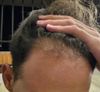
The user has been using Dutasteride for five years and noticed slow thinning on the frontal hairline. They tried Fluridil as an additional treatment, which resulted in noticeable hairline thickening after two months.
The conversation discusses using topical dutasteride with a dermapen for hair loss treatment. The user is deciding between liposomal and mesosomal formulations for this purpose.
The conversation discusses hair loss treatments, specifically asking about clinics in the US that perform dutasteride mesotherapy. Minoxidil, finasteride, and RU58841 are also mentioned.
PP405 is considered a promising potential cure for hair loss, with phase 2 trial results expected in February 2025. Hair cloning is also discussed as a potential ultimate solution, despite significant scientific challenges.
People are experimenting with high doses of dutasteride, with some reporting halted hair loss and regrowth. Others are combining it with treatments like minoxidil and finasteride, noting varying results and side effects.
PP405 is progressing to Phase 2b trials, with results expected in late 2025 or early 2026, and potential Phase 3 trials in 2026. Some users experienced side effects from finasteride and are hopeful for PP405 as an alternative treatment.
The conversation is about hair loss treatments, specifically the anticipation for the release of a new treatment, GT20029, by 2028. Users are discussing their experiences with current treatments like finasteride and dutasteride, and the potential of future treatments, including FAK inhibitors and verteporfin trials.
A user is experiencing side effects like less hard erections and sensitive nipples while on finasteride, with bloodwork showing high prolactin levels. They are seeking suggestions to address the prolactin issue.
A user shared progress pictures showing significant hair regrowth after using 1mg finasteride and weekly microneedling for about 2.5 to 3 months. The user reported no side effects and maintained good health and mood.
The user started balding at 16/17 and tried various treatments including minoxidil, finasteride, and dutasteride with little success. They recently started applying diclofenac gel to their bald areas and noticed some hair regrowth, attributing this to diclofenac's ability to lower prolactin levels and its anti-inflammatory effects.
Dutasteride may reduce bone mineral density, but there's no increased risk of osteoporosis or fractures compared to finasteride. Users suggest resistance training to counter potential bone effects.
The user stopped finasteride for family planning but plans to restart it and is considering dutasteride. Users discuss the safety of finasteride during family planning, with some sharing experiences of having healthy children while on the medication.
The user tried Minoxidil, PRP, Hair Carboxytherapy, and topical Dutasteride with limited success and is now on oral Dutasteride. They are experiencing some hair loss reduction but no significant density improvement, leading to feelings of depression.
Some people claim Dutasteride worsened their hair loss, causing concern among users. Reasons suggested include initial shedding phases, incorrect attribution to Dutasteride when other factors are involved, genetic variations affecting drug response, and the possibility of non-authentic medication.
Scientists have successfully grown functional hair follicles in the lab, marking a significant advancement in hair regeneration research. A user shared their personal experience with hair loss treatments, including Minoxidil and Finasteride, and plans to share a detailed protocol for hair restoration.
The user had high DHT levels after 8 months on dutasteride, questioning the drug's authenticity. They got dutasteride from a legitimate source and will update on progress.
The user experienced significant hair regrowth in the temple area after using 1mg finasteride daily for over a year, with no side effects. The user did not use minoxidil or microneedling and started experiencing hair loss at age 16.
The conversation is about enhancing dermarolling for hair loss by using topical peptides like tb-500 or GHK-Cu to aid in healing and hair growth, and whether anyone has experienced significant results from this method.
The conclusion of the conversation is that the user has experienced significant hair regrowth using a combination of medications, including dutasteride, RU58841, and minoxidil. They have not experienced any noticeable side effects and are considering a hair transplant in the future.
The post discusses the theory that persistent dandruff in areas prone to hair loss could be a sign of hair follicles dying due to DHT, indicating balding. The responses vary, with some users noting improvements in dandruff and hair loss with treatments like Dutasteride, while others experienced hair loss without dandruff.
The user is applying topical finasteride with stemoxydine for hair loss and has noticed hair thickening but no regrowth after two months. They also report high SHBG and prolactin levels and a lack of morning erections, even on low doses of medication.
The conversation discusses hair loss treatments, focusing on a new slow-release oral minoxidil compared to topical minoxidil and finasteride. The results show that twice-daily dosing of the new treatment is slightly more effective than once-daily, but concerns about cost, side effects, and the accuracy of reported results remain.
The user switched from finasteride to dutasteride and is using minoxidil and RU58841 for hair loss treatment. They are satisfied with the progress and considering a hair transplant, despite some initial shedding after the medication change.
The user is seeking advice on improving their hairline, currently using dutasteride 0.5mg/day and oral minoxidil 5mg/day for 14 months. They want to avoid a hair transplant and are concerned about thin hair and receding temples.
The conversation discusses hair loss where only short, thin hairs are being shed after 16 weeks of using dutasteride, with no visible regrowth. One response suggests that shedding short hairs is a positive sign, indicating that the hair follicles are still active and responding to treatment.
The conversation discusses the effectiveness of different doses of Dutasteride (Dut) in reducing scalp DHT levels. It suggests that 1mg and 1.5mg doses would reduce scalp DHT by amounts between 51% and 79%.