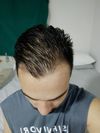
The conversation discusses buying RU58841 directly from a Chinese supplier for cost savings. It mentions that companies like Anageninc and Actifolic do the same.
User starts Nuclear Stack treatment for hair loss, including Dutasteride, Minoxidil, RU58841, Derminator 2, and supplements. Seeks advice on storing and dosing RU58841.
Hair cloning and injection of dermal papilla cells are discussed, with skepticism about their availability by 2023. Users mention Minoxidil, finasteride, and hair transplants as current treatments.
A 24-year-old male shares his two-month progress on hair regrowth using 0.5mg Dutasteride, 2.5mg Minoxidil, 10mg Biotin, and Ketoconazole shampoo, noting significant crown improvement. Users discuss the effectiveness of oral Minoxidil, with some expressing skepticism about photo angles and the necessity of Biotin unless deficient.
PP405 shows promise in regenerating hair by activating dormant follicles. Other treatments like VDPHL01 and Breezula are also advancing, providing new hope for hair loss solutions.
The conversation is about finding a source for Alfatradiol 0.1% as most available products are 0.025%. A suggestion was made to use four times the dosage of the 0.025% product.
PP405 shows potential for hair growth, with 31% of advanced balding men experiencing over 20% increase in hair density in 8 weeks. However, skepticism persists due to selective data presentation and lack of long-term results, with comparisons to treatments like minoxidil and finasteride.
The conversation discusses hair regrowth using 2-deoxy-d-ribose (2DDR) combined with minoxidil, with some users noting new hair growth. The original poster has been using minoxidil for 12 years and is considering combining 2DDR with finasteride, despite past side effects.
A human trial involving verteporfin for hair regeneration, with the results showing some regrowth of 1-2 hairs in an area where a follicular unit was extracted. The conversation also suggested that future studies should involve higher doses and more frequent injections.
Hair loss treatments discussed include promising Pyr available online and Verteporfin dosing after FUE for follicle regeneration, but no updates on SCUBE3.
A user is considering adjusting their hair loss treatment, currently using 1.0mg finasteride, 2.5mg minoxidil, 5% minoxidil foam, and Nizoral 1%. They are seeking advice on whether to increase dosages or switch treatments, and if reducing dosages later would affect their progress.
The user is considering adding minoxidil to their current dutasteride treatment to recover lost hair, particularly in the temple areas. Other users suggest that minoxidil is necessary for better results, with one user sharing their positive experience using a combination of minoxidil, dutasteride, and other treatments.
A 30-year-old with diffuse thinning and a balding crown is using a treatment regimen of a 2-in-1 pill containing finasteride, minoxidil, and biotin, along with various supplements. After two weeks, no side effects have been experienced, and updates with pictures will be posted monthly.
PP405 is a topical gel being tested for hair regrowth in adults with androgenetic alopecia. Volunteers aged 18-55 are needed for a 16-week trial in several US locations.
The user is considering using 2 vials of Fluridil every other day instead of 1 vial daily for better scalp coverage. They are questioning if this method would be as effective.
OP has been using daily oral finasteride 1.25mg for 5 months with noticeable progress and no side effects. They chose this dosage by cutting 5mg pills into quarters due to cost.
The user is trying RU58841, oral minoxidil, and dermarolling to combat hair loss caused by increased scalp testosterone after using finasteride and dutasteride. They plan to document their results.
Using PP405 and Clascoterone after a hair transplant may not cause issues if the transplant didn't achieve native density, but could lead to competition for blood supply if it did. Some users suggest waiting for these drugs to be available, as they might not significantly impact blood supply or regrowth.
PP405 is ineffective for miniaturized, fibrosed hair follicles in androgenetic alopecia. AMP303 may activate hair follicle stem cells, but minoxidil and finasteride are still the main treatments.
A 20-year-old is considering switching from applying a Minoxidil 5%/Finasteride 0.1% solution twice daily to once daily due to cost and convenience. It is suggested that applying once a day before sleep should still be effective if done consistently.
PP405 and GT20029 are new hair loss treatments with different mechanisms from traditional options like Minoxidil and Finasteride. PP405 targets hair follicle stem cells to reactivate growth, while GT20029 works as an androgen receptor deleter, both requiring ongoing use for effectiveness.
Shiseido's S-DSC hair regenerative treatment in Japan focuses on improving existing hair by thickening miniaturized follicles, not creating new ones. There is limited patient feedback and long-term data available.
The FDA will now require only one clinical trial for drug approval, potentially speeding up the release of hair loss treatments like PP405. Pelage is expected to present full results of PP405 Phase 2a trials and move to Phase III in mid-2026.
A user experienced significant hair density increase after 80 days using oral finasteride, topical minoxidil, and microneedling with a derma pen. They reported minimal side effects and attributed their success to being a hyper responder to the treatments.