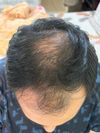
The conversation is about DIY Dutasteride mesotherapy for hair loss, focusing on creating an injectable treatment to target the scalp and limit side effects. The user seeks feedback on enhancing the treatment with additional ingredients.
The user has DUPA and suspects autoimmune activity as a cause. They have tried various treatments including finasteride, minoxidil, dutasteride, pyrilutamide, estrogel, hydrocortisone, and clobetasol, and are now seeking a long-term immunosuppressant.
The user had high DHT levels after 8 months on dutasteride, questioning the drug's authenticity. They got dutasteride from a legitimate source and will update on progress.
Hair loss progress in 4.5 months using dutasteride 3x/week, topical minoxidil 1-2x daily, and microneedling 2x/month. Users praised the significant improvement.
The conversation discusses the delay in the release of GT20029 for hair loss treatment and skepticism about its effectiveness. Participants mention other treatments like verteporfin and advancements in transplant procedures as more realistic options.
New hair loss treatments, including Breezula, VDPHL01, and PP405, are nearing Phase 3 trials, offering hope for effective solutions. Current treatments like finasteride and minoxidil remain effective, but early intervention is crucial.
Be cautious when sourcing PP405 or its analogs from third-party suppliers due to potential safety risks and lack of regulatory approval. The conversation highlights concerns about counterfeit products and the absence of reliable testing, making it risky to use such treatments.
A user experienced accelerated hairline recession after adding dutasteride to their regimen of topical finasteride and minoxidil, despite reduced hair shedding. They were informed that ELISA testing for DHT levels can be highly inaccurate.
A 24-year-old is struggling with hair loss despite using treatments like dutasteride, oral minoxidil, RU58841, and considering a hair transplant. They are advised to continue medication, possibly increase dosages, and explore additional treatments like tretinoin and tacrolimus.
A 30-year-old male has been on finasteride/dutasteride for 3 years, with stable but still receding hairline, and blood tests showing high total testosterone but normal DHT and free testosterone levels. Despite challenges in gaining muscle, he maintains a good physique with a consistent lifting routine and recently improved results with creatine.
The user has been treating hair loss with finasteride, dutasteride, oral minoxidil, and pyrilutamide for several years without success and is experiencing an inflamed scalp, possibly due to seborrheic dermatitis. They are seeking advice on additional treatments after these methods failed to improve their condition.
A 28-year-old male reported significant hair regrowth using 5mg minoxidil and 0.5mg dutasteride over five months, with occasional ketoconazole use. Users discussed side effects like stuffy nose and low libido, and shared experiences with different hair loss treatments.
Dutasteride, at 1 mg daily, was used for hair regrowth, with initial shedding and side effects like watery semen and increased libido. The user previously tried finasteride and minoxidil but switched to dutasteride for stronger, sustained results.
A 25-year-old male experienced increased testosterone and estradiol levels after starting finasteride for hair loss, leading his doctor to suggest a testicular ultrasound as a precaution. The user questions the necessity of the ultrasound, considering it potentially excessive, while others suggest it could be a useful precaution to rule out any issues.
A 21-year-old male experienced significant hair regrowth over a year using dutasteride, minoxidil, and ketoconazole shampoo. He noted improvements despite irregular application and mentioned that his hair is now thicker, with a previously bald spot completely gone.
A user shared a 14-month hair loss treatment update using dutasteride, minoxidil foam, a 1.5mm derma roller, and Nizoral, with noticeable hair regrowth and no side effects. The discussion highlights the effectiveness of microneedling in combination with topical treatments, with many users agreeing it significantly enhances results.
A 27-year-old male experienced significant hair regrowth using 0.5 mg Dutasteride and 2.5 mg Oral Minoxidil daily, with minimal side effects. He noticed improvement in hairline and crown after an initial shedding phase, and he did not use Finasteride prior to this treatment.
A 31-year-old Indian male has been using oral minoxidil and finasteride for hair loss without visible improvement. He is considering taking DUT tablets against his doctor's advice due to potential side effects and is contemplating buzzing his hair instead.
User shared before and after photos of hair regrowth using Dutasteride 5x a week for 19 months. They experienced significant improvement and thanked others for their support.
Dutasteride isn't effectively reducing DHT levels, prompting a switch back to finasteride. The user questions the reliability of their DHT test results due to hair loss concerns.
The conversation discusses using 0.5mg Dutasteride once a week for hair loss, with suggestions to increase frequency for better results. The user plans to reassess the need for a hair transplant in six months and is concerned about potential side effects like gynecomastia.
A participant using Veradermics VDPHL01, an extended-release oral minoxidil, experienced significant hair regrowth from Norwood 6 to Norwood 3V without side effects. They plan to use dutasteride after the treatment to maintain results.
The user is experiencing hair loss and is considering increasing their dutasteride dosage or trying RU58841, but is concerned about the effectiveness and side effects. Other users suggest sticking with dutasteride 0.5 mg daily and adding oral minoxidil for better results.
The conversation discusses the effectiveness of different doses of Dutasteride (Dut) in reducing scalp DHT levels. It suggests that 1mg and 1.5mg doses would reduce scalp DHT by amounts between 51% and 79%.
Scalp biopsies are crucial for diagnosing hair loss conditions like Diffuse Unpatterned Alopecia (DUPA) and retrograde hair loss, as treatments like finasteride and dutasteride may not be effective if other conditions are present. Combining PPAR-GAMMA agonists with retinoids could improve treatments for conditions like Lichen Planopilaris.
Switching from 1mg finasteride to dutasteride, with users recommending starting at 0.5mg daily. Some users prefer capsules, while others use tablets, citing effectiveness and regulatory approval in Asia.
A 24-year-old male shares his two-month progress on hair regrowth using 0.5mg Dutasteride, 2.5mg Minoxidil, 10mg Biotin, and Ketoconazole shampoo, noting significant crown improvement. Users discuss the effectiveness of oral Minoxidil, with some expressing skepticism about photo angles and the necessity of Biotin unless deficient.