A dermatologist advised stopping minoxidil and trying redensyl serum, while also starting finasteride. Concerns were raised about increased hair loss after stopping minoxidil.
The conversation is about managing allopregnanolone deficiency caused by 5-alpha-reductase inhibitors like finasteride or dutasteride. Specific treatments discussed for hair loss include Minoxidil, finasteride, and RU58841.
The user has been using finasteride 1mg for a year and minoxidil 5% for 1.6 years, with inconsistent dermarolling, and is considering switching from topical to oral minoxidil due to hair dryness. They report increased hair thickness and no side effects, with plans to consult a dermatologist about the switch.
The user is considering Botox for scalp hair loss and currently uses finasteride, minoxidil, microneedling, pumpkin seed oil, saw palmetto, and green tea extract. They seek information on potential risks and effectiveness.
A user's 12 month update on treatment for hair loss, which include oral dutasteride and minoxidil, topical RU88541 and minoxidil, microneedling with hyaluronic acid and FinDuta, experiencing no side effects, positive results and inspiring other users.
Users discuss alternatives to DHT blockers for hair loss, suggesting minoxidil, microneedling, natural DHT blockers, and scalp massages. Some explore RU58841, ketoconazole, hair transplants, and hair systems due to side effects from finasteride and dutasteride.
The user initially used dutasteride, minoxidil, and vitamins, then switched to finasteride but experienced side effects and hair loss. They found better results with a natural supplement containing stinging nettle and beta-sitosterol, reporting thicker hair without side effects.
The user has been taking dutasteride 0.5mg and minoxidil 5mg orally for 3 years to treat hair loss, which has stabilized their condition. They are considering adding topical RU58841 to their regimen but are uncertain of its effectiveness and contemplating a hair transplant instead.
A 21-year-old male has been using dutasteride, minoxidil, ketoconazole shampoo, and microneedling for hair loss, with plans to increase minoxidil dosage. He is experiencing no side effects and is planning a trichoscopy to assess hair regrowth.
Current hair loss treatments include finasteride, dutasteride, minoxidil, and derma rolling. New treatments like TDM-105795, GT20029, and others show promise but require more testing and time before approval.
Dutasteride and oral minoxidil are not yielding noticeable results for some users, with some considering alternatives like microneedling or hair transplants. Others report slowed hair loss but no regrowth, and some experience side effects or minimal improvement, leading to frustration and consideration of different treatments.
The conversation is about managing dandruff caused by using Kirkland minoxidil, with suggestions including using Kelual DS, Nizoral, and exfoliating with oils. Some users also recommend oral minoxidil and finasteride for better results and convenience.
The conversation discusses using Minoxidil with Tretinoin and Fexofenadine for hair loss. Some users doubt its effectiveness, noting Fexofenadine's unproven results for androgenetic alopecia.
The conversation discusses alternative hair growth treatments to minoxidil, including Stemoxydine, Tretinoin, adenosine, Baicalin, castor oil, Latanoprost/bimatoprost, and Redensyl. Users share their experiences and opinions on the efficacy of these treatments.
The conversation discusses hair loss treatments, specifically mentioning Minoxidil, finasteride, RU58841, and Xeljanz. The user inquires about Xeljanz and shares a link suggesting it may help with hair loss.
A user takes 5mg oral minoxidil, oral dutasteride, topical tretinoin, stemoxydine, topical minoxidil, and uses dermarolling for hair loss but sees less impressive, patchy regrowth compared to others. Another person suggests some online results may be enhanced with hair fibers, not just medication.
A 36-year-old male experienced significant hair regrowth after four months using a 1mg finasteride and 3mg minoxidil oral pill from Phoenix, alongside lifestyle changes like increased protein intake and exercise. Despite the higher cost of Phoenix, he is hesitant to switch to a cheaper prescription due to successful results.
The conversation discusses hair loss treatments, specifically using minoxidil, finasteride, and dutasteride, and advises patience as results can take up to a year. It also suggests delaying a hair transplant until after a year of medication to establish a stable baseline.
The conversation discusses hair loss treatments, focusing on iron supplements for low ferritin levels and considering finasteride and minoxidil if thinning persists. There is debate over starting with finasteride versus dutasteride, with some users advocating for dutasteride due to its potency, while others caution about potential side effects.
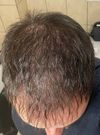
Kintor is starting a phase III trial for KX-826 combined with minoxidil for hair loss. Opinions vary on the potential success of the treatment, with some skepticism expressed.
A 35-year-old male has been using finasteride inconsistently for two years and is hesitant about using minoxidil due to potential side effects. He is considering oral minoxidil and microneedling as alternatives and is unsure if dutasteride is too strong.
The conversation is about hair loss treatment using topical minoxidil, finasteride, and arginine, showing noticeable progress in one month. The user suggests adding arginine serum for better results.
Higher doses of dutasteride, such as 2.5mg, are more effective at reducing scalp DHT than 0.5mg, but are costly and inconvenient. A 1mg dose is considered a more affordable and practical option, though its efficacy is uncertain.
A user reported significant hair growth improvements using 1mg finasteride and 2.5mg minoxidil daily, despite minor side effects. The doctor advised against combining multiple treatments to identify what works.
The conversation discusses using magnesium oil and microneedling to promote hair growth, alongside finasteride, due to financial constraints preventing the use of minoxidil. Another suggestion includes using a certilizine solution for hair health.
The user has been using oral finasteride and minoxidil for hair loss but hasn't seen improvement and is considering switching to dutasteride or RU58841. They plan to start microneedling for better results.
Adding exosomes to a treatment of dutasteride and minoxidil for hair loss increased hair count by 55% at 6 months and 46% at 1 year compared to the control group. The control group did not receive exosomes or PRP.
A user shared a 10-month update on treating hair loss with 1 mg Dutasteride and 2.5-5 mg oral Minoxidil daily, showing significant improvement. Some responses praise the results, others discuss dosing and side effects, and a few comments address the user's previous hostile interactions.
A 21-year-old male shared his extensive hair loss treatment protocol, which includes Dutasteride, RU58841, Ketoconazole shampoo, oral Minoxidil, pyrilutamide, MK677, dermastamping, and castor oil, and reported improved hair regrowth and overall well-being. He has experienced no side effects and has also improved his diet and lifestyle.