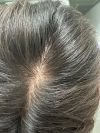
User found Dubai website selling Follics FR 12 hair treatment with 12% Minoxidil and topical Finasteride. Asks if anyone tried it and if it's beneficial.
The user experienced significant hair growth using minoxidil 5%, finasteride 0.1% topical, dermarolling, and Nizoral shampoo, with only dry scalp as a side effect. They noted improved results after increasing the finasteride concentration.
The user Consistent-Gene1334 shared their positive results in regrowing hair by using topical minoxidil and oral finasteride. Other users in the conversation praised the results and discussed the effectiveness of these treatments for diffuse thinning.
Hair follicles can be dormant and potentially revived with treatments like finasteride and minoxidil, but irreversible loss occurs if certain structures are destroyed. Early intervention is more effective, and additional methods like microneedling may help.
MinoxidilMax is now selling a product called Ruderma, which contains RU58841, a chemical used for hair loss treatment. Some users question the legitimacy of the company, while others discuss the standard concentration of RU58841 and mention that both men and women use finasteride for hair loss.
HairCarePls shared their 5-month Dutasteride update, mentioning previous use of Finasteride with no results. They also use Spironolactone, Minoxidil, dermarolling, Ketoconazole shampoo, and Yaz contraception for hair loss treatment.
A 25-year-old male is experiencing positive temple regrowth after using 1 mg oral finasteride daily and a custom topical solution from Musely containing minoxidil, dutasteride, tretinoin, ketoconazole, and hydrocortisone. He is considering adding dermarolling to enhance results, while others share their experiences and suggestions for hair regrowth treatments.
A user reports a dry and flaky scalp after starting treatment with 5% minoxidil and 0.05% tretinoin, and is seeking advice on using olive oil or face moisturizer on the scalp. They also take finasteride and have tried microneedling, and are asking for the best time to moisturize after applying minoxidil.
The user is taking 2.5 mg dutasteride and 5% minoxidil but is not seeing hair regrowth, and is considering adding RU58841. They are experiencing fatigue and low MCV/MCH, possibly related to dutasteride, and are advised to be patient, consider microneedling, and check for iron deficiency.
The user experienced significant hair regrowth using dutasteride daily for six months, then every other day, after stopping minoxidil. They did not use finasteride and reported no side effects.
Hair loss treatments discussed include Minoxidil, Finasteride, RU58841, and Nizoral shampoo. Nizoral's effectiveness is debated, with some suggesting it works as a weak antagonist for androgen receptors, while others attribute its benefits to anti-fungal and anti-inflammatory properties.
Minoxidil without propylene glycol is sought to avoid dermatitis, with Rogaine foam and Tecflox suggested as alternatives. Users discuss using foam to prevent irritation and suggest heating it for easier application.
The conversation discusses a hair loss treatment regimen that includes a topical spray with finasteride and minoxidil, tretinoin, and using a Derminator (microneedling device) at 1.25mm depth every 5-6 days. The user reports positive results after 90 days and plans to continue the treatment, with others commenting on the process and potential outcomes.
Minoxidilmax offering a 0.5% Pyrilutamide solution and debating the cost, effectiveness, and safety of using it alone or with other treatments such as Finasteride and Minoxidil.
Breezula's effectiveness is uncertain, with some users skeptical about its potential and others noting its recent availability on the grey market. A user reported success with a stack of Dutasteride (oral), Minoxidil (topical), and RU58841 (topical), achieving significant hair improvement after 18 months.
An individual is seeking options for topical finasteride and minoxidil in Australia, considering products from Medicii Labs and exploring other suppliers. They plan to use a derma roller and caffeine + yerba mate hair wash alongside these treatments.
A user found a successful hair loss treatment using a combination of finasteride, dutasteride, minoxidil, and RU58841. They plan to switch to a purely topical regimen with finasteride, RU58841, and minoxidil.
The user shares progress on hair regrowth using topical Minoxidil twice daily, tretinoin at night, and oral finasteride daily, experiencing a second shedding phase but still seeing positive results. They seek advice from others who have experienced similar shedding.
Baby hairs can mature with long-term DHT reduction, and Minoxidil can aid this process. Dutasteride mesotherapy is effective and preferable to oral pills, as it directly targets tissues.
A user shared their successful hair loss treatment using 1.25mg finasteride daily, 2.5mm microneedling every 1-3 weeks, zinc pyrithione shampoo, occasional scalp massages, and 40% glycolic acid on temples. They reported significant progress over 21 months.
A 42-year-old user shared positive results from using oral and topical Minoxidil, Finasteride, and weekly dermarolling for hair regrowth over three months. The community responded positively, noting significant progress and discussing treatment details and concerns.
The conversation is about hair regrowth treatments, including ketoconazole, vitamins, fish oil, collagen, pumpkin seed oil, rosemary, and dermal rolling. Users suggest trying finasteride and intense weight training to enhance results.
The conversation is about choosing an additional topical treatment for hair loss, with options being fluridil, topical spiro, or alfatradiol, alongside existing treatments like dutasteride, oral minoxidil, latanoprost, and RU58841. Opinions vary on the effectiveness of adding these topicals, with some suggesting RU58841 is sufficient.
The conversation is about treating hair loss without finasteride or dutasteride due to sensitivity causing gynecomastia. The user plans to use pyrilutamide, RU58841, and oral Minoxidil instead.
Dutasteride and finasteride are not effectively stopping hair loss for some users, despite long-term use. Some are considering or using RU58841, pyrilutamide, and other treatments like microneedling, while also managing seborrheic dermatitis with diet and topical solutions.
A 31-year-old user experienced hair regrowth and no side effects after switching from finasteride to dutasteride and using minoxidil foam daily. They reported improved hair retention and shared their treatment routine, including a prescription for dutasteride and the use of minoxidil, while humorously discussing side effects and personal experiences.
The user is using a combination of 7% minoxidil, 0.2% finasteride, 0.5mg finasteride, RU58841, and daily microneedling but is not seeing hair regrowth after 5 months. Suggestions include being patient, reducing microneedling frequency, considering oral minoxidil, and possibly switching to dutasteride if no improvement after a year.
The user experienced worsening hair density despite using finasteride, minoxidil, dutasteride, and RU58841, with some temporary improvement after stopping RU58841. Currently, they are on 2.5mg dutasteride daily and topical minoxidil, but continue to struggle with hair density issues.
A 22-year-old male experiencing hair thinning and loss, possibly due to seborrheic dermatitis or low vitamin D, is cautious about using minoxidil or finasteride due to heart palpitations and high blood pressure. Suggestions include using ketoconazole shampoo to control inflammation and focusing on treating the dermatitis first.