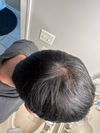
Follicusan DP is discussed as a potential alternative to Minoxidil without side effects, but information is scarce. It is noted to be of German origin and details on its mechanism are limited.
The user has been using 1mg finasteride daily for 10 months and minoxidil once a day for 7 months to treat hair loss, but has seen minimal improvement. They recently started applying 0.05% tretinoin before minoxidil and incorporated dutasteride twice a week into their regimen.
A 22-year-old is using dutasteride and minoxidil for hair loss, focusing on the crown area, and has not experienced shedding after 11 weeks. They are seeking advice on when shedding might occur and what Norwood level they might achieve.
Switching from finasteride and minoxidil to dutasteride and minoxidil can potentially lead to over 40% improvement in hair thickness in some cases, especially in young individuals who have plateaued after initial success. Generally, a 20% improvement is expected after six months.
The user is discussing hair regrowth after 4.5 months of using oral dutasteride and minoxidil. Another user suggests improvement is possible and asks about exercise and diet.
The user is considering using 0.5mg Dutasteride and 2.5mg Minoxidil for hair loss reversal. Another user advises consulting a doctor and getting bloodwork and a trichoscopy before starting the treatment.
The user is experiencing progress in hair regrowth using 1 mg finasteride and 5 mg minoxidil, with no side effects reported. There is a discussion about whether to switch from finasteride to dutasteride, but many advise against it since finasteride is showing good results.
The user shared their hair loss treatment progress using Finasteride, Dutasteride, and Minoxidil, noting initial irritation with topical Minoxidil and experiencing shedding phases. They reported no side effects and encouraged others to try this regimen for alopecia.
A 42-year-old male has been using finasteride successfully for over 10 years but is now experiencing thinning at the crown. He is considering adding minoxidil or switching to dutasteride for better results.
The user shared their 3.5-month progress using 1mg finasteride, topical minoxidil, and 0.5mg dutasteride, along with biotin, vitamin D, saw palmetto, and multivitamins. They reported improvements in hair regrowth with some dryness from minoxidil and use micro-needling weekly.
The individual is using oral minoxidil and finasteride to treat androgenetic alopecia with good results but is considering stopping due to concerns about long-term effects on the heart and potential hair dependency on the medication. They are also contemplating the impact of hair loss on gender dysphoria and considering the use of wigs as an alternative.
Dutasteride is considered more effective than finasteride for hair loss, with some users increasing the dose to 2.5mg daily for better results. Experiences vary, with some seeing regrowth and others not, and side effects are a concern.
A 29-year-old male experienced hair thinning and used topical minoxidil, finasteride, and RU58841, but stopped RU58841 due to health concerns. He is considering adding topical dutasteride and switching to oral minoxidil to enhance regrowth, while others suggest using ketoconazole shampoo, microneedling, and lifestyle changes like diet and exercise.
Discussing and researching different treatments for hair loss, including RU58841, Dutasteride, Spironolactone, Retin-A, Stemoxydine (Neogenic), Copper peptides, Superoxide Dismutase, NANO, and Eucapil.
This user experienced improvements in their hair density and texture through the use of finasteride (1.25mg) and minoxidil (5%) applied topically once a day over 8 months, with no reported side effects other than slightly lowered libido.
The user switched from finasteride to dutasteride and experienced hair thinning, which is expected during the transition. They are using ketoconazole shampoo, considering dermarolling, and adding topical minoxidil to their routine.
The user has been on a hair loss treatment for 14 months using dutasteride and oral minoxidil without seeing regrowth and is considering adding more drugs due to the psychological impact of hair loss. However, replies suggest the user may not actually be experiencing noticeable hair loss.
A user shared their 6-week update on using 0.5mg dutasteride daily, 2.5mg oral minoxidil, and Nizoral for hair loss, noting noticeable regrowth but experiencing side effects like lower sex drive and brain fog. The conversation includes suggestions for additional treatments and discussions about hair transplant costs.
A 25-year-old is using 1.25mg finasteride six times a week and 5% topical minoxidil daily for hair loss. They are experiencing reduced libido and erectile issues, possibly due to stress, and are questioning if the finasteride dosage is affecting DHT suppression.
The user experienced significant hair regrowth in temples, eyebrows, eyelashes, and beard after one month of using 0.5 mg Dutasteride, 2.5 mg Oral Minoxidil, and Ketoconazole Shampoo, with no side effects. They are still experiencing scalp shedding but expect further progress.
A user shared their experience using Dutasteride for hair loss, alongside a regimen of Minoxidil, Finasteride, and RU58841. They reported no major shedding or sexual side effects, but experienced mild acne when increasing the Dutasteride dose, and noted their hair condition remained stable.
A 23-year-old is using 2.5 mg dutasteride, 5 mg oral minoxidil, RU58841, a laser cap, and PRF injections for hair loss. They are hesitant about microneedling due to concerns about RU58841 absorption and are considering other treatments.
The user tried finasteride for a year without success, then switched to dutasteride and oral minoxidil for 10 months, still experiencing hair loss. Adding RU58841 and topical minoxidil seemed to improve their condition, with new hair growth observed.
The user has been using finasteride for 5 months and minoxidil for 9 months without results and is considering switching to dutasteride. Microneedling seems to be the only effective treatment for them so far.
Using a microdose of finasteride on the scalp with minoxidil as a carrier may have positive effects with minimal side effects. The user is also considering the effects of sulforaphane or broccoli sprouts on hair loss.
Minoxidil and finasteride are the main effective treatments for hair loss. RU58841 is discussed as a potential option but has concerns about safety and side effects.
The conversation discusses hair loss treatments, specifically using Minoxidil, finasteride, and RU58841. Users suggest simplifying the application routine and question the absence of dutasteride.
The conversation discusses using Stemoxydine, a hair growth stimulant considered weaker than Minoxidil, and questions whether applying it twice daily could improve results similar to twice-daily Minoxidil applications.
The conversation discusses alternatives to 5AR inhibitors for hair loss treatment, suggesting options like minoxidil, KX-826, pyrilutimide, microneedling, and topical bicalutamide. Concerns about side effects and the effectiveness of these treatments are also highlighted.
The user experienced hair regrowth after four months of using finasteride, dutasteride, and oral minoxidil. They noted increased oiliness in their hair after starting the treatment.