Search
for
Sort by
Community Join
150-180 / 1000+ resultscommunity Serum DHT data wanted for insights into dutasteride efficacy. Please get in touch!
The conversation is about gathering serum DHT data from individuals taking dutasteride to investigate its efficacy, especially in cases with unexpectedly low DHT reduction. The aim is to explore potential genetic factors affecting drug metabolism.
community Hair growth stimulated by allogenic adipose-derived stem cells supplemented with ATP in a mouse model of dihydrotestosterone-induced androgenetic alopecia
Adipose-derived stem cells with ATP improved hair regrowth in male and female mice with androgenetic alopecia. The most effective treatments were low dose stem cells with ATP for males and medium dose stem cells with non-liposomal ATP for females.
community DHT levels after 4 weeks of Fina and 8 weeks of Fina + 4 weeks of Duta
The user reported early stage diffuse hair thinning and increased DHT levels after 4 weeks on Finasteride and 8 weeks on Finasteride plus 4 weeks on Dutasteride, despite the medications being authentic and stored properly. They are considering increasing their Dutasteride dosage due to the lack of side effects and are unsure if the treatment is helping their hair.
community 18M 8 months progress 40mg daily dut stack
An 18-year-old is using a high-dose hair loss treatment with 40mg daily dutasteride, finasteride, minoxidil, tretinoin, and topical bicalutamide. Despite health risk concerns, especially liver issues, they report hair regrowth progress and intend to continue the regimen.

community PP405 Identity Research
PP405 is a potential hair loss treatment that inhibits mitochondrial pyruvate carriers, increasing lactate dehydrogenase activity and stimulating hair follicle stem cells. In a phase 1 trial, 31% of participants showed over 20% hair density increase with PP405 treatment.
community Still losing miniaturized hair after 8 months on fin. Is it time for dutasteride?
The user is considering switching from finasteride to dutasteride due to continued hair loss and lack of improvement after 8 months. They plan to add minoxidil and are advised to give treatments more time, as progress can take years.
community How come Dut doesn’t cause more brain problems than fin if it inhibits Type 1 5AR?
Dutasteride and finasteride have similar risk profiles despite Dutasteride blocking more types of 5AR in the brain. Some users report no mood issues with either drug, and it is suggested that Dutasteride's larger molecular size may limit its ability to cross the blood-brain barrier.
community Pilose antler extracts promotes hair growth in androgenetic alopecia mice by activating hair follicle stem cells via the AKT and Wnt pathways
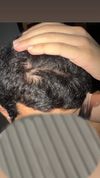
community Should i be worried dut 6 months
The user has been using finasteride and minoxidil, then switched to dutasteride and minoxidil for six months without significant results, noticing thinning after increasing creatine dosage. They plan to consult a dermatologist to explore potential causes beyond androgenetic alopecia.
community Why is scalp DHT suppression lower than systemic?
Dutasteride reduces DHT more effectively in hair follicles than finasteride, but some individuals still experience hair loss despite treatment. Combining oral and topical finasteride may improve results, and some users experiment with topical dutasteride despite uncertainties about its absorption.
community My blood tests pre-fin (excluding DHT)
community Switched from finasteride to dut
community HLT Megathread on HMI-115 (key takeaways in comments)
HMI-115, a newly discovered hair loss treatment that could potentially be effective for those with diffuse thinning and telogen effluvium. It is based on prolactin receptor antagonist signaling and has already undergone Phase I trials in women, with potential commercialization by 2027.
community [Nov 2019] The peptide AC 2 isolated from Bacillus-treated Trapa japonica fruit extract rescues DHT (dihydrotestosterone)-treated human dermal papilla cells and mediates mTORC1 signaling for autophagy and apoptosis suppression
A peptide from Japanese water chestnut fruit may help with hair loss by suppressing DHT's effect on hair follicle cell death, potentially serving as a finasteride alternative. The treatment's effectiveness and safety in humans remain uncertain.
community 7.5 months and fin, time for dut?
The user has been using 1mg finasteride, 2% ketoconazole shampoo, vitamins, and growth shampoo for 7.5 months to treat hair loss and is considering switching to 0.5 mg dutasteride due to slight recession and persistent symptoms. Another user commented that the user's temples appear to have improved, especially in the latest photo.
community Is finasteride shedding at month 8,9, 10... really a thing?
Finasteride and minoxidil users discuss shedding around months 8-10, with mixed experiences on hair regrowth. Some consider switching to dutasteride if shedding persists.
community 8 years of Finasteride and Minoxidil (includes a photo)
User has used Finasteride, Minoxidil, and derma roller for 8 years to treat hair loss but is still losing the battle. Others suggest trying Dutasteride, oral Minoxidil, RU58841, or considering a hair transplant.
community Dr. Tsuji online lectures today and tomorrow
Dr. Tsuji is giving online lectures about hair multiplication trials. Users express hope for a cure, but some are skeptical about its timeline.
community [34M] Diffuse Loss Progress: Dut/Oral & Topical Min/Keto/Microneedling
A 34-year-old man with diffuse hair loss experienced regrowth and hair thickening using daily Dutasteride, oral and topical Minoxidil, a specialized shampoo, and microneedling. He switched from Finasteride to Dutasteride after seeing significant improvement in a peer, reporting no side effects.
community rudirect ru58841 seems bunk to me
RU58841 from rudirect caused more hair shedding and itch, while anageninc's RU58841 improved the situation. Users are concerned about the quality and authenticity of RU58841 from different suppliers, including those from China.

community Should I start oral dut?
A 22-year-old with advanced diffuse thinning is considering oral dutasteride after stopping finasteride due to side effects like brain fog and testicular pain. They are also contemplating a hair transplant combined with oral dutasteride and topical finasteride, noting a thick donor area.
community There is something off with DUT and it’s time we stop ignoring it
Dutasteride and finasteride for hair loss, with dissatisfaction expressed about dutasteride and consideration of switching back to finasteride. Users share varied experiences, noting individual responses to treatments differ.
community 8 months - 1 mg fin + 5% min for 4 months. .5mg dut , 1.5mg min 5% min . Microneedling + Keto shampoo mfor 8 months
The user experienced hair regrowth using 1 mg finasteride and 5% minoxidil for 4 months, then switched to 0.5 mg dutasteride, 1.5 mg minoxidil, microneedling, and ketoconazole shampoo for 8 months. They noticed significant improvement after switching to dutasteride.
community Minoxidil Max Ru58841 with PG absorption time
community Pp405 AAD presentation tomorrow - fingers crossed - what to expect?
New hair loss treatments PP405 and VDPHL01 are discussed with skepticism and hope, alongside existing treatments like minoxidil and finasteride. Users express frustration over limited progress since the 1980s but remain cautiously optimistic.
community Korean scientists breakthrough in hair regeneration targeting CXXC5 protein and WNT Signaling Pathway
A potential non-invasive topical treatment targeting the WNT Signaling Pathway for hair regeneration is being researched, with positive results on human hair follicle cells. Current effective treatments for hair loss include Minoxidil, finasteride, and hair transplantation.
community 8 month difference in hair (11 months on medications
A user shared progress pictures showing hair improvement after 11 months of using finasteride, minoxidil, and occasional microneedling. The user aims to motivate others starting similar treatments.
community Switching from DUT back to FIN - yes you read that correct but not what you may think!
The user experienced positive scalp results with Dutasteride but noticed beard thinning, prompting a switch back to Finasteride. They plan to monitor the situation and may consider combining treatments in the future.
community 800pg/mL serum DHT after almost 2 years on dht blockers
The user has been using dutasteride and finasteride but still experiences hair loss and high DHT levels. They plan to try topical finasteride and RU58841 while continuing dutasteride to see if topicals are more effective.