Search
for
Sort by
Community Join
90-120 / 1000+ resultscommunity Serioxyl / Stemoxydine no longer available
community Just ordered RU powder, a scale, beaker, ethanol and PG. This will be my final attempt.
The user is trying RU58841, oral minoxidil, and dermarolling to combat hair loss caused by increased scalp testosterone after using finasteride and dutasteride. They plan to document their results.
community Stemoxydine, anyone use it, is it a nice add-on?
Treatments for hair loss (Dutasteride, Finasteride and Minoxidil) and the potential benefits of adding Stemoxydine to the treatment.
community Mixing Stemoxydine 5% with premixed solution of RU58841 5%
The user is using Dutasteride, Nizoral, and RU58841 for hair loss and is considering mixing RU58841 with Stemoxydine for better scalp coverage but is concerned about the potential degradation of RU58841 when mixed with a water-based solution. They are seeking advice on the feasibility of this mixture.
community Chinese Research Chemicals You Suggest
The conversation discusses hair loss treatments, specifically RU58841, with mentions of side effects from finasteride and dutasteride. Alternatives like Pyri, KX-826, and Breezula are also mentioned.
community Using a 2-deoxy-d-ribose gel. My experience 2 weeks in.
The user switched from minoxidil to a homemade 2-deoxy-d-ribose gel and noticed no hair fall after two weeks, despite stopping minoxidil. The gel includes water, 2-deoxy-d-ribose, vegetable glycerine, 2-phenoxyethanol, sodium alginate, and rosemary oil, and the user reports healthier-feeling hair.
community RU58841 works great!
community 15% discount various hair research products Chemyo.com
A 15% discount is offered on hair research products like RU58841 and TEMPOL at Chemyo.com. The legality of selling these compounds is confirmed by the seller.
community Thoughts on this? Supposed everychem pp405 results after 2 weeks
community Buzzing it to gauge results, thoughts?
The user is considering buzzing their long hair to better assess the effects of finasteride, which they have been using for over two months, and is concerned about maintaining their unique appearance. They are also curious if dyeing short hair could cause any issues.
community What are some topical anti androgens(not dht).
community RU58841 KB Solution vs PG + Ethanol
The conversation discusses the differences between KB solution and PG + Ethanol solution for RU58841 in treating hair loss. It compares the effectiveness and properties of these two solutions.
community Addressing the fake allegations on my 200 day dut progress
The conversation is about a user defending their hair loss progress photos against accusations of being fake, explaining changes in hair color and texture due to dyeing and straightening. The user shares their treatment timeline, using dutasteride and minoxidil, and addresses side effects and skepticism from others.
community Why don’t more people use hair fibers?
Hair fibers can effectively cover thinning hair when used with minoxidil and hairspray but require daily application and can be inconvenient in certain conditions. Some users prefer treatments like finasteride, dutasteride, microneedling, or wigs due to the maintenance and limitations of hair fibers.
community Thoughts on this 2-deoxy-D-ribose Topical?
The post and conversation are about skepticism towards a new hair loss treatment containing 2-deoxy-D-ribose, copper peptides, and exosomes, with concerns about the legitimacy of the product and its website. The treatment's effectiveness and authenticity are questioned due to lack of testing and transparency.
community Finasteride topical formulation (pharmacy vs stemoxydine)
Hair loss discussion includes treatments like hinoki tree oil and procyanidin b2. Experiences and effectiveness of these treatments are shared.
community Any experiences with Ptd-dbm??
The user experienced reduced hair loss using an online serum but found it too expensive and is seeking a vendor for ptd-dbm. They are also interested in KY19382 but are unable to find it.
community Serum containing minoxidil and bimatoprost analogs
A user discusses using a serum called Dallixa, containing minoxidil-like and bimatoprost-like compounds, for hair loss and greying. The user's dermatologist advised against finasteride and suggested the serum might improve hair pigmentation.
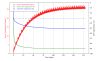
community Research Backed Dutasteride Simulator (Serum/scalp DHT included for all doses)
A Dutasteride Simulator predicts serum dutasteride, serum DHT, and scalp DHT levels using models from research papers. It simulates various dosing schedules to determine steady-state effects and visualizes outcomes, including hair growth-related scalp DHT suppression.
community Shiseido Dermal Sheath Cup (DSC) Hair Multiplication Is Finally in Japan (on July 1)
Shiseido's Dermal Sheath Cup (DSC) Hair Multiplication treatment is now available in Japan. Users discuss the treatment's availability and cost.
community Any experiences with ds laboratory revita shampoo, or nanoxidil?
The conversation is about exploring alternatives for hair loss treatment, specifically ds laboratory revita shampoo and nanoxidil, with the user currently using microneedling. The user is considering these options due to fewer side effects compared to other treatments.
community RT1640 - Gray Hair Reversal Recipe
The conversation discusses a hair loss treatment formulation containing cyclosporin, minoxidil, and tacrolimus, and mentions ongoing research on hair color reversal. The treatment showed high efficacy in restoring hair color in trials with 40 to 50 people.
community Any chemists want to manufacture PP405 / JXL069? (Steps inside)
The conversation discusses the synthesis and potential use of JXL069 and PP405 for hair loss treatment, with skepticism about their effectiveness and concerns about safety. Users mention that JXL069 has shown no results in hair growth, and there is confusion about its identity and effectiveness compared to PP405.
community For all of those saying I use hair fibers, LOL
User shows wet hair and blow drying to prove no hair fibers used. Hair gains achieved with finasteride and minoxidil.
community What solution to use for RU58841?
The post is about using different solutions for RU58841, a treatment for hair loss. The user is asking for opinions on the effectiveness of different vehicles and dosages.
community Caffeine + Dimethylglycine (DMG) Shampoo research
A user discusses the potential of caffeine and DMG in shampoo for treating hair loss, citing a pending patent and personal plans to test it. They find it more convenient than using minoxidil, tretinoin, and microneedling.
community Making RU-58841 hair solution from raw powder (video)
Making a hair solution using RU58841 from raw powder. Users humorously compare the process to a science experiment.