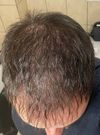
Minoxidil should be applied first, allowed to dry, then emu oil can be applied. Emu oil is recommended for daily use, but it may not need to be washed off daily.
Topical antihistamine creams, like diphenhydramine, are being considered for scalp inflammation and itchiness as an adjunct to standard hair loss treatments like minoxidil and finasteride. The user is cautious about oral antihistamines due to potential side effects and is exploring topical options.
The user is currently using oral finasteride for hair loss and considering adding Eucapil, dutasteride mesotherapy, and microneedling to their treatment regimen. They are seeking alternatives to minoxidil, such as Stemoxydine, due to concerns about minoxidil's side effects.
Dutasteride capsules were exposed to heat and humidity, causing them to soften, and the user considered replacing them with new ones from a local pharmacy. Suggestions included alternating between old and new capsules, storing them properly, and using them topically with Minoxidil, though the user decided to wait and see the effects of Dutasteride first.
The conversation is about whether to use gloves when applying 5% RU58841 to avoid systemic absorption and if washing hands with water is sufficient. Users question the concern, noting it is applied to the scalp.
Exosomes are being considered for hair regrowth after using finasteride and minoxidil, with skepticism about their effectiveness and high cost. Users discuss administration methods like injections and microneedling, but concerns about pricing and potential scams are prevalent.
Dutasteride can drastically reduce sebum production, leading to dryer hair and shedding. Alternating shampoos and periodic silica supplementation can improve hair quality and thickness.
User tried DIY Dutasteride Mesotherapy for hair loss due to unsatisfactory Finasteride results. Used mesotherapy injection gun and liquid dutasteride for better results and fewer side effects.
Pelage is developing a topical hair follicle stem cell therapy, PP405, for non-scarring alopecias like androgenetic alopecia, with Phase III trials planned and a potential market launch by 2027. The treatment may not require continuous use after initial regrowth.
Reducing sebum can indirectly lower DHT levels, with treatments like accutane, tretinoin, and green tea extract acting as DHT blockers. Accutane can lower DHT levels by reducing 5α-reductase activity, but its impact on hair varies.
A 24-year-old male experienced an increase in estradiol levels and symptoms like gynecomastia and excessive sweating after using Minoxidil for hair loss. His estradiol levels decreased after he stopped using Minoxidil.
SCUBE3 and GT20029 are potential treatments for hair loss, with SCUBE3 stimulating hair growth and GT20029 protecting against DHT. A combined approach using SCUBE3, finasteride or dutasteride, and later GT20029 could provide a comprehensive treatment for androgenetic alopecia.
Coconut oil may act as a natural conditioner but can clog pores, while castor oil might promote hair growth and help with dandruff. Users suggest trying lighter oils like apricot or grapeseed for better results.
Crushing spironolactone pills and combining them with minoxidil for topical application may be effective for hair loss, with the addition of finasteride suggested. Adding rosemary and peppermint oils can help mask the unpleasant smell.
The user is using minoxidil, finasteride, dermarolling, and other treatments for hair regrowth, showing promising results in the temple area. Despite some skepticism, there is optimism about potential improvement.
CBD in an emu and lanolin oil preparation showed a 100% increase in hair growth, but the effectiveness may partly come from the oils. Users discussed proper CBD dosage, preparation methods, and skepticism about the study's quality.
The conversation is about a user experiencing positive hair regrowth results using 1mg of dutasteride, 10% minoxidil, and occasional microneedling, after unsatisfactory results with finasteride. Other users express interest in switching to dutasteride and share similar sentiments about finasteride.
Hair loss theory involves 3alpha-hydroxysteroid reductase (3AHD) converting DHT to androstenol. Discussion explores potential treatments and encourages more research.
User "Ant1pal" shares progress pictures of hair regrowth using Minoxidil, Estradiol valerate, and Spironolactone. Users discuss potential side effects and the possibility of localizing estrogen to hair follicles for better treatment.
The user switched from finasteride to dutasteride due to side effects and is experiencing fewer side effects with dutasteride, though some scalp itching has occurred. Blood tests show elevated testosterone and estrogen, low DHT, and normal liver and cholesterol levels, leading the user to feel confident in the long-term benefits of dutasteride for hair regrowth.
User experienced significant hair regrowth after 4 months using Dutasteride, Minoxidil, castor oil, rosemary spray, Ketoconazole, and microneedling. Others praised the impressive results and attributed them mainly to Dutasteride.
This post and conversation are about the effects of Minoxidil on renal electrolytes transport in the Loop of Henle. The replies show a lack of interest and a brief summary stating that rectal Minoxidil electrolytes are bad.
The user experienced hair shedding after switching from minoxidil to finasteride and is considering switching to dutasteride or stopping pills altogether. They also stopped using a specific shampoo with probiotics, enzymatic exfoliator, zinc, and panthenol.
A user experienced accelerated hairline recession after adding dutasteride to their regimen of topical finasteride and minoxidil, despite reduced hair shedding. They were informed that ELISA testing for DHT levels can be highly inaccurate.
The user diagnosed with DUPA tried treatments like dutasteride, finasteride, RU58841, and minoxidil without success and is considering a hair system. They hope for a future cure, possibly with PP405, and others suggest options like scalp biopsy and SMP.
PP405, a topical treatment, shows promise for hair growth by activating inactive follicles, with 66% of participants experiencing positive results. The treatment is well-tolerated and may proceed directly to Phase 3 trials, offering a potential alternative to minoxidil and finasteride.
Lichen Planopilaris (LPP), a form of permanent hair loss, which can be mistaken for seborrheic dermatitis and is characterized by scalp itching, burning, redness, and dandruff. Treatment options discussed include steroidal creams, finasteride, minoxidil, and RU58841.
A user's father experienced hair regrowth and other health improvements after two IV exosome treatments. The user also had four rounds of exosome therapy, noting significant hair regrowth and relief from headaches, but no change in gray hair.
Minoxidil, dutasteride, and copper peptides are used in a tattooing method for hair regrowth, with some users noting better results compared to oral treatments. Copper peptides are considered to have minimal impact, but the method may reduce side effects.