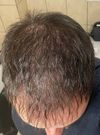
The conversation discusses experiences with Procapil for hair loss treatment. A user inquires about purchasing Procapil and provides a link to a product website.
The user shared a 3-month update on using a 5% minoxidil and finasteride topical solution enriched with redensyl and procapil for hair regrowth. They mentioned inconsistency in using the treatment and initially starting it without consulting a dermatologist.
A 22-year-old used oral finasteride from Costco and topical Kirkland minoxidil for 4-5 months to treat hair loss, resulting in significant hair regrowth and restored confidence. The "big 3" refers to minoxidil, finasteride, and microneedling as hair loss treatments.
User LateNightCoffeeShop shared progress after 3 months using Finasteride, Minoxidil, and Derma-rolling for hair regrowth. Users discussed treatment frequency, effectiveness, and potential side effects.
The user is considering continuing minoxidil and microneedling, possibly adding low-dose topical finasteride, and undergoing a large FUE hair transplant to improve hair appearance. They plan to use hair fibers for added density, aiming for a convincing cosmetic look rather than full density.
A user questions if a topical compound with finasteride, dutasteride, minoxidil, retinoic acid, caffeine, and triamcinolone is excessive for hair loss treatment. Another user shares their experience using topical finasteride without issues and notes that alternating finasteride and dutasteride is common.
The user is dissatisfied with the results of using 0.3% finasteride and 6% minoxidil for hair thinning and is considering a topical treatment combining finasteride, dutasteride, minoxidil, melatonin, caffeine, and latanoprost. Another user suggests that high topical concentrations can lead to systemic exposure and recommends using oral dutasteride and microdosing topical finasteride.
The user is experiencing a lack of morning erections after using 0.5mg of finasteride every other day for two weeks and is considering whether to reduce the dose, continue, or stop. The discussion focuses on adjusting finasteride dosage due to side effects.
Use a dermastamp with rosemary, peppermint, and coconut oil mixture for hair loss. Consider needle length, frequency, and number of passes for effective results.
The conversation is about experiences with GHK-Cu Copper and AHK-Cu Copper for hair regrowth and thickening. One user expressed skepticism about its effectiveness.
Pyrilutimide and CB-03-01, two treatments for hair loss, have similar clinical trial results despite different binding affinities to androgen receptors. Factors other than binding affinity, like the time a drug stays bound to the receptor, may influence their effectiveness.
Hope Medicine's HMI-115 is expected to be released in 2027, with phase 3 trials currently recruiting. Concerns include the safety of targeting prolactin and the potential cost of the treatment.
The user started using 1mg finasteride and Regaine foam post-hair transplant, noticing significant hair growth at three months. They experienced testicular cramps as a side effect but no other issues, and are considering microneedling for further improvement.
The conversation discusses managing seborrheic dermatitis (sebderm) and male pattern baldness (MPB) with treatments like finasteride, coal tar shampoo, Nizoral, and oral minoxidil. Users suggest dietary changes, regular shampooing, and using antifungal products to control sebderm before considering minoxidil.
A 42-year-old user shares progress on hair loss treatment using finasteride, topical minoxidil, and dermarolling. They seek advice on obtaining Minoxidil pills in Europe.
The user is exploring alternatives to finasteride and dutasteride due to concerns about side effects, and is using rosemary and jojoba oil, ketoconazole, minoxidil, microneedling, multi-peptide serum, saw palmetto, and stinging nettle for hair loss. They are also considering CB 03 01 and spironolactone.
A user with scalp psoriasis and hair loss is hesitant to use topical minoxidil and finasteride due to concerns about psoriasis and potential side effects. They are considering alternatives like pumpkin seed and saw palmetto.
The user is using topical minoxidil and finasteride with good results and is considering adding stemoxydine 5% to their regimen. Another user suggests trying it if financially feasible, as results can vary.
The conversation is about concerns over using a combination spray containing finasteride, minoxidil, and ketoconazole for hair loss. The user is worried about potential scalp irritation and considers using separate products to better manage sensitivity.
The conversation is about a person who started using finasteride, minoxidil, and a dermaroller for hair loss in September 2023 and has seen significant improvement after 3 and a half months. Other users are expressing happiness and support for the progress made.
After 8 months of using topical finasteride, hair miniaturization continues, raising concerns about its effectiveness. Microneedling is suggested as a possible complementary treatment.
User discusses group buy for finerenone, a third-gen mineralocorticoid antagonist for hair loss treatment. Finerenone inhibits TGFb, NOX, and ROS, and improves renal and cardiac function; topical dose should be no more than 10mg per day.
The user is concerned about mixing Pantostin (with Alfatradiol) and Finasteride in a topical solution, fearing a potential toxic reaction or ineffectiveness. They seek advice on whether this combination is safe.
ET-02 showed significant hair growth in five weeks, outperforming minoxidil, with a non-hormonal mechanism that avoids side effects of treatments like finasteride. A phase 2 trial is planned to further assess ET-02's efficacy and safety.
The conversation discusses concerns about using a high concentration of 1% topical finasteride for hairline balding, with some users suggesting starting with a lower dose. It also mentions the use of GHK-CU peptide and the importance of considering the formulation to avoid excessive absorption.
The user is experiencing ongoing hair loss despite using a comprehensive treatment regimen including dutasteride, oral minoxidil, cyproterone acetate, transdermal estradiol, and topical bicalutamide. They suspect cyproterone acetate may be worsening their hair loss and are considering switching to injection monotherapy.
The user is experiencing hair loss and plans to use a treatment protocol including Saw Palmetto Berries, MCT Oil, Zinc, testosterone balancers, L-tyrosine, and L-theanine. They also use a specific dandruff shampoo and are open to non-prescription treatments.
A 27-year-old male with ADHD is experiencing hair thinning and is starting a treatment with topical finasteride (0.025%) and minoxidil (5%). He is addressing high prolactin levels and low vitamin D, while managing side effects from ADHD medication.
Bryan Johnson's new hair loss product, which includes peptides, is viewed skeptically by many, with concerns it may be a money grab rather than an effective treatment. Most users prefer proven treatments like finasteride and minoxidil, which are cheaper and have established results.
Zeuss sublingual products for hair loss, including finasteride and a finasteride-free option, are discussed for their potential to reduce side effects through sublingual delivery. The inclusion of copper peptides is noted, but the high price is a concern without more user feedback.